
Quantum Systems, the Bavarian Drone Maker Ukraine Made Essential
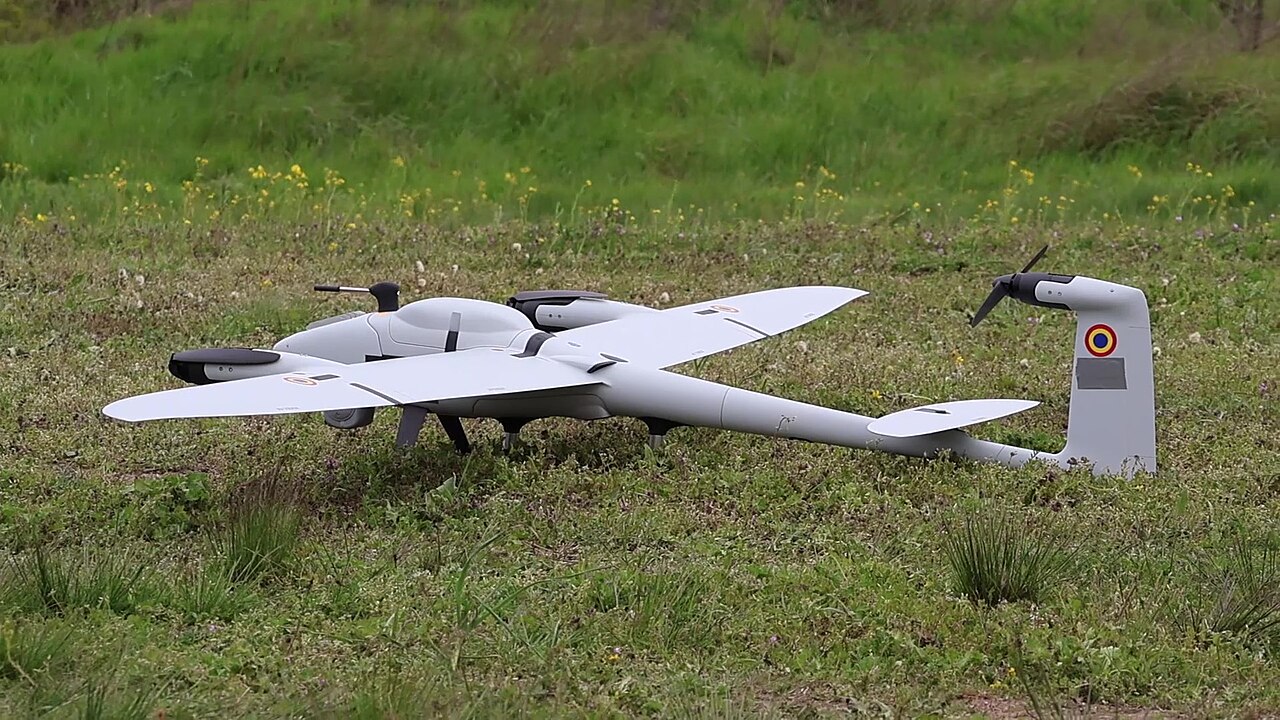
Europe’s most valuable defense startup does not build missiles or jets. It builds a 2.8-meter reconnaissance drone that soldiers launch from a backpack, and the Ukraine war turned that modest machine into the eyes of entire brigades. Quantum Systems, from Gilching outside Munich, rode the Vector from niche surveying tool to an approximately $8 billion valuation.
What the Vector actually is
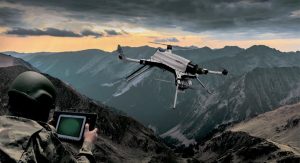
The Vector is a fixed-wing aircraft that takes off like a helicopter, a VTOL transition drone with a 2.8-meter wingspan, up to 180 minutes in the air and a 60-kilometer link range. Two soldiers carry it, assemble it without tools in minutes and recover it anywhere flat. The payload is the point, stabilized electro-optical and infrared sensors feeding real-time video, with the newer Vector AI variant adding onboard machine vision that keeps navigating and tracking when jamming severs GPS and the operator’s link.
That last feature is not marketing garnish. Electronic warfare decides drone survival in Ukraine, and an aircraft that can fly its mission through a jamming bubble on visual navigation is the difference between a sensor and a casualty.
Ukraine, the proving ground
Quantum’s drones arrived in Ukraine early and in quantity, and the battlefield rewrote the product. Iteration cycles compressed from years to weeks as crews reported which frequencies died first and which landing zones bent airframes, and the company’s engineers pushed updates against Russian electronic attack that no laboratory could simulate. Ukrainian units use Vectors for artillery spotting, route reconnaissance and battle damage assessment, the unglamorous work that decides whether shells land on target.
The credential is now commercial gold. Every European army modernizing its reconnaissance stack asks the same question, does it work in Ukraine, and Quantum answers with thousands of airframes and verified combat hours rather than brochure claims.
Factories forward, including Kyiv
Production spans Munich, Los Angeles, Brisbane and, since April 2024, Kyiv itself, a deliberate architecture that shortens delivery to the main customer while seeding NATO-market factories on three continents. Output runs at 40 to 80 Vectors monthly and climbing. Building inside a war zone is also a statement investors understood, the company is structurally committed to the fight that made it, not merely selling into it.
The funding ladder to $8 billion
| Round | Date | Size | Valuation |
|---|---|---|---|
| Series C | May 2025 | ~$174M | ~$1.1B, unicorn status |
| Growth round | Nov 2025 | ~$195M | ~$3.3B |
| Series D | 2026 | ~$1.2B | ~$8B |
The cap table is as strategic as the cash. Hensoldt and Airbus Defence and Space invested alongside venture firms, giving Germany’s defense establishment a stake in its own disruptor, while the round sizes signal that European investors now believe drone warfare is a permanent market, not a wartime spike. Among Western small-drone champions, only Skydio and Anduril occupy comparable positions in their home markets.
Eyes first, strike ecosystems next
Quantum’s stated ambition runs beyond reconnaissance toward the full recce-strike loop, Vectors finding targets that loitering munitions from partner firms then finish, stitched together by software that automates the handoff. The company has grown through acquisitions and partnerships toward that stack, and its rivalry with fellow German startup Helsing, which approaches the same loop from the software side, will shape how Europe buys autonomous airpower for a decade.
Risks remain, valuation expectations that assume European rearmament money arrives on schedule, competition from cheaper mass-market platforms, and the perpetual question of what peace, if it comes, does to demand. But the Vector’s position is enviable, the standard tactical eye of a continent that just remembered it needs armies.
The German Procurement Test
Quantum’s hardest market may be its own. Germany’s Bundeswehr buys the Vector, but German procurement remains a byword for slowness, and the company’s leadership has been publicly blunt that Europe’s rearmament rhetoric outruns its purchase orders. The startup’s answer has been to diversify before being asked, selling into Australia through its Brisbane site, pursuing American programs from Los Angeles, and letting Ukraine’s operational tempo, not Berlin’s, set the engineering clock.
That impatience is itself a product. European defense ministries increasingly cite Quantum, alongside Helsing and a handful of others, as proof that the continent can produce battlefield-relevant technology at startup speed, and the political pressure those examples create feeds back into procurement reform debates in Berlin and Brussels.
Frequently asked questions
What does Quantum Systems make?
VTOL fixed-wing reconnaissance drones, led by the Vector, a backpack-portable ISR aircraft with up to 180 minutes endurance and AI-assisted navigation.
How many drones has Quantum Systems delivered to Ukraine?
The company has delivered over 4,000 drones overall, with Ukraine the largest operator, supported by a Kyiv factory opened in 2024.
What is Quantum Systems worth?
Its 2026 Series D of roughly $1.2 billion valued the company near $8 billion, the highest of any European defense startup.
Who are Quantum Systems’ main customers?
Ukraine, the German Bundeswehr, and NATO-aligned forces including Spain, Australia and Romania, plus geospatial survey users.
- Trending Topics and dev.ua reporting on the 2025-2026 funding rounds
- Company announcements on Kyiv production and Vector AI
- Ukraine’s Arms Monitor analysis of Quantum Systems in recce-strike operations