Skydio, the Drone Company Carrying America’s Answer to DJI
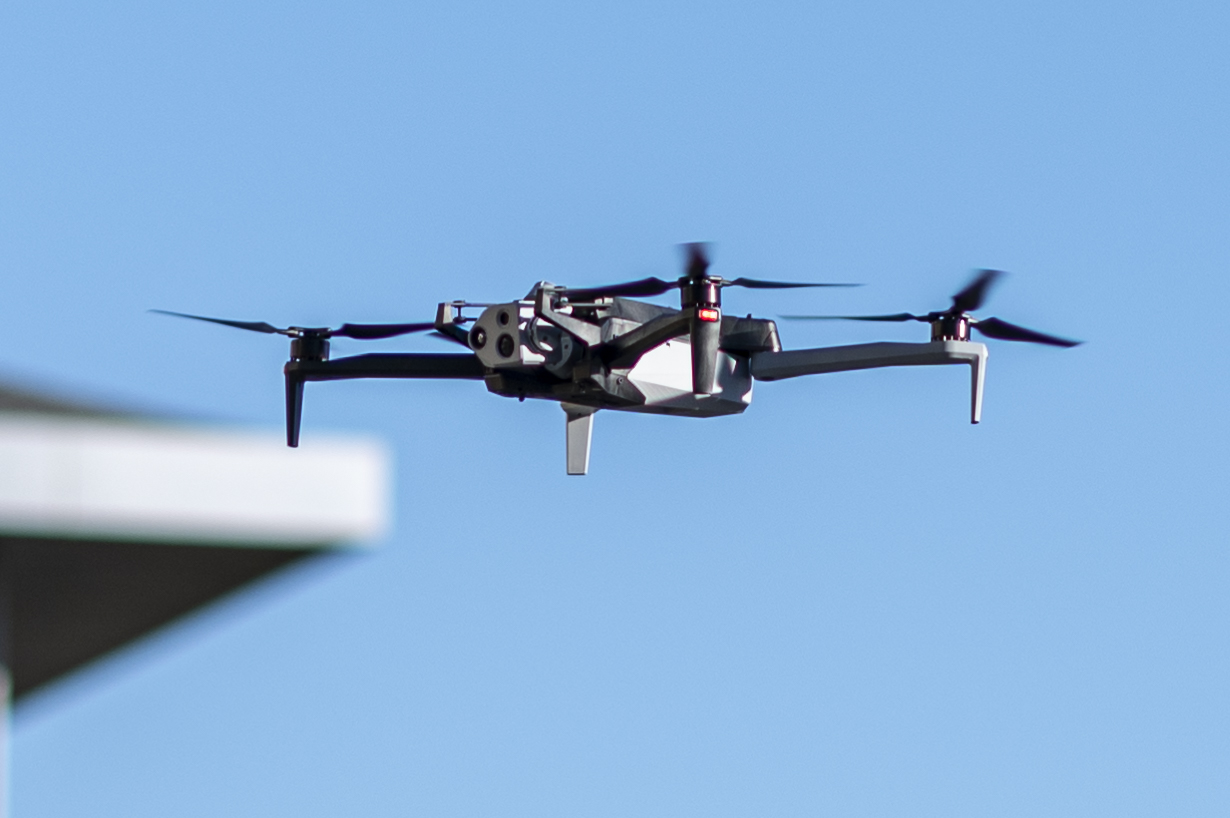
America’s small-drone problem has a name, DJI, the Chinese giant that owns the global market. Its most credible domestic answer is Skydio, the San Mateo company that stopped selling to consumers entirely and bet everything on autonomy for soldiers and cops. Roughly 22,000 of its drones now serve across the US military.
From selfie drone to soldier’s tool
Adam Bry, Abe Bachrach and Matt Donahoe founded Skydio in 2014 out of MIT’s autonomous flight research community, and the early products were consumer marvels, drones that filmed you while dodging trees without a pilot. The pivot came in stages, the X2 for enterprise and defense, Blue UAS certification opening Pentagon procurement, and finally the August 2023 decision to exit the consumer market entirely. By late 2024 more than half the company’s business was military.
Autonomy as the product
Skydio’s core argument is that the drone industry sells the wrong thing, aircraft, when what users need is outcomes without pilot skill. Its machines navigate with six onboard cameras feeding an NVIDIA-powered vision system that builds a real-time 3D model of the world, allowing flight in GPS-denied spaces, under bridges, inside buildings and, with the X10’s NightSense, in total darkness. For a soldier, that means throwing a drone into the air and pointing at a map rather than flying it, and it means the aircraft survives environments that kill piloted competitors.
X10, the current flagship
| Attribute | Detail |
|---|---|
| Announced | September 2023 |
| Sensors | 64MP zoom, 50MP wide, FLIR Boson+ thermal |
| Autonomy | Six navigation cameras, NightSense zero-light flight |
| Roles | Reconnaissance, inspection, public safety, border security |
| Users | US military services, 50+ allied and partner customers |
| Made in | United States, NDAA-compliant supply chain |
The X10 packages the autonomy stack into a foldable airframe with sensor quality aimed squarely at DJI’s enterprise line, and its NDAA-compliant, American-built supply chain is as much a feature as any camera, since federal buyers and a growing list of states are barred from Chinese drones.
Ukraine, the harshest classroom
Ukraine humbled every Western drone maker, Skydio included. Early-war deployments of the X2 struggled against Russian jamming that severed links and scrambled GPS, and company leadership has been unusually candid that the battlefield exposed assumptions built for permissive environments. The response was rapid iteration, hardened radios, autonomy that continues the mission when links drop, and hundreds of updated drones delivered to Ukrainian forces, lessons now baked into the X10 line.
The DJI problem and the market
DJI still builds better price-performance hardware at consumer scale, an advantage rooted in Shenzhen’s electronics ecosystem that no policy can quickly replicate. Skydio’s counter is to compete where autonomy, data security and domestic sourcing outweigh sticker price, defense, public safety and critical infrastructure, while Washington’s tightening restrictions on Chinese drones steadily enlarge that protected market. With 800-plus public safety agencies and dozens of allied militaries aboard, the bet is that the trust market eventually becomes the whole Western market.
Manufacturing at American Speed
Skydio’s Hayward, California factory is its answer to the hardest question any DJI challenger faces, scale. The company has pushed production capacity into the tens of thousands of airframes annually, trivial by Shenzhen standards but unmatched among Western small-drone makers, and its supply chain excludes Chinese components to hold NDAA compliance. Attritable-drone programs and border-surveillance contracts both reward whoever can actually deliver volume, not just demonstrate prototypes.
The pressure now comes from below as well, a wave of Ukraine-inspired FPV and low-cost drone startups competing for Pentagon replicator-style buys at price points far under Skydio’s. The company’s wager is that autonomy and fleet software, not the airframe, are where durable margins live.
Software Is the Actual Moat
The drones are the visible product, but Skydio increasingly sells systems, dock-based drones that launch themselves on patrol schedules, fleet management that feeds video into a customer’s operations center, and 3D scanning software that turns a bridge inspection into a repeatable autonomous mission. A police department running drone-as-first-responder operations, with aircraft dispatched to 911 calls ahead of officers, is buying a workflow, and workflows are far stickier than hardware.
That model matters for the military too. An army that trains squads on one autonomy interface, accumulates flight data in one ecosystem and automates its reconnaissance patterns has high costs to switch vendors, which is precisely the position every defense supplier wants to occupy when budgets tighten.
Frequently asked questions
What makes Skydio drones different?
Vision-based onboard autonomy that flies without GPS or pilot skill, including zero-light navigation, built in the US with an NDAA-compliant supply chain.
Does the US military use Skydio?
Yes, roughly 22,000 Skydio drones serve across US forces, the largest small-drone fleet of any American maker.
Did Skydio drones work in Ukraine?
Early X2s struggled against heavy jamming; the company iterated hardened radios and link-loss autonomy, and its updated drones continue serving with Ukrainian units.
Is Skydio a public company?
No, it remains private, last valued at $2.2 billion at its 2023 Series E.
- Wikipedia – Skydio (accessed October 2026)
- Company statements on military fleet size and Ukraine deployments
- US Blue UAS program documentation