Canada Awards Davie C$11 Billion Deal for Six Polar Icebreakers
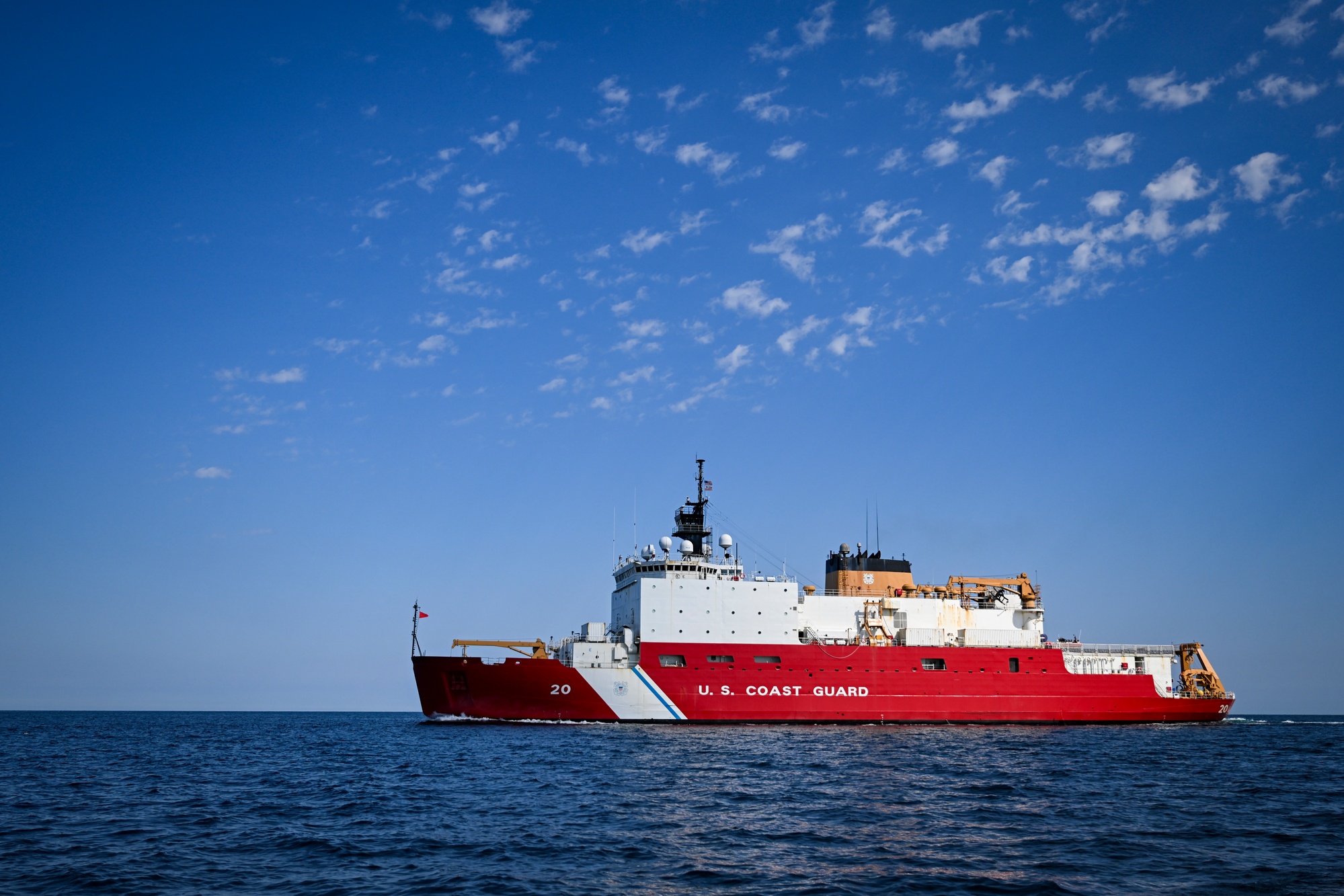
Canada has awarded Chantier Davie a contract worth more than C$11 billion for six Polar Class 3 icebreakers for the Canadian Coast Guard, the largest shipbuilding contract ever placed in Quebec and one of the most significant Arctic capability investments in the country’s history.
The vessels will be built at Davie’s yard in Lévis, on the south shore of the St. Lawrence opposite Quebec City. Construction is scheduled to begin in 2027, with the first ship delivered in 2032 and the full fleet operational by 2038.
“Built in Lévis by Canadian workers, they are a lasting investment in a stronger, more self-reliant Canada,” Prime Minister Mark Carney said in announcing the award.
Defence Minister David J. McGuinty framed the vessels in operational terms: “These six new icebreakers will keep Canadian trade flowing, strengthen our presence in the Arctic.”
What Polar Class 3 means
The Polar Class system, set by the International Association of Classification Societies, runs from PC1 to PC7. PC3 denotes a vessel capable of year-round operation in second-year ice that may include multi-year ice inclusions — a genuinely capable heavy icebreaker, below the PC1 and PC2 tiers occupied by the most powerful Russian nuclear icebreakers but well above the light and medium classes that make up most Western fleets.
That capability level is the point. The Canadian Coast Guard’s existing heavy and medium icebreakers are old — several have been in service for four decades or more — and the fleet has been kept running through life extensions that are increasingly difficult to justify. A PC3 vessel can work where the current fleet increasingly cannot.
The operating pattern is seasonal and dual-theatre. The ships will work Atlantic Canada and the St. Lawrence through the winter, keeping the seaway and the ports it serves open for commercial traffic, and move north to the Arctic in summer. Their mission set covers search and rescue, environmental response, northern community resupply and Arctic science support.
How the contract was built
The award did not appear from nowhere. Davie received a C$19.6 million design contract in 2024, and in 2025 was awarded a C$3.25 billion contract for the Polar Max heavy icebreaker. The six-ship programme announced this week is the production follow-on to that design work, and it consolidates Davie’s position as one of the three yards under Canada’s National Shipbuilding Strategy, alongside Irving in Halifax and Seaspan in Vancouver.
Davie’s route into the strategy was contentious — the yard was excluded from the original 2011 allocation and spent years arguing its way in, finally being confirmed as the third strategic partner in 2023. The icebreaker programme is the payoff.
Canadian steel and Canadian materials are required under the Buy Canadian Policy. Ottawa estimates the programme will support around 5,000 jobs during construction and contribute roughly C$650 million annually to GDP.
The Arctic calculation
Icebreakers are not warships, and it would be a mistake to read this contract purely through a military lens. But they are instruments of sovereignty in a way few civilian vessels are. Presence in the Arctic is a function of the ability to operate there, and the ability to operate there is a function of hulls that can move through ice. A state without icebreakers has claims it cannot physically service.
That has become more pressing as Arctic sea ice retreats and previously impassable routes open for longer each year. The Northwest Passage runs through waters Canada considers internal and the United States considers an international strait — a disagreement that has been managed politely for decades largely because commercial traffic was negligible. As traffic grows, the disagreement becomes harder to leave unresolved.
Russia, meanwhile, operates by far the largest icebreaker fleet in the world, including nuclear-powered vessels in the PC1 and PC2 classes, and has invested heavily in Arctic military infrastructure. China has declared itself a “near-Arctic state” and built polar research vessels of its own. The Western response has been slower and is only now translating into steel.
Canada signed the Icebreaker Collaboration Effort — the ICE Pact — with the United States and Finland in 2024, an agreement intended to pool shipbuilding expertise and expand Western polar shipbuilding capacity. Finland has built a substantial share of the world’s icebreakers; the United States has struggled to recapitalise a Coast Guard polar fleet that for years rested on a single operational heavy icebreaker. The Davie award is one of the first large production contracts to follow from that framework.
Delivery risk
The schedule is the obvious vulnerability. A first delivery five years after construction start, and a full fleet a further six years after that, assumes a yard that can move from one-off design work to serial production without the learning-curve problems that have afflicted almost every recent Western naval shipbuilding programme. Australia’s Hunter-class frigates, Britain’s Type 26 and the U.S. Constellation-class frigate have all slipped, in each case for broadly similar reasons: design instability, workforce constraints and supply chains that had atrophied.
Davie has one advantage the others often lacked — an icebreaker is a mature ship type, and the design work is already contracted and largely done. It also has a disadvantage: six large hulls is a substantial serial production commitment for a yard that has not built at that tempo in modern times.
The Coast Guard’s existing fleet, meanwhile, has to last until 2032 at the earliest.
Sources
- Defence Industry Europe, “Canada awards contract worth more than C$11 billion to Chantier Davie for six Polar Class 3 Canadian Coast Guard icebreakers,” 24 August 2026
- Government of Canada, Prime Minister’s Office statement on the icebreaker award (quoted remarks by Prime Minister Mark Carney)
- Government of Canada, National Shipbuilding Strategy programme documentation
- Icebreaker Collaboration Effort (ICE Pact), Canada–United States–Finland, 2024