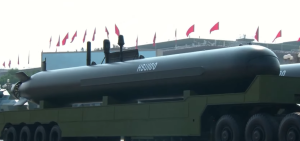

What is a Submarine-Launched Ballistic Missile (SLBM)? The Apex of Nuclear Deterrence
In the complex geopolitical chessboard of global superpowers, the ultimate guarantee of national survival does not rest in the sky or on land, but deep beneath the surface of the ocean. The weapon responsible for this guarantee is the Submarine-Launched Ballistic Missile (SLBM).
But what exactly is an SLBM, and why are they considered the most terrifying and technologically advanced weapons in human history?
The Core Concept: The Unseen Deterrent
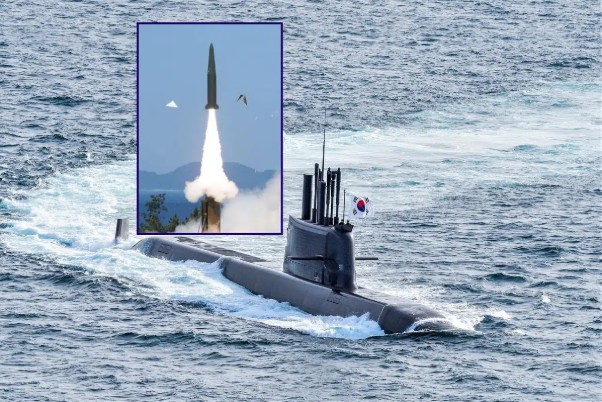
An SLBM is a ballistic missile capable of delivering nuclear warheads to intercontinental targets, specifically designed to be fired from a submerged nuclear-powered submarine (known as an SSBN).
To understand the SLBM, one must understand the concept of the Nuclear Triad. Superpowers like the United States, Russia, and China divide their nuclear arsenals into three branches: land-based silos (ICBMs), strategic bomber aircraft, and submarines.
Land silos are heavily fortified but their locations are known.
Bombers are flexible but vulnerable to air defenses.
SSBNs are the “Apex Predator.” Hidden in the vast, opaque depths of the ocean, they are virtually impossible to track continuously.
If a nation suffers a devastating first strike that wipes out its land and air forces, its submarines will survive to launch a retaliatory “second strike” using SLBMs. This guarantees Mutual Assured Destruction (MAD), preventing the initial war from starting.
How it Works: The Engineering Miracle of a Submerged Launch
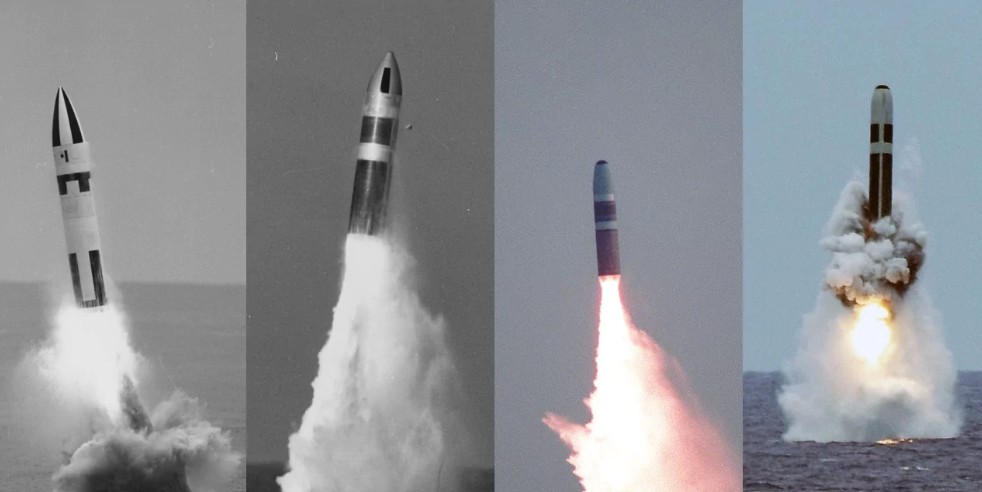
Firing a multi-ton rocket filled with highly volatile solid fuel from inside a metal tube deep underwater is an extreme engineering challenge. The launch sequence of a modern SLBM, such as the American/British UGM-133 Trident II D5 or the Russian RSM-56 Bulava, happens in three distinct phases:
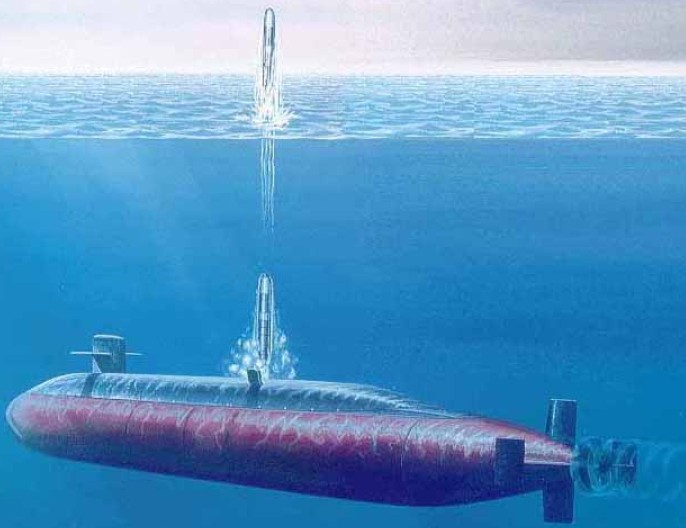
1. The Cold Launch (Ejection) Unlike a land-based rocket that ignites its engines on the pad, an SLBM cannot ignite inside the submarine—the exhaust gases would instantly melt the launch tube and destroy the vessel. Instead, SLBMs use a “Cold Launch” system. A high-pressure gas generator (often using steam) rapidly expands, violently ejecting the missile out of the submarine’s vertical launch tube and pushing it up through the water column.
2. Breaking the Surface (Ignition) As the missile clears the water and breaches the surface of the ocean, a sensor detects the change in environment. At this precise millisecond, the first-stage solid-rocket motor ignites in mid-air. The SLBM rapidly accelerates, transitioning from a submerged projectile into a hypersonic space vehicle, exiting the Earth’s atmosphere.
3. The Terminal Phase (MIRV Deployment) Modern SLBMs do not carry a single warhead. They are equipped with MIRVs (Multiple Independently targetable Reentry Vehicles). Once the missile reaches the vacuum of space, the “bus” (the top section) detaches. It then maneuvers and releases multiple individual nuclear warheads—sometimes up to 8 or 12 per missile—along with inflatable decoys to confuse enemy radar. Each warhead re-enters the atmosphere at hypersonic speeds, striking separate cities or military installations simultaneously.
The Global Arsenal
Mastering SLBM technology is the ultimate hallmark of a premier military power. Currently, only a select few nations possess operational SLBM capabilities:
The United States & UK: Rely on the highly accurate Trident II D5 missile.
Russia: Operates a diverse fleet utilizing the newer Bulava and legacy Sineva missiles.
China: Rapidly expanding its sea-based deterrent with the advanced JL-2 and JL-3 missiles.
France & India: Field their own indigenous SLBMs (the M51 and K-series, respectively) to ensure their independent sovereign deterrence.
Ultimately, the Submarine-Launched Ballistic Missile is a paradox of modern engineering: it is a weapon of apocalyptic destructive power, designed with the sole strategic purpose of ensuring it never has to be used.