TUSAŞ ANKA: Specs, ANKA-S, Engine and Operators
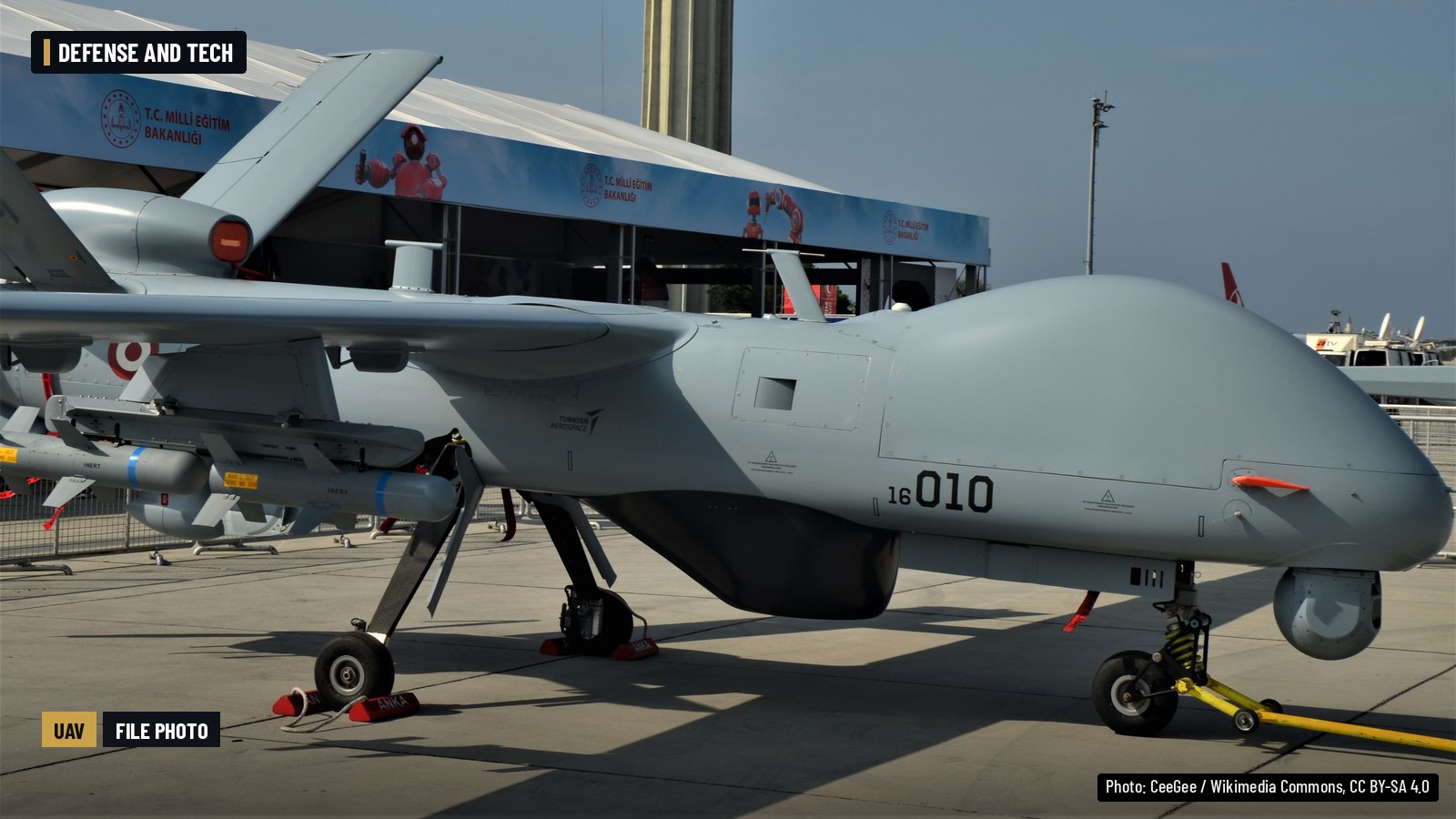

ANKA is Turkish Aerospace’s (TUSAŞ) single-engine, medium-altitude long-endurance (MALE) drone, used for intelligence, surveillance and reconnaissance (ISR) and, when armed, light strike missions. It was rolled out on 16 July 2010 and first flew on 30 December 2010; the satellite-linked ANKA-S version entered serial production after a 10-aircraft contract in October 2013. TUSAŞ lists a 17.5 m wingspan, a 1,700 kg maximum take-off weight, a payload of more than 350 kg, endurance of up to 30 hours and a 30,000 ft ceiling. Outside Türkiye, it is in service in Indonesia and Malaysia, among others, and Kazakhstan has signed to assemble it locally.
- Maker: Turkish Aerospace (TUSAŞ), Ankara, a subsidiary of the Turkish Armed Forces Foundation (TSKGV) and an affiliate of the Presidency of Defence Industries (SSB)
- Class: single-engine MALE UAV for ISR, electronic warfare payloads and light strike
- Rollout / first flight: 16 July 2010 / 30 December 2010 (TUSAŞ)
- Serial production: ANKA-S, 10-aircraft contract signed in October 2013 (TUSAŞ)
- TUSAŞ data: 17.5 m span, 8.6 m length, 1,700 kg MTOW, 350+ kg payload, up to 30 h, 30,000 ft
- Fleet hours: “over 400,000” across all ANKA fleets (company figure)
- Confirmed foreign users: Indonesia (first aircraft September 2025), Malaysia (No 11 Squadron, June 2026), Tunisia (announced by TUSAŞ in 2020); Kazakhstan has an export deal and a local-assembly agreement
What is ANKA?
ANKA was Türkiye’s first domestically designed MALE drone and the start of the TUSAŞ family that now includes the twin-engine AKSUNGUR and the jet-powered ANKA-III flying wing. It has a conventional layout: a long straight wing, a pusher propeller at the rear of the fuselage, an inverted-V tail and a retractable undercarriage. TUSAŞ says it was designed by its own engineers with “numerous domestic subcontractor companies” (TUSAŞ product page).
The design leans on redundancy. TUSAŞ lists double-redundant flight computers, sensors and control-surface actuators; an automatic take-off and landing system that uses two position sources (radar tracking and differential GPS); a backup battery supply if the alternator fails; two encrypted line-of-sight datalinks plus satellite communications; automatic return to base if the link is lost; the ability to divert to the nearest field in an emergency; and de-icing on the wing and tail. Its software and hardware are certified to the civil aviation standards DO-178B and DO-254, according to the company.
ANKA specifications
The figures below are the manufacturer’s, as shown on TUSAŞ’s English product page on 16 November 2026. They have not been independently verified.
| Parameter | TUSAŞ figure |
|---|---|
| Wingspan | 17.5 m |
| Length / height | 8.6 m / 3.25 m |
| Maximum take-off weight | 1,700 kg |
| Payload capacity | 350+ kg |
| Endurance | Up to 30 hours |
| Service ceiling | 30,000 ft |
| Datalink / SATCOM range | 250+ km / 2,500+ km |
| Payload options | EO/IR camera, SAR/GMTI-ISAR radar; COMINT, ELINT, ESM, electronic attack, communications jamming; precision-guided bombs, laser-guided rockets, anti-tank missiles |
Older published figures are lower. A TUSAŞ display board photographed at TEKNOFEST 2019 gave 24 hours’ endurance, a 200 kg payload and a 155 hp heavy-fuel engine, and Malaysia’s defence minister described his country’s ANKA-S as able to fly “more than 24 hours” at up to 30,000 ft. TUSAŞ does not explain the difference; it most likely reflects configuration and payload, so readers should treat “up to 30 hours” as a best-case figure.
ANKA and ANKA-S: what is the difference?
The prototype ANKA flew in 2010. The production standard is ANKA-S, which adds satellite communications so the aircraft can be controlled beyond the 250 km line-of-sight datalink range; TUSAŞ gives the SATCOM range as more than 2,500 km. TUSAŞ says the ANKA-S development work was completed and the system went into serial production after the October 2013 contract for 10 aircraft. Export customers such as Malaysia and Indonesia refer to their aircraft as ANKA-S.
TUSAŞ markets ANKA with a common avionics architecture and ground segment shared with AKSUNGUR and ANKA-III, which lets an operator train crews and maintain ground stations across the family.
Engine: heavy-fuel engine and the domestic TEI-PD170
TUSAŞ’s product page does not name the engine. Its 2019 display board listed a 155 hp heavy-fuel engine. The domestic alternative is the TEI-PD170 turbodiesel from TUSAŞ Engine Industries (TEI), developed in a project run under the SSB to give Türkiye its first indigenous aviation engine for MALE drones. TEI says the PD170 produces 172 hp (±2), first flew on the ANKA platform on 27 December 2018 and entered serial production in 2019 (TEI). Neither company publishes which engine each production batch or export aircraft uses, so we do not state it.
Operators: ordered, delivered and reported
Order, delivery and active inventory are different things. The table keeps them apart and names the source for each line.
| Country | What is confirmed | Source |
|---|---|---|
| Türkiye | Main user. ANTARA reported in 2023 that TUSAŞ had delivered more than 36 ANKA to the Turkish Air Force, Navy, Interior Ministry and the forestry directorate, as well as to foreign customers. No current official fleet total. | ANTARA (2023), TUSAŞ |
| Tunisia | TUSAŞ announced on 24 December 2020 that ANKA was going to Tunisia, its first export customer. Turkish media reported an $80 million deal for 3 ANKA-S, 3 ground stations and training for 52 personnel; TUSAŞ has not published those figures. | TUSAŞ on X; Turkish media (reported) |
| Kazakhstan | TUSAŞ says an export deal was signed the year before. On 10 May 2022 TUSAŞ and Kazakhstan Engineering signed a memorandum to set up ANKA assembly and maintenance in Kazakhstan, the first production base outside Türkiye. Quantities not published by either company. | TUSAŞ; Kazakhstan Engineering |
| Indonesia | Contract for 12 ANKA signed 3 February 2023, worth $300 million including training, logistics, a simulator, hangar infrastructure and warranty; 6 to be assembled by PT Dirgantara Indonesia. First aircraft arrived at Supadio air base, Pontianak, on 26 September 2025, according to the air force chief. Later deliveries not officially totalled. | Indonesian MoD (via Türkiye’s Directorate of Communications); ANTARA; Kompas |
| Malaysia | 3 ANKA-S bought for RM423.8 million including ground stations and two years’ training; launched with No 11 Squadron at RMAF Labuan on 16 June 2026. Malaysia chose not to arm them. Three more are under consideration (our report). | Malaysian Defence Minister via Bernama |
| Others reported | Algeria, Chad, Uzbekistan, Kyrgyzstan and Angola appear in media reports as buyers or operators. We found no official confirmation of quantities on 16 November 2026. | Media reports (unconfirmed) |
The $300 million and RM423.8 million figures are package values that include support, training and infrastructure. They cannot be divided into a per-aircraft price. Envanter Medya keeps a running ANKA export tracker that separates reported and confirmed deals in the same way.
How ANKA compares with the rest of the family
| TUSAŞ figure | ANKA | AKSUNGUR | ANKA-III |
|---|---|---|---|
| Layout / power | Single heavy-fuel engine, pusher propeller | Twin TEI-PD170 turbodiesels | Jet-powered flying wing |
| Wingspan | 17.5 m | 24 m | 13.1 m |
| MTOW | 1,700 kg | 3,300 kg | 7,250 kg |
| Payload | 350+ kg | 750+ kg | 1,700 kg |
| Endurance / ceiling | Up to 30 h / 30,000 ft | Up to 50 h / 40,000 ft | Not published / 40,000 ft |
ANKA is the lightest and simplest of the three. That is its selling point for air forces whose main need is long, cheap-to-run maritime or border surveillance rather than heavy strike: Malaysia’s minister argued that ANKA-S patrols cost less than sending fighters or large patrol ships to look for intruders. For heavier weapons loads, TUSAŞ points customers to AKSUNGUR; Baykar’s AKINCI is the other Turkish option in the heavier class.
Why ANKA matters
ANKA’s 400,000-plus fleet flight hours (a TUSAŞ figure covering all users, not only Turkish ISR flights) and its export list give it the longest track record in the TUSAŞ drone family. Two of its deals also carry an industrial element that buyers increasingly ask for: final assembly of six Indonesian aircraft by PT Dirgantara Indonesia, and the planned assembly and maintenance line in Kazakhstan. For a wider view of the country’s fleet, see What drones does Türkiye have? and our TUSAŞ company profile.
Frequently asked questions
Who makes the ANKA drone?
Turkish Aerospace (TUSAŞ) in Ankara, a subsidiary of the Turkish Armed Forces Foundation and an affiliate of the SSB.
How long can ANKA stay in the air?
TUSAŞ says up to 30 hours. Older TUSAŞ material gave 24 hours, and Malaysia describes its ANKA-S as able to fly more than 24 hours, so real endurance depends on configuration.
Is ANKA armed?
It can be. TUSAŞ lists precision-guided bombs, laser-guided rockets and anti-tank missiles as options. Some users fly it unarmed: Malaysia says it deliberately chose not to arm its three ANKA-S.
Which countries use ANKA?
Türkiye, Tunisia, Indonesia and Malaysia are confirmed by official statements, and Kazakhstan has an export deal and a local-assembly agreement. Other countries appear in media reports without official confirmation.
What engine does ANKA use?
TUSAŞ does not name it on the product page. The domestic TEI-PD170 turbodiesel first flew on ANKA in December 2018, according to TEI.
What is the difference between ANKA and ANKA-III?
ANKA is a propeller-driven surveillance drone; ANKA-III is a much heavier jet-powered flying wing designed for strike and air-to-air roles. See our ANKA-III guide.
Sources
- TUSAŞ – ANKA product page (accessed 16 November 2026)
- TEI – TEI-PD170 turbodiesel aviation engine
- TUSAŞ – new ANKA production base agreement with Kazakhstan
- Kazakhstan Engineering JSC – production of ANKA UAVs to be organised in Kazakhstan (11 May 2022)
- Directorate of Communications of Türkiye – Indonesian Ministry of Defence purchases 12 UCAVs (August 2023)
- ANTARA – ANKA purchase and local assembly (2023)
- Kompas – first ANKA-S arrives at Supadio (27 September 2025)
- Bernama – RMAF ANKA-S launch at Labuan (16 June 2026)
- Malay Mail – Malaysia acquires RM423.8m ANKA-S drones (17 June 2026)
- Wikimedia Commons – TUSAŞ ANKA display board, TEKNOFEST 2019
- Wikimedia Commons – cover photograph, ANKA at TEKNOFEST 2019 (CC BY-SA 4.0)
Last updated: 16 November 2026. This page was rewritten and expanded on this date. Specifications were rechecked against TUSAŞ’s current product page; unsourced claims in the earlier version (specific munitions, dedicated electronic-warfare variants and their ranges) were removed, and the 400,000-hour figure is now attributed to TUSAŞ as a fleet-wide total. Cover: file photo, TEKNOFEST 2019, Istanbul, 17 September 2019; Photo: CeeGee / Wikimedia Commons, CC BY-SA 4.0, cropped.