
Iran War Situation Report: The 3-Carrier Armada and the 35-Day Deadlock


 React
React
The Iran War Situation Report delves into the strategic implications of the recent deployment of a three-carrier armada in the region amid a protracted 35-day deadlock. This report examines the military and geopolitical dynamics at play, highlighting the challenges faced by both Iranian forces and international actors. The ongoing stalemate underscores the complexities of the conflict and the potential for escalation if diplomatic solutions are not pursued. A careful analysis of the situation is crucial for understanding the broader ramifications for regional stability and security.
WASHINGTON / CENTCOM HQ — As the conflict enters its 35th day, the operational reality of the Iran War has starkly diverged from the initial political rhetoric of a swift, 24-hour surgical victory. What was envisioned as a rapid suppression of enemy air defenses (SEAD) and targeted infrastructure strikes has officially devolved into a grinding, multi-domain war of attrition.
For defense analysts, military planners, and global markets, the fog of war is thickening. Here is the definitive Situation Report (SITREP) on the current state of the US-Iran conflict.
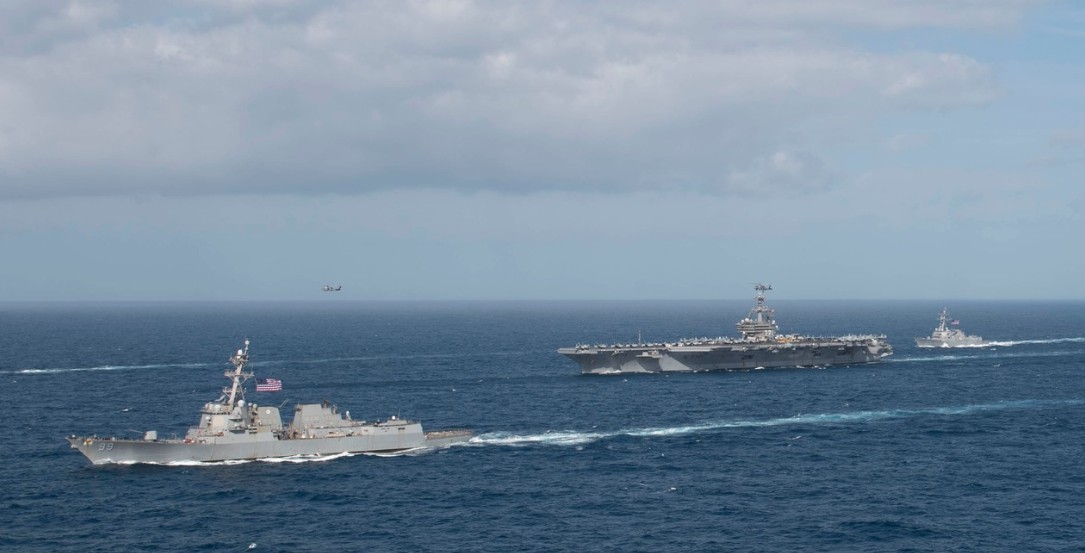
1. Naval Posture: The 3-Carrier Armada Assembles In a massive escalation of force projection, the US Central Command (CENTCOM) has integrated the USS George H.W. Bush into the Middle Eastern theater. Joining the USS Abraham Lincoln and the USS Gerald R. Ford, this establishes an unprecedented 3-Carrier Strike Group armada. Backed by Marine Expeditionary Units (MEUs) and the 82nd Airborne Division, the Pentagon has amassed a total theater force capable of both sustained aerial bombardment and major amphibious ground operations. However, this massive footprint also provides the Islamic Revolutionary Guard Corps (IRGC) with an abundance of high-value targets in the confined waters of the Persian Gulf and the Gulf of Oman.
2. The Kinetic Reality: Shattered Air Supremacy The most shocking tactical development of the Iran War has been the resilience of Iran’s integrated air defense systems. Contrary to pre-war intelligence estimating that Iran would be incapable of launching a single missile under the weight of US electronic warfare, the reality has been lethal.
-
Casualties & Losses: The Pentagon has confirmed the deaths of at least 13 US military personnel. Furthermore, the undisputed myth of absolute US air supremacy has been pierced, with confirmed reports of advanced US combat aircraft being successfully engaged and downed by Iranian surface-to-air missile (SAM) networks.
-
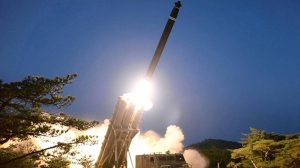
The Retaliatory Tempo: Iran maintains a steady retaliatory capability, launching between 7 to 19 waves of ballistic missiles and loitering munitions (kamikaze drones) daily, heavily contesting the airspace and forcing US naval assets into a perpetual defensive posture.
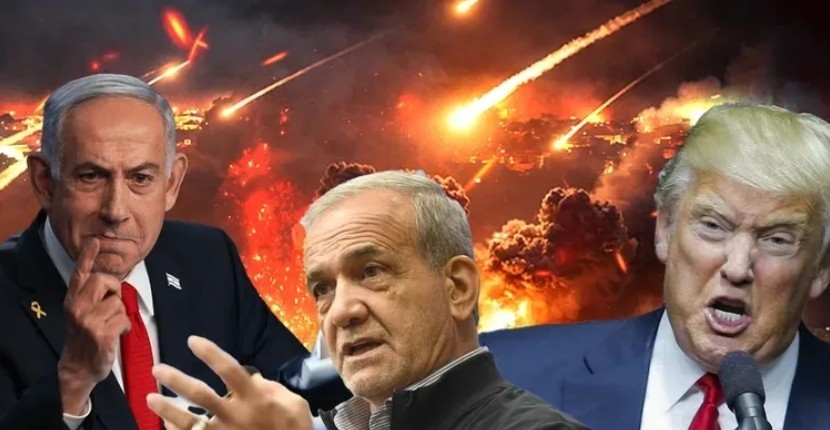
3. The Diplomatic Collapse and “False Flag” Shadows The diplomatic channels that briefly offered a glimmer of a ceasefire have entirely collapsed. The initial 48-hour ultimatum issued by the White House to clear the Strait of Hormuz expired hundreds of hours ago, yet the vital shipping lane remains a highly contested “no-go” zone for international commercial freight. Complicating the battlefield is the severe risk of covert sabotage. Intelligence agencies are on high alert for third-party “false flag” operations—specifically orchestrated by regional actors like Israel—designed to trigger irreversible escalation and force the 3-carrier US armada into an all-out regime change campaign.
Strategic Outlook The Iran War has reached a dangerous strategic deadlock. The United States possesses the overwhelming firepower to destroy Iranian infrastructure, but doing so has failed to neutralize Tehran’s retaliatory capabilities or secure the vital maritime chokepoints. As the naval buildup reaches historic proportions and casualties mount, the illusion of a clean, short war has vanished. The Middle East is now locked in a high-stakes standoff where a single miscalculation could ignite a broader, uncontrollable regional conflagration.
React