
What is the Conventional Armed Forces in Europe (CFE) Treaty?


 React
React
When studying the history of modern warfare and global security, few documents are as mechanically complex—or as historically significant—as the Treaty on Conventional Armed Forces in Europe (CFE).
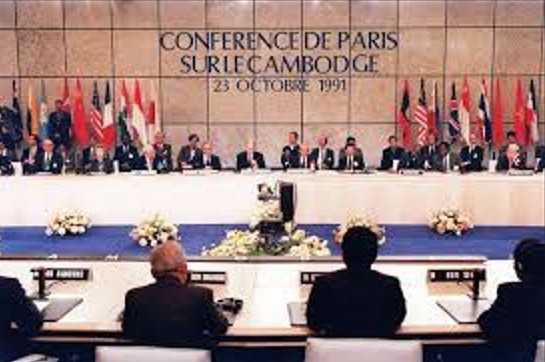
Signed in Paris on November 19, 1990, by the 22 member states of NATO and the Warsaw Pact, the CFE Treaty was not a vague declaration of peace. It was a strict, mathematically precise engineering document designed to completely dismantle the offensive military capabilities of the Cold War.
But what exactly was it, and how did it work?
The Core Objective: Eradicating the Surprise Attack
For decades, the strategic nightmare of European defense planners was a massive, unnotified armored invasion across the continent. Both NATO and the Soviet-led Warsaw Pact had amassed staggering quantities of tanks and artillery along their borders.
The CFE Treaty was designed to eliminate the possibility of a “surprise attack” or a sustained, large-scale offensive operation. It achieved this by establishing a strict numerical balance of conventional (non-nuclear) military hardware across a massive geographic zone spanning from the Atlantic Ocean to the Ural Mountains (the ATTU zone).
The Mechanics: The Five Categories
The genius of the CFE Treaty was its focus. It did not attempt to limit troop numbers, which are fluid and difficult to verify, nor did it limit small arms. Instead, it strictly capped the heavy, logistical hardware required to conquer and hold territory.
The treaty mandated equal numerical ceilings for both blocs across five specific categories of “Treaty-Limited Equipment” (TLE):
-
Battle Tanks: Capped at 20,000 per bloc.
-
Armored Combat Vehicles (ACVs): Capped at 30,000 per bloc (including infantry fighting vehicles and armored personnel carriers).
-
Heavy Artillery: Capped at 20,000 pieces per bloc (caliber of 100mm and above).
-
Combat Aircraft: Capped at 6,800 per bloc.
-
Attack Helicopters: Capped at 2,000 per bloc.
Because the Warsaw Pact possessed a massive numerical superiority in conventional weapons in 1990, meeting these equal limits required asymmetrical reductions. The Soviet Union and its allies had to destroy significantly more equipment than NATO.
The Verification Regime: Unprecedented Transparency
Signing the treaty was only the first step; enforcing it was a monumental task. The CFE Treaty introduced the most intrusive and comprehensive verification regime in military history.
Member states were legally required to provide detailed annual data exchanges regarding the exact locations and quantities of their military formations. Furthermore, the treaty allowed for on-site inspections without the right of refusal. Russian inspectors walked through American bases in Germany, and American inspectors verified Soviet tank depots in the Urals.
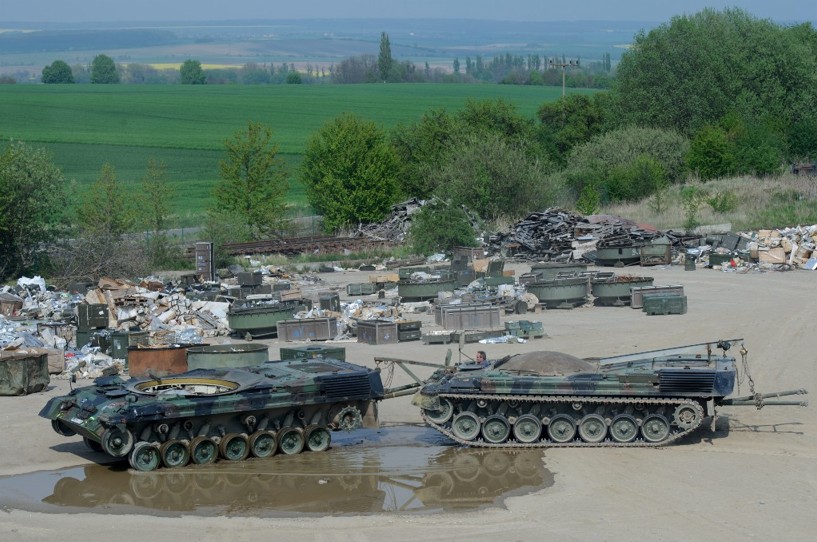
Under this regime, over 50,000 pieces of heavy conventional weaponry were physically destroyed under the watchful eyes of rival inspectors—creating an era of unprecedented transparency.

The Current Status
While the CFE Treaty successfully demilitarized post-Cold War Europe, its rigid bloc-to-bloc structure struggled to adapt to a changing world where the Warsaw Pact no longer existed and NATO had expanded. After years of diplomatic friction, Russia formally suspended its participation in 2007 and officially withdrew entirely in 2023. In response, NATO allies suspended their obligations.
Today, the treaty is legally dormant, but its legacy remains the ultimate masterclass in how mathematical arms control and strict verification can successfully defuse a continent on the brink of war.
React