
The Starshield Era: How SpaceX is Quietly Redefining Military Space Supremacy



 React
React
SPACE STRATEGY REPORT – For decades, space dominance was defined by a few multi-billion dollar, school-bus-sized satellites launched by state agencies. That era is officially over. With the emergence of Starshield, SpaceX’s dedicated military and government business line, the world is witnessing the privatization of space supremacy.
As highlighted in recent defense news, the Pentagon is no longer just a customer of SpaceX; it is increasingly becoming dependent on its “proliferated” Low Earth Orbit (LEO) architecture to counter the rising threats from China and Russia.
Starlink vs. Starshield: What is the Difference?
While Starlink provides global internet to consumers, Starshield is a purpose-built defense platform. It focuses on three core areas that are critical to modern military operations:
-
Earth Observation: Real-time, high-resolution imagery and data collection for intelligence agencies.
-
Secure Communications: End-to-end encrypted, low-latency communication for tactical units.
-
Hosted Payloads: A modular satellite bus that allows the government to “plug in” their own specialized sensors or electronic warfare tools.
The End of the “Fat Target” Doctrine
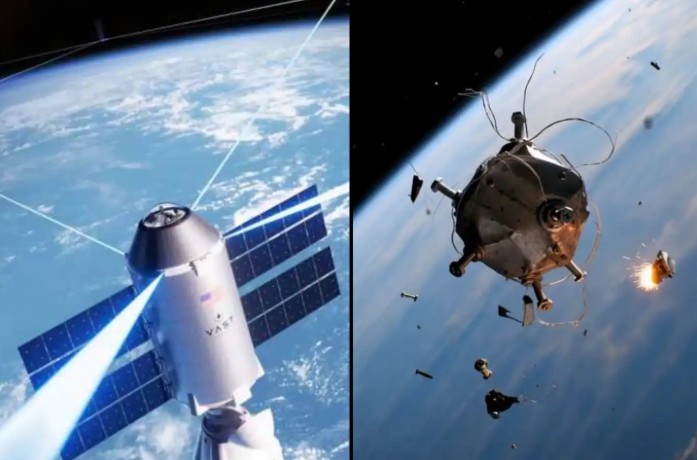
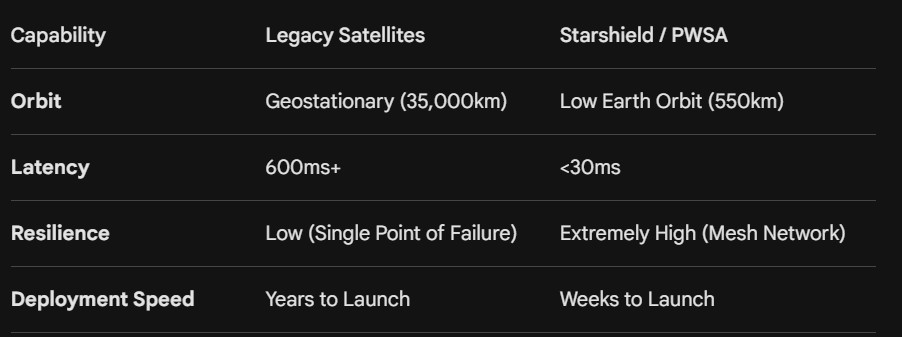
The most significant shift in defense strategy is the move from “fragile” to “resilient” networks. Traditional military satellites are “fat targets”—meaning a single anti-satellite (ASAT) missile could blind an entire theater of operations.
Starshield changes the calculus. By deploying thousands of small, interconnected satellites, SpaceX creates an “unkillable mesh.” If an adversary destroys ten or even a hundred satellites, the rest of the network automatically reroutes data. In the eyes of the US Space Force, Starshield represents the first truly attritable space asset—a network that can survive a full-scale orbital conflict.
The SDA and the PWSA Partnership
The US Space Development Agency (SDA) has aggressively integrated SpaceX into its Proliferated Warfighter Space Architecture (PWSA). By early 2026, SpaceX has secured multi-billion dollar contracts to provide the “transport layer” for this new military backbone.
Global Implications: China and Russia’s “Space Barrier”
The rise of Starshield has sent alarm bells ringing in Beijing and Moscow. Chinese military analysts have openly discussed the “Starlink Threat,” noting that the sheer volume of SpaceX satellites makes traditional jamming or kinetic strikes ineffective.
Strategic intelligence reports suggest that Russia is exploring nuclear space-based weapons specifically to counter this decentralized threat. However, the maneuverability and rapid replacement capability of Starshield mean that any attempt to “clear the skies” would be economically and tactically futile for the aggressor.
Strategic Verdict: The “Space-as-a-Service” Monopoly
For followers of defense news, the most intriguing aspect of Starshield is the shift in power. SpaceX now holds a near-monopoly on the logistics of orbital warfare. Elon Musk’s company is not just building hardware; it is providing a “Space-as-a-Service” model that allows the US and its allies to deploy new capabilities at the speed of software updates.
In the 21st century, space supremacy belongs to the entity that can launch the fastest and fail the least. Through Starshield, SpaceX has ensured that the “High Ground” is no longer just a place, but a resilient, digital shield surrounding the planet.
Editor’s Note: This analysis is based on current Space Force procurement data and SpaceX mission manifests for 2025-2026. Defense & Tech will continue to monitor the classified launches of the Starshield constellation.
React