
Slovenia Breaks EU Ranks with Total Israel Arms Ban: Where Do Other Nations Stand?



 React
React
In a significant departure from European Union consensus, Slovenia has become the first EU member state to impose a total ban on the export, import, and transit of military equipment to and from Israel. The decision, announced by the Slovenian government, cites grave concerns over the humanitarian crisis in Gaza and condemns the “internal disputes” within the EU that have prevented a unified continental response.
While the move is largely symbolic—as Slovenia has not issued new export licenses since October 2023—it sets a political precedent that increases pressure on Tel Aviv and highlights a growing fracture in Western defense policy.
The Slovenian Stand: Beyond Exports
Unlike other nations that have merely limited sales, Slovenia’s ban is comprehensive. Minister of Foreign Affairs Tanja Fajon stated that “all measures are on the table,” including the suspension of association agreements and trade sanctions. The ban explicitly covers the transit and import of military goods, a move intended to complicate the logistics of Israeli military procurement within the European framework.
The Fractured European Landscape
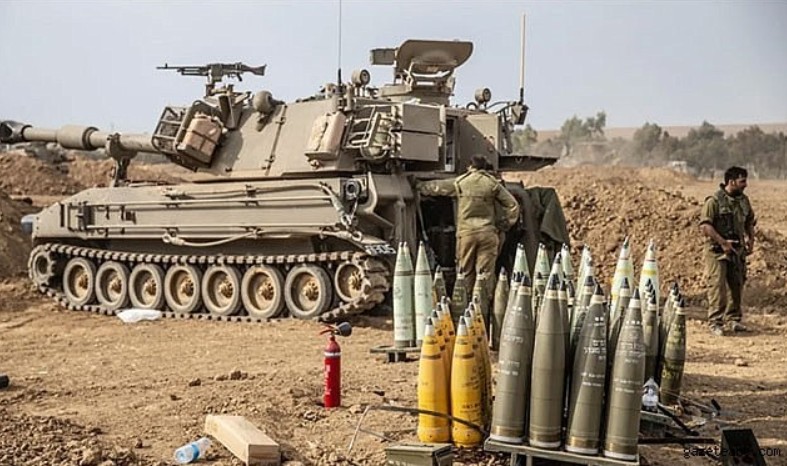
Slovenia’s move stands in stark contrast to the rest of Europe, where military trade continues under a patchwork of regional restrictions and legal challenges:
-
The Netherlands: In February 2024, the Hague Court of Appeal intervened to cancel the export of F-35 fighter jet parts to Israel, citing a “clear risk” of violations of international humanitarian law.
-
Belgium: Following the 2008-2009 conflict, Belgian regions formally banned arms exports to Israel. However, “dual-use” technologies continue to slip through. Reports indicate that drone control screens—manufactured as general technology—were recently exported and utilized in UAVs involved in Gaza operations.
-
Italy: While Rome has suspended new export licenses, existing contracts signed before October 7, 2023, remain active. This includes the supply of parts for M-346 advanced trainer aircraft used by the Israeli Air Force.
The Supply Giants: USA and Germany
Despite individual European bans, Israel’s primary supply lines remain intact. According to data from the Stockholm International Peace Research Institute (SIPRI), the United States accounts for two-thirds of Israel’s military imports, followed by Germany at approximately 30%.
Berlin’s exports are primarily focused on high-end naval assets, including frigates and torpedoes, as well as components for maritime systems. Together with the UK and Italy, these nations form the backbone of Israel’s military-industrial supply chain in Europe.
The Legal Framework and the “Embargo” Deadlock
The 2013 Arms Trade Treaty (ATT) prohibits states from transferring weapons that could be used to commit genocide or crimes against humanity. However, a formal EU-wide embargo requires a unanimous vote in the EU Council. Analysts at Defense & Tech suggest such a move is unlikely, as staunch supporters of Israel—including Germany, Hungary, and the Czech Republic—are expected to block any collective sanction.
As Slovenia moves forward alone, the debate over “dual-use” technology and the fulfillment of pre-existing contracts continues to test the boundaries of international law and European defense ethics. For now, the “Slovenian Model” remains an isolated case in a continent still deeply divided over its role in the Middle Eastern theater.
Editor’s Note: This report will be updated as new legal challenges to arms export licenses emerge in national courts across Europe.
React