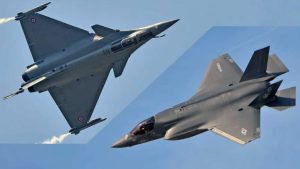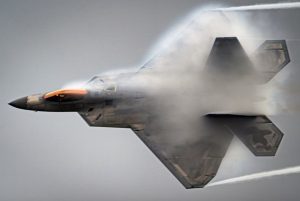

F-35, F-15, and A-10: Is American Aerial Invincibility Waning?


By Abdullah Ağar
Defense & Security Expert
In the wake of an F-35 incident… what does it truly signify when the United States loses an F-15E Strike Eagle and, shortly after, an A-10 Thunderbolt II?
On Friday, news broke in rapid succession regarding the loss of several U.S. air assets, specifically the F-15E and A-10. Throughout the 36 days of this ongoing conflict, we have witnessed, heard, or seen claims of various tankers, Early Warning aircraft, strategic UAVs, and fighters—the very instruments of U.S. strategic superiority—being struck at their bases, suppressed during missions, or removed from the “game” entirely.
The critical question is this: Do these losses point to a systematic, verified reality, or are they merely artifacts of the “fog of war,” information warfare, and psychological operations? While we seek the objective truth, in modern warfare, perception is as potent a tool for strategic impact as physical loss. We must remain vigilant; modern war loves to infiltrate our minds, manage our biases, and weaponize our conclusions.
The Erosion of Systemic Reliability
The loss of three F-15s over Kuwait due to friendly fire—coupled with those struck while grounded—presents a logistical and cost burden for the U.S. However, the aircraft downed by Iranian military capabilities represent a far more profound set of challenges:
-
A crisis of Strategic Superiority.
-
A challenge to Established Doctrine.
-
A crack in Technological Dominance.
-
A potential failure in Strategic Intelligence.
-
And ultimately, a dilemma in Strategic Decision-Making.
The core issue here is not “platform loss,” but the erosion of systemic reliability. If these losses indicate a chain-link model, it is not just the aircraft being suppressed; it is the breaking of the U.S. “Kill Chain”—the cycle of Find, Fix, Track, Target, Engage, and Assess. If the kill chain is fractured, even the most advanced aircraft becomes blind, deaf, and isolated.
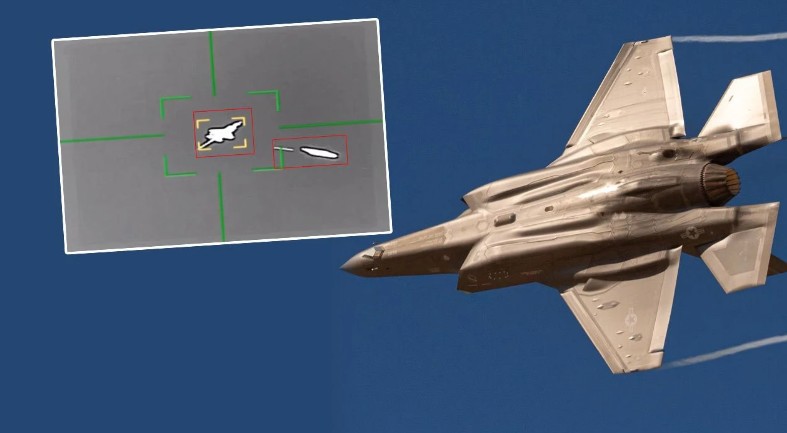
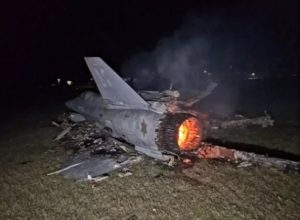
This crisis was triggered most significantly by an F-35 Lightning II making an emergency landing under fire. This was followed on Friday by the downing of an F-15E Strike Eagle—the heavyweight of the U.S. tactical fleet—by Iran.
Discarding the noise of the fog of war—claims of F-16s or the losses incurred during the rescue operation for the F-15 pilot—the neutralization of just these two platforms (F-35 and F-15) stands as the most significant military event of this war to date. Why? Because the U.S. global strategic strike capability and deep-strike power (alongside the F-22 Raptor) rest entirely on these pillars. These platforms are the carrying columns of the claim that U.S. power is not just “accessible,” but “untouchable.”
If Washington cannot find a solution, it faces a forced shift in doctrine and a future defined by uncertainty.
The Pressure to Adapt
For the USAF (U.S. Air Force), this is not necessarily a total collapse, but it is an undeniable pressure for “forced adaptation.” It is not a defeat, but it is a “cracking of the invincibility narrative.”
The likely U.S. reflex will be to:
-
Identify the vulnerability.
-
Update the doctrine.
-
Integrate new technological counters.
In this context, stealth alone will no longer be viewed as a sufficient initiative. “Stand-off” capabilities (firing from outside the danger zone) will dominate the agenda. Electronic warfare, networked systems, and autonomy will take center stage. We may see a shift where “manned platforms move back, and distributed, autonomous systems move forward.” The evolution will be dictated by the depth and scale of the threat.
Anatomy of the F-15E Strike Eagle
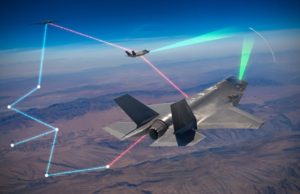
What is an F-15E Strike Eagle? It is far more than a conventional fighter. It is a “miniature air operation system” in its own right:
-
It provides absolute air superiority.
-
It is a relentless air-to-air hunter.
-
It executes deep-strike missions against strategic ground targets.
-
It possesses elite Electronic Warfare (EW) capabilities.
-
It is built for low-altitude penetration and all-weather operations.
The fall of an F-15E is the fall of a system. However, its vulnerabilities are clear: it lacks stealth and is heavy. It is susceptible to integrated systems like the S-300, S-400, Bavar-373, and TOR M-1. Iran’s ability to use these systems in a layered, “Counter-Air Architecture”—combining radar, passive sensors, and IR tracking—suggests a high level of systemic coordination. It also raises the question: is there clandestine support from Russia or China? If so, the war is no longer about individual platforms, but about the clash of synchronized strategic minds.
The A-10 and the “Death Zone”
The downing of an A-10 Thunderbolt II (Warthog) is, frankly, simpler to achieve than hitting an F-35 or F-15. The Warthog is a flying tank, a 30mm GAU-8 Avenger cannon with wings, designed for the “Death Zone.” It flies low and slow (700 km/h) right in the teeth of MANPADS and short-range air defenses.
What is shocking is not that an A-10 was hit, but that it was sent into a “Death Zone” without knowing the air defense threat. No commander sends an A-10 into a saturated missile environment. Its armor is for bullets, not guided missiles.
This points to a failure in the decision-making center:
-
Intelligence failure?
-
Electronic blindness?
-
Overconfidence?
-
Or a desperate need for Close Air Support (CAS) despite the risk?
The answer to these questions reveals the health of the U.S. decision-making algorithm.
Conclusion: The End of Absolute Hegemony?
If this pattern continues, we are witnessing the fracturing of U.S. air superiority across all layers:
-
High Layer (Stealth): F-35 suppressed.
-
Middle Layer (Strike): F-15E/F-16 suppressed.
-
Low Layer (CAS): A-10/AC-130 suppressed.
This challenges the entire NATO air power paradigm. For the first time, the assumption that the U.S. “owns the sky under all conditions” is being tested and found wanting.
The real loss for the U.S. and Israel is not the hardware; it is the loss of control and the shattering of the aura of invincibility. If this loss persists, the paradigm of strategic dominance that emerged after the 1991 Gulf War may officially be reaching its end.
One final thought: While the U.S. takes these controversial losses in a war pushed by Netanyahu, Israel has reportedly not lost a single aircraft. What do CENTCOM, the Pentagon, and the Trump administration think of this disparity? Perhaps the real question is: Are two different realities being lived in the same war?
Respectfully,
Abdullah Ağar