How Big Is Russia’s Navy? Fleets, Ships and Submarines
Russia’s navy has about 67 submarines and roughly 220 surface warships in 2026, which makes it the third-largest fleet in the world after those of China and the United States. The numbers are less impressive than they look: most of the surface ships are small, and many large ones date from the Soviet era.
The navy’s strength is under water, and its recent record on the surface is poor. This guide explains what ships Russia has, where they are based, what the Black Sea Fleet has lost to Ukraine and what Russian shipyards are building.
How big is Russia’s navy?
Open-source fleet lists count about 67 submarines and 222 surface warships, including vessels in reserve or under repair. The navy has about 120,000 personnel, according to IISS estimates, and Global Firepower ranks it third in the world. Our own ranking is in the top 10 navies.
| Type | Number | Notes |
|---|---|---|
| Ballistic missile submarines | 13 | Borei and Delta IV classes |
| Nuclear cruise missile and attack submarines | About 23 | Yasen, Oscar II, Akula and older classes |
| Diesel-electric submarines | About 20 | Mostly Kilo class |
| Aircraft carriers | 1 | Admiral Kuznetsov, not operational |
| Battlecruisers and cruisers | 4 | Two Kirov class, two Slava class |
| Destroyers | About 8 | Udaloy class |
| Frigates | About 12 | Including three Admiral Gorshkov class |
| Corvettes and small missile ships | About 80 | Steregushchiy, Buyan-M, Karakurt and Soviet-era types |
| Large landing ships | About 17 | Ropucha and Ivan Gren classes |
Russia’s four fleets and one flotilla
Geography splits the navy into separate forces that cannot easily reinforce each other.
| Fleet | Headquarters | Main role |
|---|---|---|
| Northern Fleet | Severomorsk | Largest fleet. Most ballistic missile submarines, access to the Atlantic |
| Pacific Fleet | Vladivostok | Second in size. Submarine base at Vilyuchinsk in Kamchatka |
| Baltic Fleet | Kaliningrad | Small ships and coastal defense, now facing a NATO-ringed sea |
| Black Sea Fleet | Sevastopol, now largely at Novorossiysk | Kalibr strikes on Ukraine, heavily damaged |
| Caspian Flotilla | Kaspiysk | Small missile ships able to fire Kalibr |
Submarines, the navy’s real strength
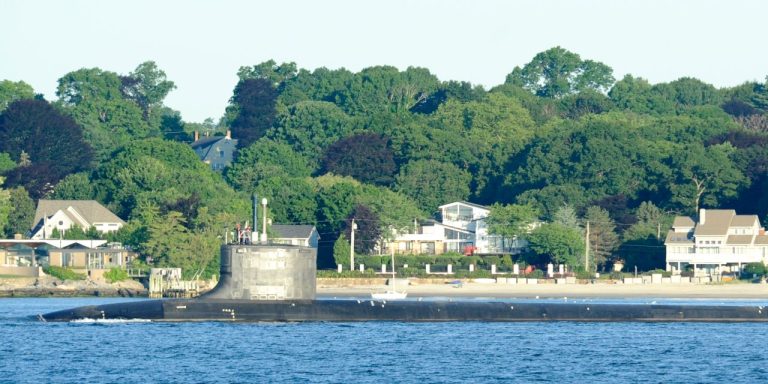
Russia spends most of its naval budget on submarines, and it shows. Eight modern Borei-class boats carry the sea-based part of the nuclear deterrent. The Yasen-M attack submarine is quiet enough to worry NATO planners and carries Kalibr, Oniks and Zircon missiles. How it compares with the American equivalent is covered in Virginia class vs Yasen-M.
Improved Kilo-class diesel submarines are cheap, quiet in coastal waters and have fired Kalibr missiles at Ukraine from the Black Sea. For a global comparison see our top 10 attack submarines.
Surface ships, few large and many small
Russia has not completed a new surface warship larger than a frigate since the Soviet collapse. Its big ships are aging: the carrier Admiral Kuznetsov has not sailed since 2017, one of the two nuclear-powered Kirov-class battlecruisers is laid up and the other, Admiral Nakhimov, has only recently begun sea trials after a refit lasting more than two decades.
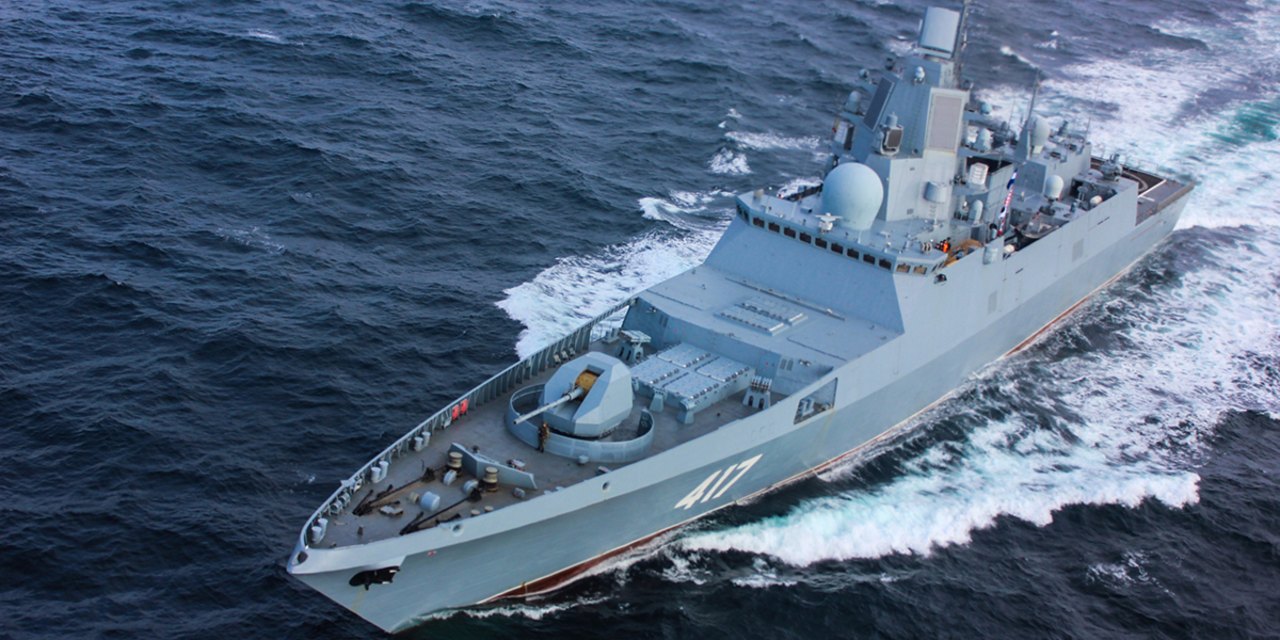
The newer fleet is made of frigates and corvettes that carry heavy missile loads for their size. The Admiral Gorshkov class is the most capable, with air defense missiles and 16 or more launch cells for Kalibr, Oniks or Zircon missiles, but only three are in service after two decades of work. Corvettes of under 1,000 tonnes can fire the same Kalibr cruise missiles.
What has the navy lost in the Black Sea?
More than any navy since 1945, and to an opponent with almost no warships. Ukraine sank the Black Sea Fleet’s flagship, the cruiser Moskva, with anti-ship missiles in April 2022. It has since used cruise missiles, naval drones and, in December 2025, an underwater drone to hit ships and a submarine in port.
Ukraine’s defense ministry listed 33 vessels destroyed or seriously damaged by April 2026 and estimated that about 30 percent of the fleet’s combat ships had been put out of action. The fleet withdrew from Sevastopol to Novorossiysk, which has also come under drone attack. Ukraine was able to reopen its grain export route without owning a navy.
What is Russia building?
Submarines first. New Borei-A and Yasen-M boats continue to arrive from the Sevmash yard at a rate of about one a year each. On the surface, shipyards are building more Gorshkov-class frigates and small missile ships, while two large amphibious assault ships under construction at Kerch are years behind schedule.
Vladimir Putin said in April 2025 that 8.4 trillion rubles would be spent on new ships over the following decade. Russian shipbuilding has struggled with sanctions, a shortage of skilled workers and the loss of Ukrainian-made engines, and the state bank VTB took over management of the United Shipbuilding Corporation in 2023. The wider force is described in how strong Russia’s military is.
Frequently asked questions
How many ships does Russia’s navy have?
About 67 submarines and 222 surface warships, according to open-source fleet lists for 2026, including vessels in reserve or refit.
Is Russia’s navy bigger than the US Navy?
No. It has a similar number of hulls if small craft are counted, but far fewer large ships and much less tonnage. It has no operational aircraft carrier against eleven American ones.
How many fleets does Russia have?
Four fleets, the Northern, Pacific, Baltic and Black Sea, plus the Caspian Flotilla.
What happened to the Black Sea Fleet?
Ukraine has destroyed or damaged about a third of its combat ships, including the flagship Moskva, and forced the rest to leave Sevastopol.
What is Russia’s most powerful warship?
The nuclear-powered battlecruiser Admiral Nakhimov, which is returning to service after a long refit. The most modern are the Admiral Gorshkov-class frigates.
- Wikipedia – List of active Russian Navy ships: en.wikipedia.org
- IISS – The Military Balance 2026: iiss.org
- Ministry of Defence of Ukraine – Russia’s largest losses in the Black Sea and the Sea of Azov (April 2026): mod.gov.ua
- Bulletin of the Atomic Scientists – Russian nuclear weapons, 2026: thebulletin.org
- Global Firepower – 2026 Military Strength Ranking: globalfirepower.com