V-280 Valor vs UH-60 Black Hawk Comparison and Verdict
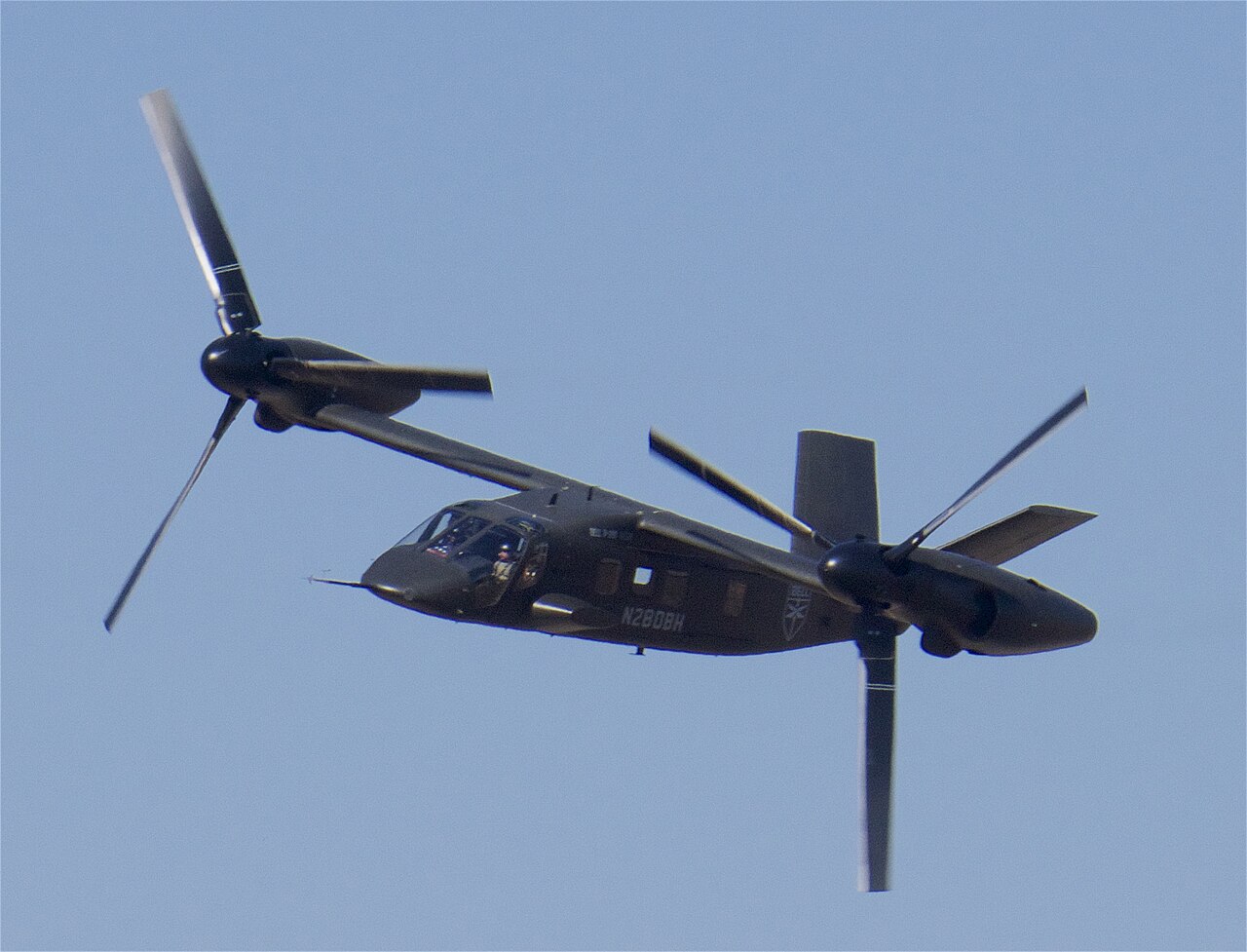
The V-280 Valor vs UH-60 Black Hawk comparison comes down to one number, speed: Bell’s tiltrotor cruises at roughly 280 knots, about twice as fast as the Black Hawk’s 150 knots, and that gap is why the US Army chose it as the basis of its future long-range assault aircraft. The Black Hawk, however, is a proven, mass-produced workhorse with more than 4,000 built.
V-280 Valor vs UH-60 Black Hawk specs
| Parameter | Bell V-280 Valor | Sikorsky UH-60M Black Hawk |
|---|---|---|
| Type | Tiltrotor with fixed wing and tilting rotors | Conventional twin-engine utility helicopter |
| First flight | December 2017 (demonstrator) | 1974 (original YUH-60A); UH-60M from 2000s |
| Crew and troops | 4 crew, up to 14 troops | 4 crew, up to 11 troops |
| Cruise speed | About 280 knots (Bell figure) | About 150 knots |
| Max speed | About 300 knots (Bell figure) | About 193 knots |
| Range | Combat radius of several hundred nautical miles; extended by refueling | Combat radius roughly 200 to 300 nautical miles |
| Engines | 2 x turboshaft engines driving tilting proprotors | 2 x T700-GE-701D turboshafts, about 2,000 shp each |
| Maximum takeoff weight | About 30,000 lb class (demonstrator) | About 22,000 lb |
| Status | Selected by the US Army; designated MV-75 in service plans | In production and service for decades |
What is the V-280 Valor
The V-280 is a third-generation tiltrotor built by Bell, part of Textron, with Lockheed Martin as a partner. Unlike the V-22 Osprey, whose engines tilt with the rotors, the V-280 keeps its engines fixed and tilts only the rotors and gearboxes. That design reduces heat on the ground, simplifies maintenance and leaves the cabin side doors clear for troops and door gunners.
It flew for the first time in December 2017 as part of the Joint Multi-Role technology demonstrator, and it reached more than 300 knots in testing. The Army selected Bell’s design in December 2022 for its Future Long-Range Assault Aircraft program, and the production aircraft has been given the designation MV-75. Sikorsky’s competing SB>1 Defiant helicopter lost the competition.
Why the Army chose the V-280 over the Black Hawk
The Army has argued that future wars in the Pacific will involve distances that no conventional helicopter can cover quickly. A Black Hawk would need many hours to cross the distances between island airfields, while a tiltrotor can cover them in roughly half the time. Speed also shortens exposure to air defenses, which the Army now considers a primary threat to low-flying helicopters.
Importantly, the V-280 is meant to replace the Black Hawk gradually rather than immediately. The Army’s Black Hawk fleet is large and will keep flying for years. Lockheed Martin owns Sikorsky, so the Black Hawk line remains a substantial business for it.
Strengths and weaknesses of each aircraft
| Aircraft | Strengths | Weaknesses |
|---|---|---|
| V-280 Valor | Roughly double the speed, much greater range, large cabin, modern digital design | Unproven in service, higher expected cost and complexity, tiltrotor maintenance demands |
| UH-60M Black Hawk | Proven, large fleet, cheap to operate, thousands of mechanics and pilots, many variants | Slow and short-ranged compared with new designs, old basic airframe |
The V-280’s weaknesses are less about physics and more about risk. Tiltrotors have a mixed safety history, including early V-22 accidents, and they demand careful maintenance of the gearbox and rotor systems. The Black Hawk benefits from 40 years of incremental refinement and an enormous logistics tail.
Which is better by mission profile
For long-distance air assault, medical evacuation across wide areas and rapid reinforcement in the Pacific, the V-280 is the better choice. For utility work, low-cost transport, disaster response and operations in rough, confined terrain, the Black Hawk remains hard to beat. Attack helicopters such as the AH-64 Apache fill a different role altogether and will work alongside either aircraft.
The verdict is therefore not that one aircraft wins, but that they serve different wars. The Army is betting that the next fight will reward speed and reach, and it is paying for a fleet that can deliver both.
V-280 vs UH-60 frequently asked questions
Is the V-280 faster than the Black Hawk?
Yes. Bell cites about 280 knots cruise versus roughly 150 knots for the UH-60M.
Will the V-280 replace the Black Hawk?
Gradually. The Army plans to field it alongside and then in place of part of the Black Hawk fleet.
What is the MV-75?
The designation reported for the US Army’s production tiltrotor derived from the V-280.
Who builds the V-280 and the Black Hawk?
Bell, a Textron company, builds the V-280. Sikorsky, a Lockheed Martin company, builds the Black Hawk.
How is the V-280 different from the V-22 Osprey?
Only its rotors tilt, not the engines, which simplifies design and maintenance.
- Bell and Sikorsky manufacturer product literature
- US Army public statements on Future Long-Range Assault Aircraft
- Wikipedia – Bell V-280 Valor (accessed October 2026)
- Defence & Tech reporting on Army aviation