Unmarked Russian Mi-171E Operated by Secretive US Army Unit Spotted in Arizona
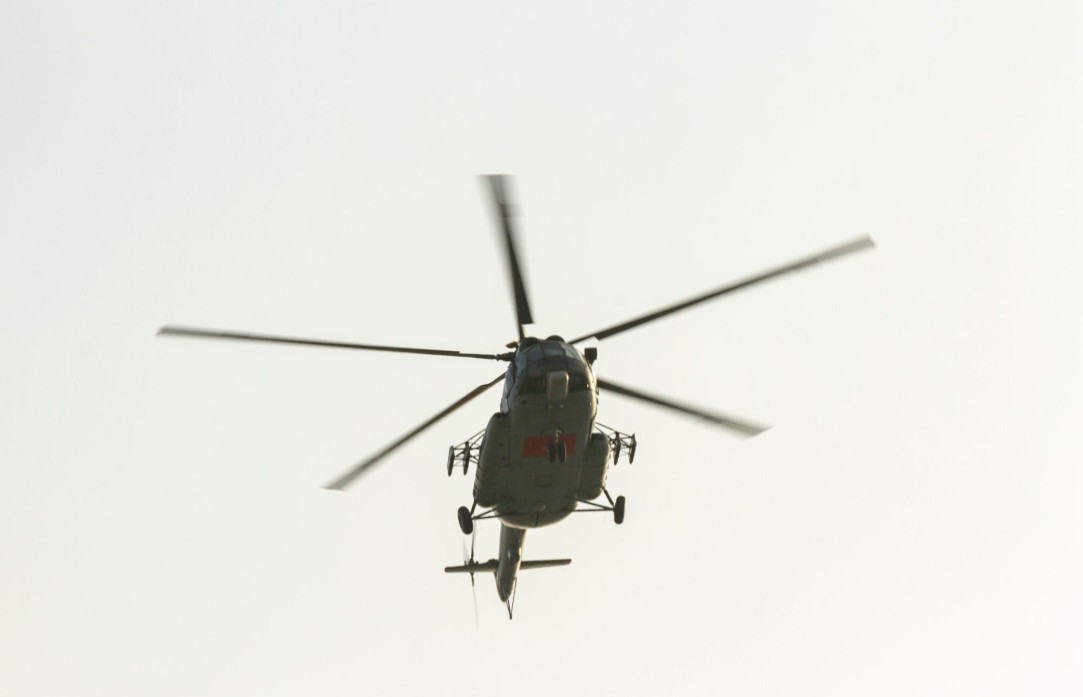
In a rare glimpse into the Pentagon’s covert aviation capabilities, a Russian-made Mi-171E helicopter—operated by the highly secretive US Army Aviation Technology Office (ATO)—has been spotted flying over Arizona. Known for providing low-visibility and deniable airlift for the Joint Special Operations Command (JSOC), the ATO utilizes foreign airframes to conduct missions where standard US military markings are a liability. Why is the US military flying Russian hardware in 2026, and what does this sighting reveal about modern covert doctrine?
The Aviation Technology Office: JSOC’s Ghost Fleet
Captured on January 31, 2026, near Phoenix, the footage shows an Mi-171E bearing the serial number 14-0184 returning to base after a localized flight. While an unmarked helicopter in the American Southwest might easily be dismissed, OSINT analysts quickly linked the airframe to the Aviation Technology Office (ATO).
Operating deep in the shadows, the ATO is arguably the most closed-off aviation unit within the US Army. Its primary mandate is to support JSOC missions that require absolute identity concealment and a minimal footprint. To achieve this, the ATO maintains a diverse and highly unconventional inventory. Alongside Russian Mi-17 and Mi-171 variants, the unit operates civilian-style Bell 407s, Bell 429s, MD-500s, and fixed-wing Beechcraft King Airs.
The Strategic Value of the Mi-171E
The choice of the Mi-171E—an export variant of the legendary Soviet Mil Mi-8/Mi-17 family—is a deliberate tactical calculation rather than a procurement anomaly.
| Feature | Tactical Capability | Doctrinal Advantage |
| Origin | Russian-manufactured (Mil Moscow) | Blends perfectly into Middle Eastern and African airspace. |
| Payload | 27 personnel or 4,000 kg cargo | Ideal for inserting or extracting heavy JSOC teams. |
| Visual Identity | Unmarked / Civilian paint schemes | Secures absolute plausible deniability for Washington. |
| Durability | High tolerance for austere environments | Can operate effectively without standard US logistics chains. |
The Doctrine of Plausible Deniability
In modern asymmetric warfare, attribution is often just as dangerous as the kinetic strike itself. By utilizing a helicopter that is ubiquitous in the arsenals of over 60 countries—including many nations hostile to the United States—the ATO creates a critical layer of plausible deniability.
If an ATO Mi-171E is spotted flying low over a contested border in the Middle East or Africa, local observers are far more likely to assume it belongs to regional forces or private contractors rather than elite US operators. The recent sighting in Arizona strongly suggests that JSOC is actively training for upcoming operational profiles that require precisely this type of “deniable” insertion capability in complex geopolitical theaters.