Top 10 Torpedoes in Service in 2026
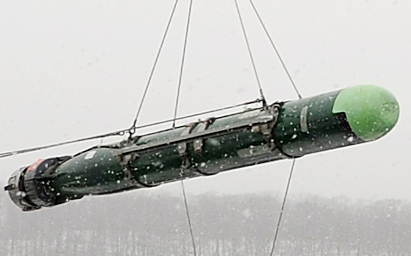
The top 10 torpedoes in service in 2026 are led by the US Mk 48 ADCAP, a 533 mm heavyweight with a warhead of roughly 290 kilograms that has armed American submarines since the 1970s. Most of the list is heavyweights for submarines, but two lightweight weapons for ships and aircraft earn places because they set the standard in their class.
How this ranking works
The ranking weighs five factors: guidance and countermeasure resistance, range and speed where published, warhead lethality, operational maturity and operator base, and the weapon’s evidence from trials and combat. Performance data for torpedoes is among the most secret in any arsenal, so figures here are approximate and Russian and Chinese numbers are treated as manufacturer claims, not verified facts. Lightweights and heavyweights are ranked together, with heavyweights favored slightly because they threaten larger targets. Consistent with this site’s editorial policy, companies and platforms headquartered in Israel are excluded from consideration.
Top 10 torpedoes in service ranking table
| Rank | Torpedo | Country | Type |
|---|---|---|---|
| 1 | Mk 48 ADCAP Mod 7 | United States | 533 mm heavyweight |
| 2 | Spearfish | United Kingdom | 533 mm heavyweight |
| 3 | DM2A4 Seehecht | Germany | 533 mm heavyweight |
| 4 | F21 Artemis | France | 533 mm heavyweight |
| 5 | Black Shark Advanced | Italy | 533 mm heavyweight |
| 6 | MU90 Impact | France, Italy, Germany | 324 mm lightweight |
| 7 | Mk 54 | United States | 324 mm lightweight |
| 8 | Type 18 | Japan | 533 mm heavyweight |
| 9 | UGST Fizik | Russia | 533 mm heavyweight, manufacturer claims |
| 10 | Yu-6 | China | 533 mm heavyweight, reported |
The top ten, one to ten
1. Mk 48 ADCAP Mod 7 (United States)
Fired from every American attack submarine, the Mk 48 carries a heavy warhead and a wire-guided, then acoustically homing, seeker. Reported speeds exceed 50 knots and depths go past 800 meters. Its combination of size, upgrades and large numbers sets the benchmark, and it is also carried by Australia and other allies.
2. Spearfish (United Kingdom)
The Royal Navy’s heavyweight, built by BAE Systems, is reported to combine high speed, above 60 knots, with a large warhead and a wire-guided control link. A recent upgrade program refreshed its warhead and electronics for the Astute class.
3. DM2A4 Seehecht (Germany)
Made by Atlas Elektronik, part of the group in our TKMS profile, it uses fiber-optic guidance that lets operators steer it with high-fidelity sonar data. Reported range is tens of kilometers, and it is widely exported to European and Asian customers.
4. F21 Artemis (France)
Naval Group’s newest heavyweight is designed for the Barracuda class and for export submarines. It uses a multi-mode seeker and an electric propulsion system, with reported ranges beyond 50 kilometers at high speed, as summarized in our Naval Group profile.
5. Black Shark Advanced (Italy)
Built by Leonardo’s underwater systems unit, it is a fiber-optic-guided heavyweight with a reported range of tens of kilometers and modern countermeasure filters. It equips several European and Asian submarines.
6. MU90 Impact (France, Italy, Germany)
The most widely exported modern lightweight, with a pump-jet drive and a shaped-charge warhead aimed at deep-diving submarines. Its broad user list, including several NATO members and Asia-Pacific navies, raises its ranking.
7. Mk 54 (United States)
The American lightweight torpedo for ships, helicopters and maritime patrol aircraft combines a legacy warhead with upgraded electronics from earlier programs. It is widely fielded with the US Navy and allies.
8. Type 18 (Japan)
Japan’s newest heavyweight, developed by Japanese industry for Soryu and Taigei class submarines, is reported to use an improved seeker and high-speed propulsion. Details are sparse, so its ranking is conservative.
9. UGST Fizik (Russia)
Russia’s modern 533 mm heavyweight is described by Russian sources as a wire-guided weapon with active and passive homing and a range of around 50 kilometers. These are manufacturer claims, and its effectiveness has not been demonstrated in open conflict.
10. Yu-6 (China)
China’s heavyweight is reported by Chinese state media to resemble Western designs in guidance and propulsion. Independent data is thin, and performance is treated here as a claim.
| Torpedo | Diameter | Guidance | Reported range or speed |
|---|---|---|---|
| Mk 48 ADCAP | 533 mm | Wire-guided, active and passive homing | Above 50 knots; range in the tens of kilometers |
| Spearfish | 533 mm | Wire-guided, active and passive homing | Above 60 knots, reported |
| DM2A4 | 533 mm | Fiber-optic guided, active and passive homing | Tens of kilometers, reported |
| F21 Artemis | 533 mm | Wire or fiber-optic, multi-mode seeker | Beyond 50 km, reported |
| MU90 Impact | 324 mm | Active and passive homing | Around 50 knots, reported |
| UGST Fizik | 533 mm | Wire-guided, homing | About 50 km, Russian manufacturer claims |
How do modern torpedoes work
A torpedo is a small, fast underwater vehicle with a seeker, a propulsion system and a warhead. Wire or fiber-optic guidance lets the launching submarine steer it using the boat’s sonar, which is described in our sonar explainer, before the torpedo’s own seeker takes over. Modern designs ping with active sonar and listen passively, and they can filter out decoys and noise makers. Electric propulsion is quiet, while thermal engines deliver higher speed and range.
Torpedo combat record
Combat use is rare. In 1982, the British submarine HMS Conqueror sank the Argentine cruiser General Belgrano with older Mark 8 torpedoes. In 2010, the South Korean corvette Cheonan was sunk by a torpedo explosion, which a multinational investigation attributed to North Korea, a claim Pyongyang denies. Because actual engagements are so few, rankings like this one lean on trials, design and operator base.
Top 10 torpedoes frequently asked questions
What is the best torpedo in the world?
The US Mk 48 ADCAP is widely regarded as the benchmark heavyweight, though data for rivals is limited.
What is the fastest torpedo?
Some heavyweights, such as the Spearfish, are reported to exceed 60 knots, but official numbers are rarely published.
How far can a heavyweight torpedo travel?
Reported ranges run from about 40 to over 50 kilometers, depending on speed.
What is the difference between a lightweight and heavyweight torpedo?
Lightweights are 324 mm and launched from ships and aircraft, while heavyweights are 533 mm and launched from submarines.
- Navy and manufacturer product literature (public)
- Jane’s-style open source references and national defense ministry releases
- Wikipedia – Mark 48 torpedo and related articles (accessed October 2026)
- Defence & Tech reporting