Top 10 Future Fighter Programs in 2026 Ranked
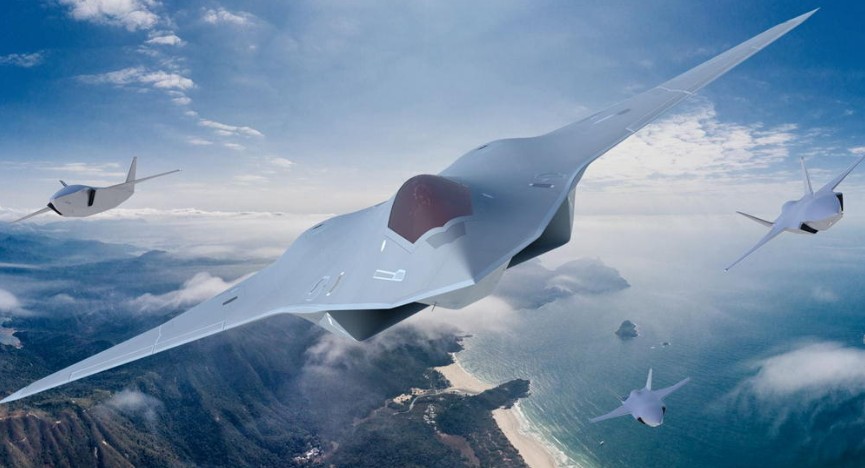
The top 10 future fighter programs of 2026 are led by the US Air Force’s F-47, with a first flight targeted for 2028, followed by the UK-Japan-Italy GCAP and the US Navy’s F/A-XX. This ranking orders the world’s next-generation combat aircraft efforts by funding, technical progress and realistic odds of reaching service, and it treats Russian and Chinese claims with caution.
How this ranking works
Programs are scored on four factors: confirmed funding and government commitment, demonstrated hardware, industrial strength of the teams, and a believable path to service entry. Paper studies rank below aircraft that have flown, and programs backed by contracts rank above those backed by announcements. For Chinese and Russian entries, performance and status information comes largely from state media, commercial imagery and manufacturer statements, so those entries are marked as unconfirmed and are placed conservatively. Consistent with this site’s editorial policy, companies and platforms headquartered in Israel are excluded from consideration.
Top 10 future fighter programs ranked
| Rank | Program | Lead nations | Status |
|---|---|---|---|
| 1 | F-47 (NGAD) | United States | Boeing selected in 2025; first flight targeted for 2028 |
| 2 | GCAP | UK, Japan, Italy | Joint development; service entry planned around 2035 |
| 3 | F/A-XX | United States (Navy) | Carrier fighter; contract reported awarded to Boeing |
| 4 | FCAS / SCAF | France, Germany, Spain | Fighter pillar in political difficulty; demonstrator planned |
| 5 | J-36 and related designs (unconfirmed) | China | Prototypes seen in imagery since late 2024; no official specifications |
| 6 | KAAN | Türkiye | Prototype flying; 5th-generation effort moving toward production |
| 7 | AMCA | India | Approved development; prototype expected later in the decade |
| 8 | KF-21 Boramae | South Korea, Indonesia | Flying and entering service; upgrades planned |
| 9 | Russian next-generation concepts (claims) | Russia | Manufacturer and state-media claims; hardware unconfirmed |
| 10 | Swedish next-generation fighter study | Sweden | Concept and partnership studies, no final decision |
The F-47 leads because it has the largest budget, the strongest industrial team and a contract already awarded. Its crewed stealth design is meant to fly with collaborative combat aircraft, a concept covered in our guide to the drone wingman race. Details of its performance are classified, and any figures circulating are speculation.
GCAP is second because three experienced partners share the cost and the schedule has political backing. The Navy’s F/A-XX follows, reported to have been awarded to Boeing in our coverage of the F/A-XX contract, although budget pressure could alter its timeline. FCAS sits fourth: the technology is promising, but disputes over workshare between French and German industry have put the fighter pillar in doubt.
China’s J-36 and related prototypes come fifth. Imagery shows large tailless aircraft flying, but specifications, engines and mission systems are unconfirmed. KAAN ranks sixth because a prototype is flying and Türkiye has industrial momentum, though it depends on foreign engines. India’s AMCA is seventh: funded and approved, yet years from a flying prototype. The KF-21 is proven and flying; it ranks lower only because it is a 4.5-generation aircraft, and readers can compare it with KAAN in our KF-21 vs KAAN comparison.
What makes a sixth-generation fighter
There is no official definition, but the term usually describes an aircraft with very low observability across more radar bands, an adaptive-cycle engine that improves range, advanced sensor fusion, and the ability to command uncrewed wingmen. Some programs emphasize artificial intelligence for decision support, and others emphasize open software architectures so that weapons can be added without redesigning the aircraft.
| Feature | Purpose |
|---|---|
| Adaptive-cycle engine | Better range and thermal management for high-power sensors |
| Collaborative combat aircraft | Uncrewed wingmen extend sensors and weapons |
| Advanced low observability | Reduced detection by radar and infrared sensors |
| Open mission systems | Faster software and weapons upgrades |
| Integrated electronic warfare | Detect, jam and deceive enemy sensors |
Chinese and Russian future fighters, claims and unknowns
Two prototype families seen in Chinese imagery, often referred to as J-36 and J-50 by outside observers, suggest that China is also pursuing a next-generation design. Chinese authorities have not confirmed names, roles or specifications, so performance claims from social media and state-affiliated outlets should be treated as unverified. The same caution applies to Russian statements: officials have spoken of a future fighter and of an export-oriented light design, but public evidence of flying hardware is limited, and claimed capabilities are manufacturer statements.
For a view of where fielded aircraft stand today, see our top 10 fighter jets ranking.
Future fighter programs frequently asked questions
What is the F-47?
The US Air Force’s Next Generation Air Dominance fighter, awarded to Boeing in 2025, with a first flight targeted for 2028.
What is GCAP?
The Global Combat Air Programme, a UK, Japan and Italy fighter planned to enter service around 2035.
Is the J-36 confirmed?
No. Prototypes have been seen in imagery, but China has not published official specifications.
What is a sixth-generation fighter?
An informal label for next-generation aircraft with advanced stealth, new engines and the ability to control drone wingmen.
Which future fighter will enter service first?
Programs with flying prototypes, such as KAAN and KF-21, are closest, while the F-47 and GCAP target the 2030s.
- Official statements from the US Air Force, US Navy and GCAP partner governments
- Wikipedia – Sixth-generation fighter (accessed October 2026)
- Manufacturer and program literature
- Defence & Tech reporting on next-generation combat aircraft