Minuteman III Explained: America’s Only Land-Based ICBM, Range, Bases and Replacement
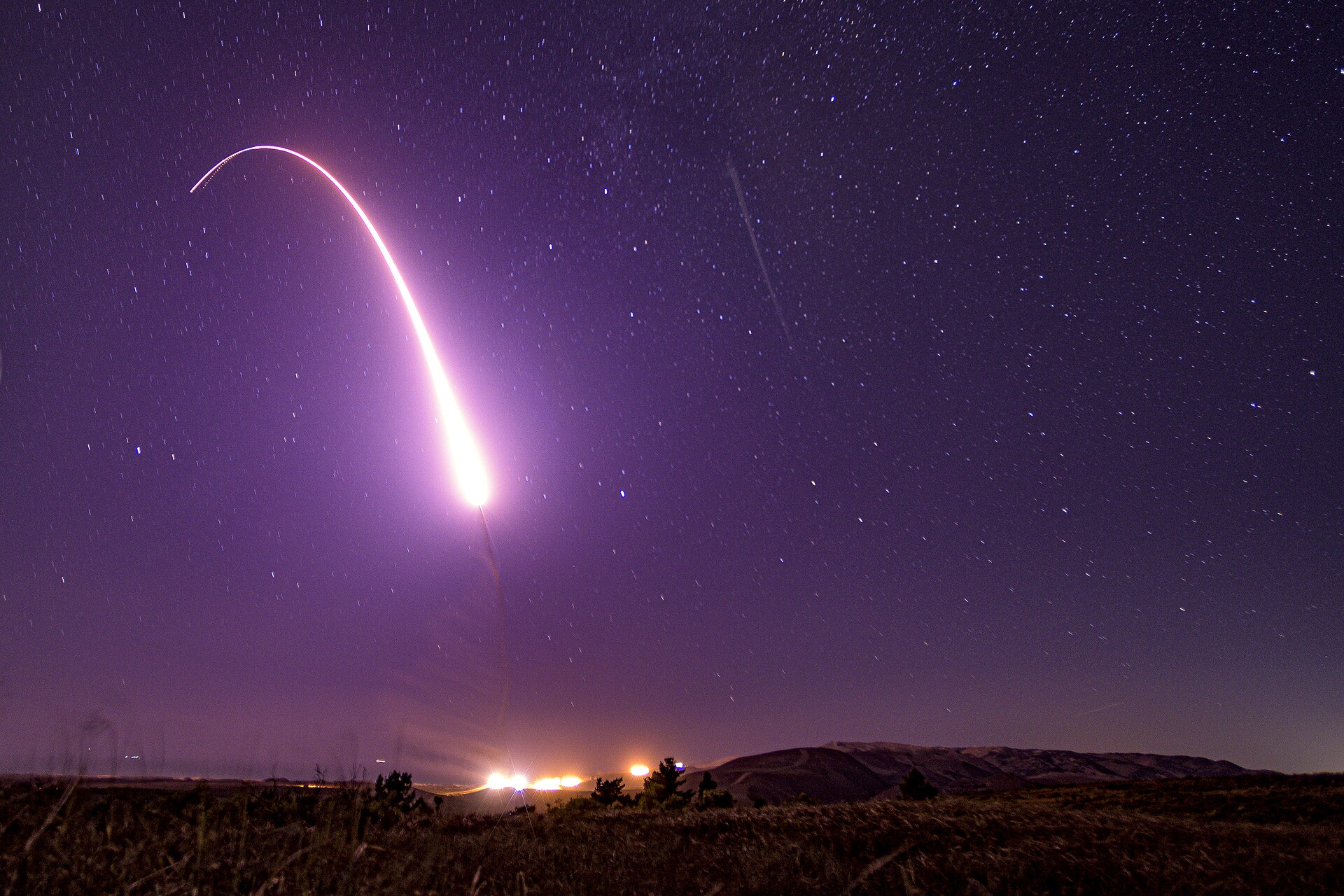

For more than half a century, hundreds of Minuteman missiles have waited in underground silos across the northern Great Plains, ready to launch within minutes. The LGM-30G Minuteman III is the only land-based intercontinental ballistic missile (ICBM) in the US arsenal, and because its replacement is delayed, it will have to serve far longer than anyone planned.
- Three-stage, solid-fuel ICBM; first deployed in 1970
- About 400 missiles deployed in silos, with 450 silos in total
- Range of more than 9,600 km (6,000 miles)
- Originally the world’s first ICBM with multiple independent warheads (MIRV)
- To be replaced by the LGM-35A Sentinel, now running years late
What is the Minuteman III?
The Minuteman III is a solid-fuel ICBM built by Boeing. Solid fuel means it can be stored ready to fire and launched within minutes, unlike older liquid-fuelled missiles. It entered service in 1970 as the first American missile able to carry multiple independently targetable re-entry vehicles, and it has been continuously upgraded with new motors, guidance and electronics.
Where are the missiles?
The missiles are spread across three Air Force bases: Malmstrom in Montana, Minot in North Dakota and F.E. Warren in Wyoming. Each wing controls 150 silos, with about 400 missiles loaded in total. Two-person crews in underground launch control centres stand alert around the clock.
Range and warheads
The Minuteman III can strike targets more than 9,600 km away, travelling at more than 20 times the speed of sound in the final phase. It carries W78 or W87 thermonuclear warheads. To comply with arms control limits under New START, the treaty that ran until February 2026, the missiles have been deployed with a single warhead each, although they can carry up to three.
Test launches
The Air Force regularly test-fires unarmed Minuteman IIIs from Vandenberg Space Force Base in California towards the Kwajalein Atoll in the Pacific. Missiles are pulled at random from operational silos to check reliability. These launches are announced in advance and are not linked to world events, although they often attract attention.
The Sentinel delay
The Minuteman III was meant to be replaced by the LGM-35A Sentinel around 2030. But the Sentinel programme breached cost limits in 2024, with its estimated cost rising to about $141 billion, and the first deployments slipped into the mid-2030s. As a result, the Air Force must keep Minuteman III operational well beyond its intended retirement, with extra maintenance and life-extension work.
Verdict
The Minuteman III is a remarkable example of an old system kept relevant through constant upgrades. But ageing silos, parts and infrastructure create growing risks. Its long service highlights both the strength of the US nuclear triad and the difficulty of modernising it on time.
Featured image: Staff Sgt. JT Armstrong / Public domain, via Wikimedia Commons