Ka-52 Alligator Specs, Weapons, Variants and Ukraine Record
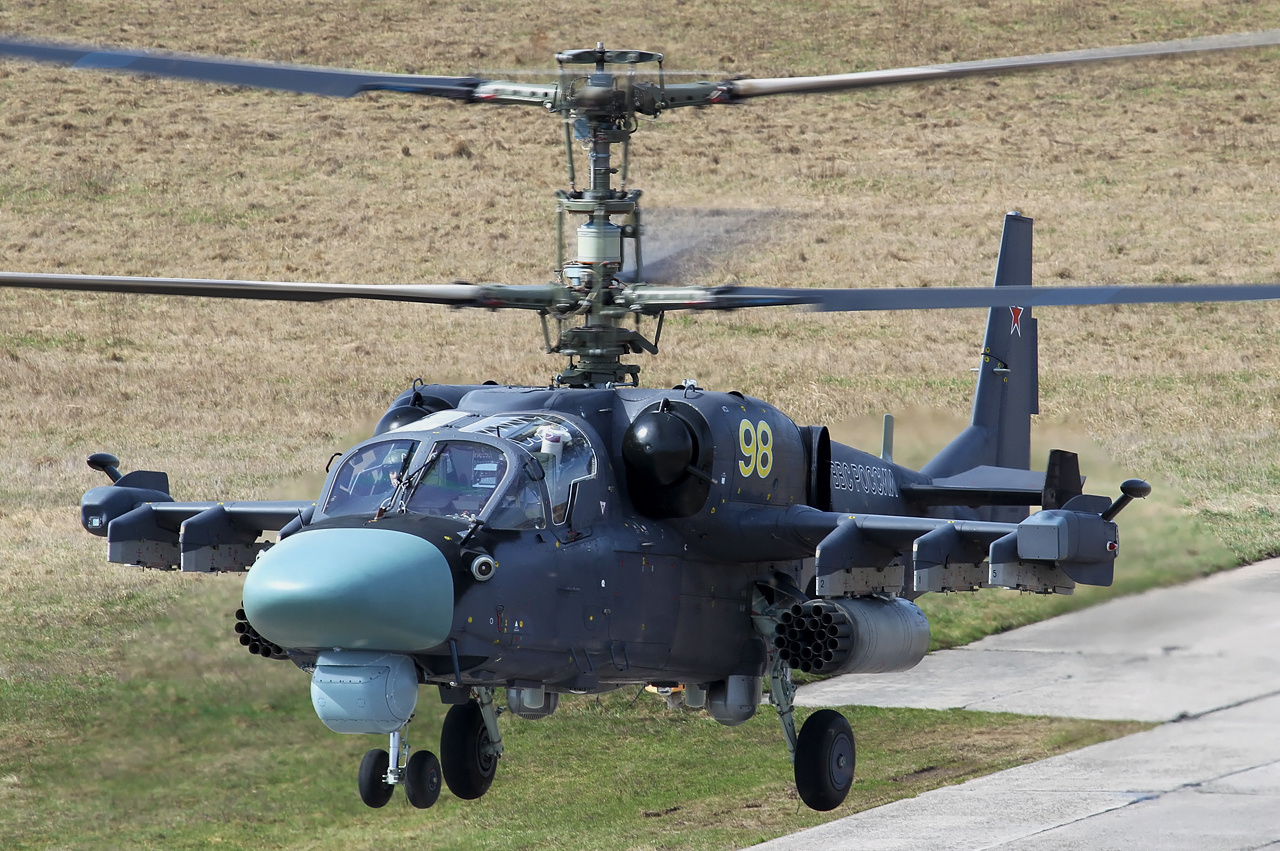
The Ka-52 Alligator is Russia’s twin-seat coaxial-rotor attack helicopter, rated by its manufacturer at about 300 km/h with a 30 mm cannon and up to 12 guided anti-tank missiles. It is the only attack helicopter in service with ejection seats, and its record in Ukraine has made it one of the most closely studied gunships of the decade.
What is the Ka-52 Alligator
The Ka-52, NATO reporting name Hokum B, is a development of the single-seat Ka-50 Black Shark built by the Kamov design bureau, now part of Russian Helicopters under Rostec. First flown in 1997, it entered Russian service in the early 2010s and is produced at the Progress plant in Arsenyev. The second crew member, sitting beside the pilot, was added to share the sensor and weapons workload.
The aircraft’s defining feature is its pair of counter-rotating coaxial rotors, which eliminate the need for a tail rotor, give exceptional agility and let the helicopter fly sideways or pivot on the spot. It also carries Zvezda K-37 ejection seats, with explosive charges that sever the rotor blades before the crew eject.
Ka-52 specifications
| Parameter | Value |
|---|---|
| Manufacturer | Kamov (Russian Helicopters), Arsenyev |
| Crew | 2, side by side |
| Rotor system | Coaxial, about 14.5 m diameter |
| Engines | 2 x Klimov VK-2500, roughly 2,400 shp each |
| Max takeoff weight | About 10,400 to 10,800 kg |
| Maximum speed | About 300 km/h, manufacturer claim |
| Ferry range | About 1,100 km with external tanks, manufacturer claim |
| Service ceiling | About 5,500 m |
| Gun | 30 mm 2A42 cannon, about 460 rounds |
Ka-52 weapons and variants
According to Russian manufacturer claims, the Ka-52 can carry Vikhr-M laser-beam-riding anti-tank missiles, Ataka-V missiles, S-8 and S-13 rockets, Igla-V air-to-air missiles and gun pods. The newer Ka-52M adds the LMUR missile, advertised by Russian sources at about 15 kilometers, together with upgraded avionics and a stronger datalink. The naval Ka-52K, built for Egypt’s cancelled Mistral-class ships, folds its blades for shipboard use.
For comparison with Western gunships, see our AH-64 Apache guide. The Alligator has no mast radar on standard models, which leaves it more reliant on optical targeting than the Apache’s Longbow.
Ka-52 in Ukraine
The Ka-52 was used heavily in the opening phase of the war, including in the assault on Hostomel airport near Kyiv in February 2022. Ukrainian officials reported several helicopters shot down by shoulder-fired missiles in those first days, a finding consistent with open-source loss counts. Those numbers are operator-reported and only partly confirmed by imagery.
Russia adapted. Crews shifted to standoff tactics, firing missiles and lofted unguided rockets from behind their own lines. During the 2023 counteroffensive, Russian sources claimed the helicopters destroyed many armored vehicles using the LMUR and Vikhr. Ukraine’s own reports, again operator-reported, also credit the type with heavy damage but acknowledge its growing vulnerability to drones and air defenses. Our MANPADS countermeasures explainer shows how such threats are countered.
Ka-52 operators
| Operator | Notes |
|---|---|
| Russia | Aerospace Forces and naval aviation; well over 100 delivered before 2022, plus wartime production |
| Egypt | Ordered 46 Ka-52K for Mistral ships in 2015; ships were never delivered and the status of the helicopters is unclear |
| Other prospects | Algeria and others were reported as possible customers, though sales are unconfirmed |
Export success has been limited, not least because of sanctions and the Ukraine losses. In our top 10 attack helicopters ranking the Alligator still places high for its agility and weapons reach.
Design strengths and weaknesses
Coaxial rotors remove the tail rotor, which is often the most fragile part of a helicopter in combat, and they deliver strong hover and low-speed agility. The layout also shortens the airframe and gives the crew a compact target profile. Against that, the rotor hub is complex, maintenance is demanding, and the side-by-side cockpit offers less protection from frontal fire than the tandem arrangement used by Western gunships.
The Ka-52 also carries armor around the cockpit and the engines, and the crew cabin is rated by Russian sources to resist 12.7 mm rounds, a manufacturer claim rather than a tested fact. Modern shoulder-fired missiles remain the main danger, which is why the newer M version adds improved infrared countermeasures.
Ka-52 frequently asked questions
What does Ka-52 Alligator mean?
Alligator is the Russian service name for the Ka-52, which NATO calls Hokum B.
Does the Ka-52 have ejection seats?
Yes, it is the only attack helicopter with them, using explosive bolts to shed the rotor blades first.
How many Ka-52s has Russia lost in Ukraine?
Open-source trackers count a large number of losses, though exact totals differ and are operator-reported.
How fast is the Ka-52?
The manufacturer quotes about 300 km/h, an unverified figure.
What is the difference between the Ka-52 and the Ka-50?
The Ka-50 is single-seat; the Ka-52 has two crew and an improved sensor suite.
- Russian Helicopters and Rostec product literature (manufacturer claims)
- SIPRI Arms Transfers Database
- Wikipedia – Kamov Ka-52 (accessed October 2026)
- Defence & Tech reporting