Military AI Targeting Explained, How It Works and Who Controls It
Military AI targeting is the use of machine-learning software to find, classify and prioritize targets across the six steps of the kill chain, and in most Western systems a human still approves the decision to fire. The technology is already routine in intelligence analysis, where algorithms scan drone video and satellite images far faster than people can, while the harder policy question is how much authority software should be given over the last step.
What is AI targeting
Targeting is the process of deciding what to hit and how. It begins with finding something of interest, continues through identifying it and ends with a weapon being cleared to engage. AI can assist at each stage, but the most mature uses are at the front of the chain, where vast amounts of sensor data must be sorted.
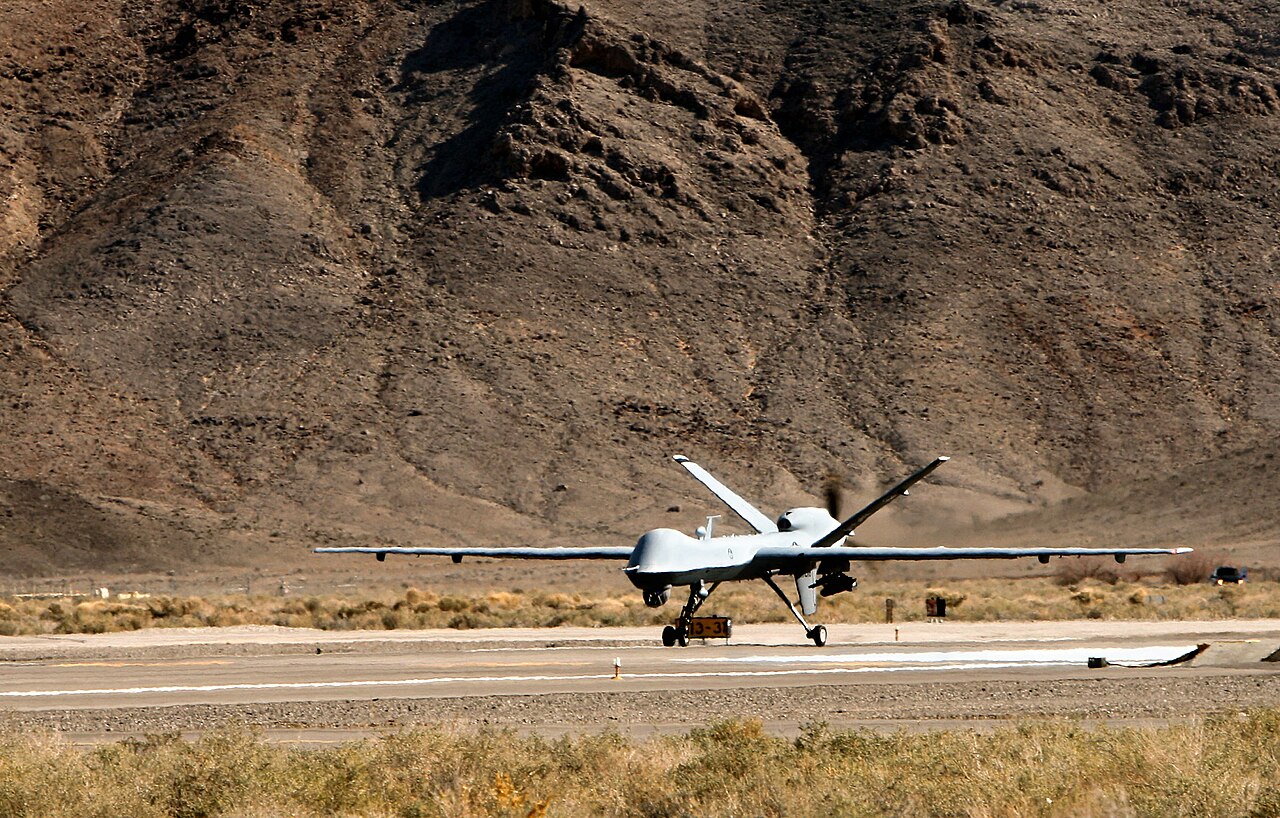
A single drone can record hours of video and a satellite constellation can image the same territory several times a day. No analyst team can watch it all. Computer vision models flag vehicles, launchers or ships and hand a short list to a human, compressing work that once took hours into minutes.
How AI targeting works
| Step | What happens | Typical AI role |
|---|---|---|
| Find | Detect something of interest | Object detection on imagery, video and radar |
| Fix | Pin down the location | Sensor fusion and geolocation |
| Track | Follow it over time | Multi-sensor tracking and pattern-of-life analysis |
| Target | Decide if it is a valid target and set priority | Decision support, ranked target lists |
| Engage | Choose a weapon and fire | Weapon-target pairing; human approval in most systems |
| Assess | Check the outcome | Automated battle damage assessment |
Training data decides quality. A model learns to recognize a tank by seeing thousands of labeled tank images under different lighting, weather and camouflage. When conditions drift away from what it has seen, accuracy can fall without warning, which is why operators treat outputs as recommendations that must be checked.
The same logic underpins sensing tools we have covered elsewhere, such as AESA radar, whose data streams feed many of these models.
AI decision support vs autonomous weapons
Two ideas are often confused. Decision support uses AI to advise a human, who remains responsible for the choice. Autonomous weapons select and engage targets without further human input once activated. The first is widespread. The second is narrower, but real examples exist, including loitering munitions that home on a target signature in their final seconds and air-defense systems that fire automatically against incoming missiles.
The line is blurry in practice. A drone operator who sees only an AI-generated box on a screen may approve quickly, and critics call this automation bias. Defenders respond that the operator still bears responsibility and often has better information than an unaided human. Our explainer on loitering munitions covers the drone side of this debate.
Who builds military AI targeting systems
| Program or company | Country | Focus |
|---|---|---|
| Project Maven and its successors | United States | Imagery analysis and targeting support; NATO acquired a version in 2025, per public announcements |
| Palantir | United States | Data integration and battlefield decision-support software |
| Anduril Lattice | United States | Sensor fusion and autonomy for uncrewed systems |
| Helsing | Germany | AI software for sensing and targeting, plus strike drones |
| Ukrainian situational-awareness platforms | Ukraine | Battlefield awareness; reported AI features are operator-reported |
The companies behind these tools are covered in our profiles of Palantir and Helsing. Ukraine has become the laboratory, with officials describing software that helps detect and prioritize targets for drone and artillery units. Those are government statements, and the real degree of automation is hard to judge from outside.
Risks, rules and human control
The core risks are familiar. Models can misidentify objects, particularly civilians or damaged equipment. Errors can spread at machine speed when one system feeds another. Adversaries can also spoof sensors or poison data. And faster decision cycles raise the risk of escalation, because there is less time for judgment.
On rules, the US directive requires commanders and operators to exercise appropriate levels of human judgment over the use of force, and dozens of states have backed a political declaration on responsible military AI. At the UN, discussions on lethal autonomous weapons have run for years without a binding treaty, and the Red Cross has urged states to set limits. Reasonable people disagree about how much control is enough.
Military AI targeting frequently asked questions
What is AI targeting in the military?
Software that helps find, identify and prioritize targets, usually by analyzing images, video and sensor data for human operators.
Are there fully autonomous weapons?
Some systems, such as certain loitering munitions and air defenses, act with limited autonomy in narrow situations, but most Western forces require human approval for lethal force.
What is Project Maven?
A US Defense Department effort launched in 2017 to use AI to analyze drone and satellite imagery.
Is military AI regulated?
There is no binding global treaty. National policies such as the US directive and non-binding international declarations set current norms.
What is automation bias?
The tendency of human operators to trust an automated recommendation too readily, even when it may be wrong.
- US Department of Defense Directive 3000.09 (updated 2023)
- Wikipedia – Project Maven and Lethal autonomous weapon (accessed October 2026)
- ICRC and UN discussions on autonomous weapon systems
- Defence & Tech reporting on military artificial intelligence