IBSAMAR IX: India, Brazil, South Africa Hold Naval Drills

Lead
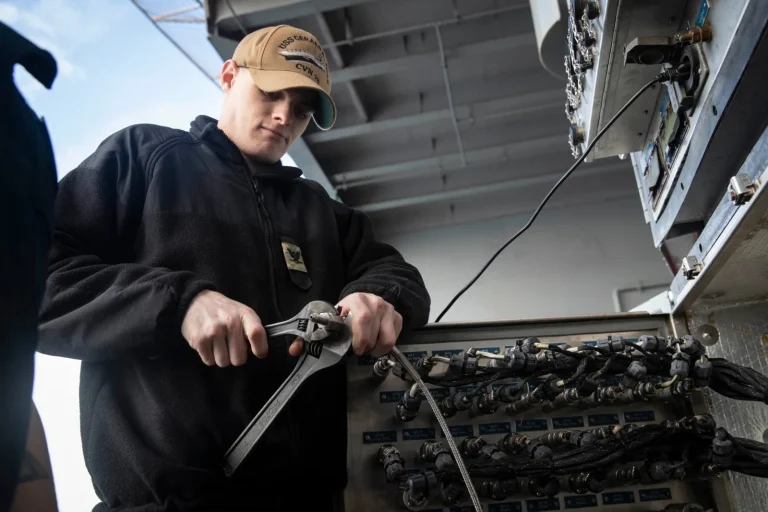
India, Brazil and South Africa wrapped up the ninth edition of Exercise IBSAMAR on October 20, 2026, at the South African Navy’s Simon’s Town base near Cape Town, after nine days of joint maritime drills that included anti-piracy boardings, anti-submarine tracking and live small-calibre gunnery. The Indian Navy sent the Teg-class guided-missile frigate INS Tarkash, fresh off a transit from the Gulf of Guinea and the Seychelles, to lead the exercise as flagship of a combined task force that also drew in Brazil’s corvette BNS Barroso and four South African Navy vessels, including the submarine SAS Manthatisi. The drills matter less for any single weapons system than for what they signal: a biennial, India-led naval partnership that keeps running in the South Atlantic and southern Indian Ocean largely outside the gaze of US and European defense media.
What Happened
IBSAMAR IX ran from October 12 to October 20, 2026, split into a harbour phase at Naval Base Simon’s Town (October 12–14) and a sea phase off the Cape (October 15–19), according to South African outlet DefenceWeb, which had a correspondent aboard INS Tarkash during the exercise’s capability demonstration. A Distinguished Visitors’ Day on October 19 featured a simulated boarding of a vessel suspected of smuggling contraband, with the South African patrol vessel SAS Adam Kok III playing the role of the target ship while boats, helicopters and special forces from all three navies carried out a coordinated visit-board-search-and-seizure (VBSS) operation. Some Indian outlets, including Cavalier.in and GKToday, describe the sea phase as scheduled to run through October 21, so the exact closing date varies slightly by source; DefenceWeb’s on-the-ground reporting of a October 20 closing ceremony at Simon’s Town is treated here as the more reliable account.
Captain Rohit Mishra, the Indian Navy officer commanding INS Tarkash and serving as Joint Task Force Commander for the exercise, said the exercise’s objectives had been met and that “together we are stronger.” General Rudzani Maphwanya, Chief of the South African National Defence Force (SANDF), was embarked aboard the frigate SAS Amatola and received a ceremonial salute as the task force’s ships steamed past in formation, followed by SAS Manthatisi and a flypast of three helicopters and a Gripen fighter.
The Product/System
The exercise’s most capable single platform was INS Tarkash (F50), one of three Teg-class frigates — an improved sub-variant of Russia’s Krivak III/Project 1135.6 design — built for India at the Yantar Shipyard in Kaliningrad and commissioned in November 2012. The ship displaces roughly 4,000 tonnes at full load, runs about 124.8 metres long, and is reported to carry a mix of an AK-190 100mm gun, a Shtil-1 medium-range surface-to-air missile system and Kashtan close-in weapon systems; manufacturer and open-source reporting on whether its anti-ship battery is the original Klub-N system or the newer BrahMos missile is inconsistent, so that detail should be treated as unconfirmed pending an Indian Navy specification sheet. The frigate carries an integral Chetak helicopter, a licence-built Indian variant of the Alouette III.
South Africa’s contribution leaned on its Heroine-class submarine SAS Manthatisi (S101), a Type 209/1400mod boat built by Howaldtswerke-Deutsche Werft in Kiel and commissioned in 2005 — about 62 metres long, crewed by roughly 30 sailors, and armed with eight 533mm torpedo tubes. It was used during the sea phase as the target for allied anti-submarine warfare (ASW) tracking drills. South Africa also fielded its Valour-class frigate SAS Amatola, two Warrior-class inshore patrol vessels, an SAAF Oryx helicopter and two Gripen fighters, while Brazil sent the corvette BNS Barroso — the first warship built domestically for the Brazilian Navy — with an embarked Lynx-family helicopter.
Who Uses It
INS Tarkash and its two sister ships, Tarkash and Trikand, are operated exclusively by the Indian Navy; no export customer has been confirmed for the Teg-class design. SAS Manthatisi is one of three Heroine-class boats operated solely by the South African Navy, the design’s only export customer for this specific Type 209 variant. BNS Barroso remains a single-ship class in Brazilian Navy service. All three navies’ participation in IBSAMAR IX is confirmed directly by their respective defense establishments and corroborated independently by DefenceWeb, India’s Press Information Bureau–linked reporting via GKToday and Raksha Anirveda, and Indian outlet Cavalier.in — meeting a two-source confirmation threshold with no contested claims about who actually took part.
Export/Procurement History
IBSAMAR has run biennially since 2008 under the trilateral IBSA Dialogue Forum linking India, Brazil and South Africa, with most editions hosted off the South African coast; the seventh edition, in October 2022, also saw INS Tarkash deploy to South Africa (then to Port Elizabeth, now Gqeberha) for the same purpose. For this year’s edition, Tarkash’s path to Simon’s Town itself doubled as a diplomatic and operational tour: Indian Navy reporting places the frigate departing Mombasa, Kenya on October 2, calling at Victoria, Seychelles, and arriving in South African waters around October 11 before the harbour phase began. No new equipment contracts or procurement announcements accompanied this edition — IBSAMAR IX was a training and interoperability exercise, not an arms transfer — and none of the reporting reviewed claims otherwise.
Global Competitors
IBSAMAR sits in a crowded field of middle-power naval exercises that run independently of NATO- or US-centred formats such as RIMPAC. India alone also leads or co-hosts Malabar (with the US, Japan and Australia), SIMBEX (with Singapore) and smaller bilateral drills with African and Indian Ocean states; South Africa periodically exercises with France and other partners in the Mozambique Channel. What distinguishes IBSAMAR is its purely South-South composition — an emerging-economy grouping with no Western participant — which gives it modest but genuine strategic weight as a hedge against dependence on any single bloc’s naval architecture, even though its scale (a handful of ships per side) remains far smaller than Malabar or RIMPAC.
Why It Matters
For India, repeated deployments of a frontline frigate to the South Atlantic — on a route that touched East Africa, the Seychelles and South Africa in a single patrol — demonstrate a navy increasingly comfortable projecting presence well beyond the Indian Ocean’s eastern approaches, reinforcing New Delhi’s stated “SAGAR” (Security and Growth for All in the Region) outreach to African and Indian Ocean states. For South Africa, hosting a three-navy exercise involving a submarine, a frigate and fighter aircraft is a visible counterpoint to years of reporting, including from DefenceWeb itself, about SANDF funding strain and fleet readiness problems; successfully generating and sustaining that force package for nine days is itself a data point on current South African Navy capacity. For Brazil, sending its flagship domestically built corvette on a long-range deployment speaks to its own ambitions for a blue-water profile beyond South American waters.
What Happens Next
IBSAMAR’s biennial cadence points to a tenth edition around 2028, though none of the sources reviewed named a confirmed host nation or date for it, and this article does not speculate further on specifics that have not been announced. In the near term, INS Tarkash’s deployment itself is not over: Indian Navy frigates on these long-range Africa deployments typically continue on to further port calls before returning to home waters, though no confirmed onward itinerary for Tarkash was available at publication.
FAQ
What is IBSAMAR?
IBSAMAR (India–Brazil–South Africa Maritime) is a biennial trilateral naval exercise running since 2008 under the IBSA Dialogue Forum, designed to build interoperability between the three navies in areas such as anti-piracy, maritime interdiction and anti-submarine warfare.
Which ships took part in IBSAMAR IX in 2026?
India sent the frigate INS Tarkash, Brazil sent the corvette BNS Barroso, and South Africa fielded the frigate SAS Amatola, the submarine SAS Manthatisi and the patrol vessels SAS King Sekhukhune I and SAS Adam Kok III, alongside helicopters and Gripen fighter jets.
Where and when was IBSAMAR IX held?
The exercise ran from October 12 to roughly October 20–21, 2026, with a harbour phase at South Africa’s Naval Base Simon’s Town and a sea phase off Cape Town.
What class of ship is INS Tarkash?
INS Tarkash is a Teg-class guided-missile frigate, an improved variant of India’s Russian-built Talwar-class (Project 1135.6) frigates, commissioned by the Indian Navy in 2012.
Did IBSAMAR IX involve any new arms deals or deliveries?
No. Available reporting describes IBSAMAR IX strictly as a training and interoperability exercise; no procurement contracts or arms transfers were announced in connection with it.
Sources
- Dean Wingrin, “South Africa, India and Brazil conclude Ibsamar IX naval exercise,” DefenceWeb, October 22, 2026 — primary on-the-ground account of the exercise’s phases, participants, officials and closing demonstration. Link
- “INS Tarkash Joins IBSAMAR IX 2026 Naval Exercise,” GKToday, October 2026 — corroborates dates, Indian Navy participation and exercise activities. Link
- “INS Tarkash to Participate in IBSAMAR IX 2026,” Raksha Anirveda — Indian defense-media confirmation of India’s deployment framing. Link
- “IBSAMAR IX 2026 concludes in South Africa, strengthens India-Brazil-South Africa naval cooperation,” DD India, October 21, 2026 — Indian state-media account used for cross-checking closing-date reporting. Link
- “IBSAMAR,” Wikipedia — background on the exercise series’ history since 2008. Link
- “INS Tarkash,” Wikipedia; “Heroine-class submarine,” Wikipedia — used for Teg-class and Heroine-class/Type 209 technical specifications. Link / Link