How Strong Is Pakistan’s Military in 2026? Budget, Troops, J-10C, JF-17 and Nuclear Arsenal
Pakistan has the 14th most powerful military in the world in 2026, according to Global Firepower, and one of the largest standing armies on the planet. It is a nuclear-armed state that has fought several wars with India, and its armed forces play a central role in national politics. Its May 2025 clash with India gave the world a rare look at how its mostly Chinese-supplied arsenal performs.
- Global Firepower 2026 rank: 14th
- Military spending (SIPRI, 2025): $11.9 billion (+11%)
- Active personnel: about 650,000
- Nuclear warheads: around 170 (estimates)
- Main arms supplier: China
Budget and people
SIPRI estimates Pakistan spent $11.9 billion on its military in 2025, up 11%, a modest sum compared with India’s $92 billion but a heavy burden for a struggling economy. The armed forces have around 650,000 active personnel, most of them in the Army, plus large paramilitary forces.
Air Force: J-10C, JF-17 and F-16
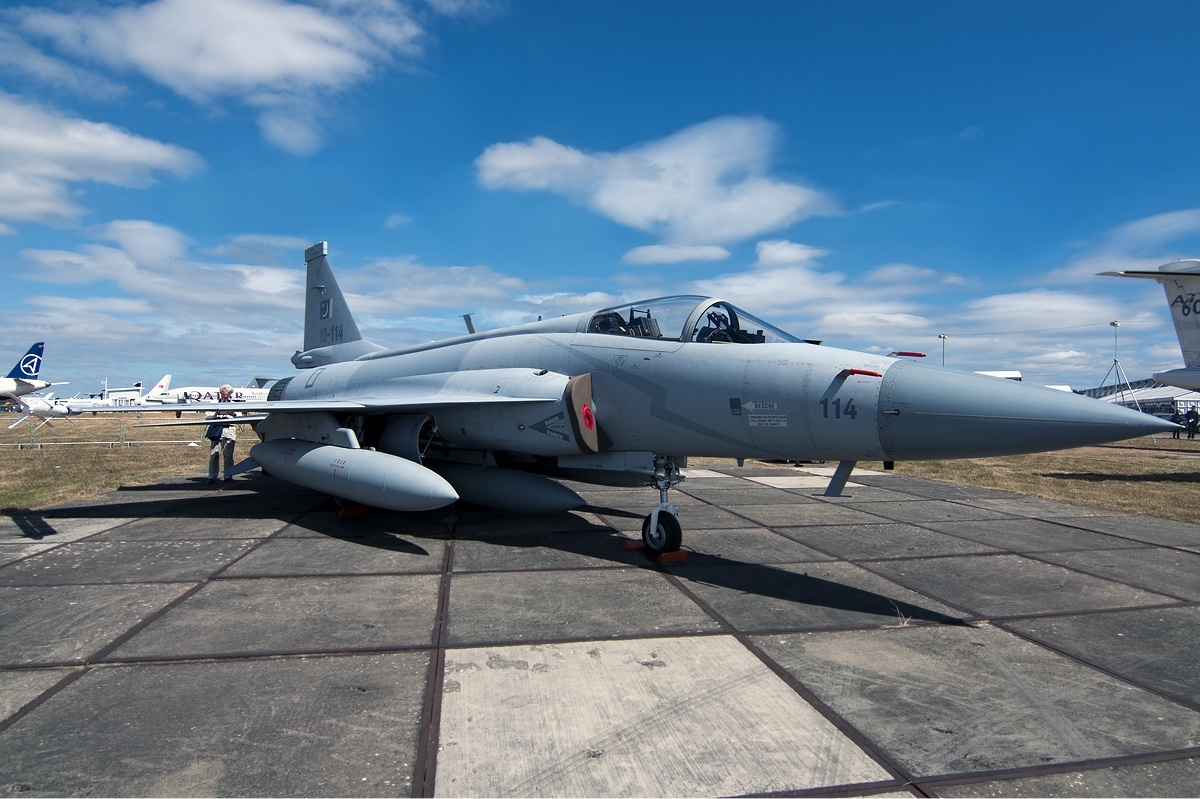
The Pakistan Air Force flies American F-16s, Chinese J-10CE fighters and the JF-17 Thunder, co-developed and co-produced with China, along with Saab and Chinese early-warning aircraft. The J-10C and its PL-15 long-range missiles drew global attention after the May 2025 air battles with India. Pakistan has also been widely reported to be considering China’s J-35 stealth fighter.
Army and rocket forces
The Army fields Chinese VT-4 and domestic Al-Khalid tanks, a large artillery force and Fatah-series guided rockets. In 2025 Pakistan created an Army Rocket Force Command to centralize its growing conventional missile arsenal, a direct response to the lessons of the conflict with India.
Navy
The Pakistan Navy operates Chinese-built Type 054A/P frigates, Turkish-designed Babur-class corvettes and Agosta submarines, and is receiving eight Hangor-class submarines from China, which will significantly boost its undersea strength in the Arabian Sea.
Nuclear forces
Independent estimates put Pakistan’s arsenal at around 170 nuclear warheads, delivered by Shaheen and Ghauri ballistic missiles, Babur cruise missiles and aircraft. It also fields short-range Nasr missiles intended as “tactical” nuclear weapons, a doctrine meant to deter a large Indian conventional attack.
China: the key partner
Around 80% of Pakistan’s major arms imports in recent years have come from China, according to SIPRI data. That partnership covers fighters, submarines, frigates, drones and missiles, and is deepening as Western supply has declined.
Weaknesses
Pakistan’s economy limits how much it can modernize, and it faces security threats on two fronts: India to the east and militant groups and tension with Afghanistan’s Taliban to the west. The military’s political role and the country’s debt are long-term constraints.
Verdict
Pakistan is a nuclear power with a large, experienced military and a modern air force built around Chinese technology. It cannot match India’s spending, but nuclear deterrence and a close alliance with China make it a formidable opponent.
Featured image: Andres Ramirez / GFDL 1.2, via Wikimedia Commons