
Kawasaki Heavy Industries, the Quiet Pillar of Japanese Defense
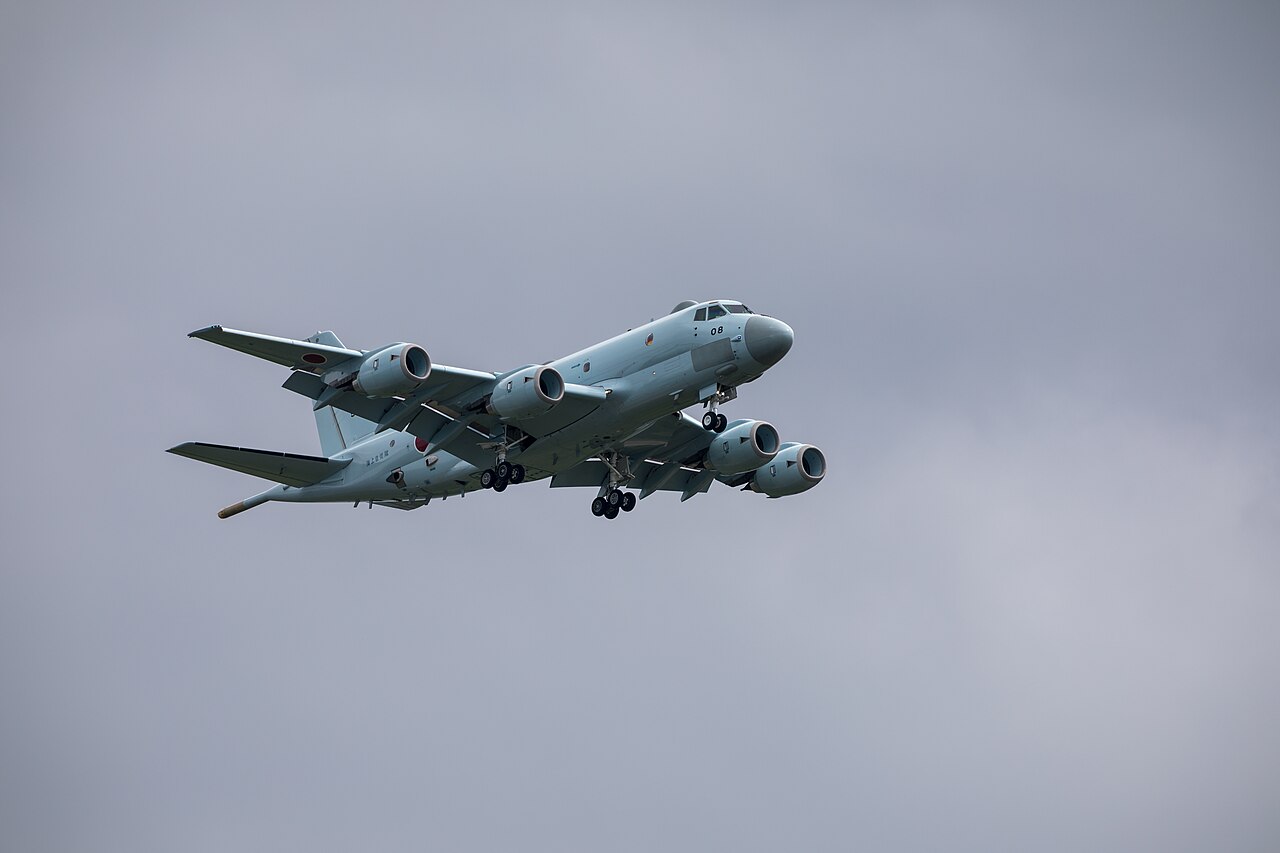
Kawasaki Heavy Industries builds Japan’s P-1 patrol aircraft, C-2 transports and roughly half of its submarines, making the 19th-century shipbuilder one of the two industrial pillars of Japanese defense. As Tokyo pushes defense spending toward 2 percent of GDP, the quiet conglomerate behind motorcycles and industrial robots is becoming a serious growth story in its own right.
Kawasaki Heavy Industries at a glance
| Item | Detail |
|---|---|
| Full name | Kawasaki Heavy Industries, Ltd. (KHI) |
| Headquarters | Tokyo and Kobe, Japan |
| Founded | 1878 as a Tokyo shipyard by Shozo Kawasaki; incorporated 1896 |
| Employees | Around 39,000 group-wide |
| Revenue | Roughly ¥2.1 trillion (about $14 billion) in recent fiscal years |
| Ownership | Publicly listed on the Tokyo Stock Exchange (7012) |
| Defense lines | Maritime patrol and transport aircraft, submarines, helicopters, missile work, jet engines, naval support ships |
Most of the world knows the Kawasaki name from motorcycles, but the bikes are a sliver of a conglomerate spanning shipbuilding, rolling stock, aerospace, energy plants, industrial robots and hydrogen infrastructure. Defense has historically been a stable minority business serving one customer, the Japan Self-Defense Forces. That is the part now changing fastest.
What does Kawasaki build for the military
| Program | Type | Notes |
|---|---|---|
| Kawasaki P-1 | Four-jet maritime patrol aircraft | In-house design; replaces Japan’s P-3C fleet |
| Kawasaki C-2 | Twin-jet strategic transport | Roughly 30-ton payload class; actively marketed for export |
| Taigei-class submarines | 3,000-ton attack submarines | Built at Kobe, alternating hulls with Mitsubishi Heavy Industries |
| T-4 trainer | Intermediate jet trainer | About 200 built for the JASDF |
| CH-47 and other helicopters | Licensed production | Chinook, and the BK117/H145 family with Airbus |
| Missile and standoff programs | New anti-ship and submarine-launched weapons | Development contracts under Japan’s standoff defense buildup, details limited |
Kawasaki P-1 and C-2 aircraft
The P-1 is the rarest kind of program, a clean-sheet, four-engine maritime patrol jet designed by a single company for a single navy. It carries an advanced acoustic and radar suite for hunting submarines across the East China Sea, work that pairs it with the Japanese fleet’s sonar network. The C-2 airlifter, developed in parallel and sharing some structure, gives Japan strategic reach that its aging C-130s never could.
Both aircraft have struggled to find export buyers against the P-8 and A400M, and both were built in modest numbers, which keeps unit costs high. But they preserve something Tokyo values more than sales, a complete domestic aircraft design and integration capability outside the fighter world, complementing Mitsubishi’s work on the GCAP fighter program with the UK and Italy.
Kawasaki submarines at Kobe
KHI has built submarines at Kobe since the early 20th century and today alternates hulls of the Taigei class with Mitsubishi Heavy Industries, whose yard sits across the same harbor. The Taigei boats pair air-independent propulsion heritage with lithium-ion batteries, a Japanese first that other navies are only now following, and they consistently rank among the most capable conventional attack submarines afloat. One boat per year, split between two yards, has kept both industrial teams alive for decades.
Kawasaki defense revenue and outlook
Japan’s 2022 decision to raise defense spending toward 2 percent of GDP transformed the order books of its contractors. KHI’s aerospace and defense-related segments have reported record orders since, driven by P-1 and C-2 sustainment, new standoff missile development work, and expanded submarine funding. The company has also said it is studying export opportunities more seriously as Tokyo loosens its transfer rules, the C-2 and P-1 have been pitched to several countries, and Japanese yards are courting Australia and others on naval programs.
Constraints remain real. Defense still competes for engineers with KHI’s civil businesses, Japanese margins on domestic defense contracts were long notoriously thin, and export wins have yet to materialize at scale. The government has raised profit-rate ceilings on defense work precisely to fix that, a change contractors describe as the most important reform of the buildup, echoing dynamics at Aegis-equipped fleet suppliers covered in Japan’s missile defense ship program.
Kawasaki Heavy Industries frequently asked questions
Is Kawasaki Heavy Industries the same company as Kawasaki motorcycles?
The motorcycle business was spun off as Kawasaki Motors in 2021 but remains within the Kawasaki group; KHI itself focuses on aerospace, defense, ships, energy and industrial machinery.
What military aircraft does Kawasaki make?
The P-1 maritime patrol jet and C-2 transport, both in-house designs, plus the T-4 trainer and license-built helicopters such as the CH-47.
Does Kawasaki build submarines?
Yes. Its Kobe shipyard alternates construction of Taigei-class attack submarines with Mitsubishi Heavy Industries, a pattern going back generations of Japanese boats.
How big is Kawasaki’s defense business?
Defense and aerospace form a minority of roughly ¥2.1 trillion in group revenue, but orders have hit records since Japan’s spending buildup began.
Does Kawasaki export weapons?
Barely, so far. Japan’s strict transfer rules are loosening, and KHI actively markets the C-2 and P-1 abroad, but no major platform export has closed yet.
- Kawasaki Heavy Industries public disclosures and segment reporting
- Wikipedia – Kawasaki Heavy Industries (accessed October 2026)
- Japan Ministry of Defense program information
- Defence & Tech reporting on Japan’s defense buildup