Challenger 3 vs Leclerc XLR, Britain and France Rebuild the Heavy Tank
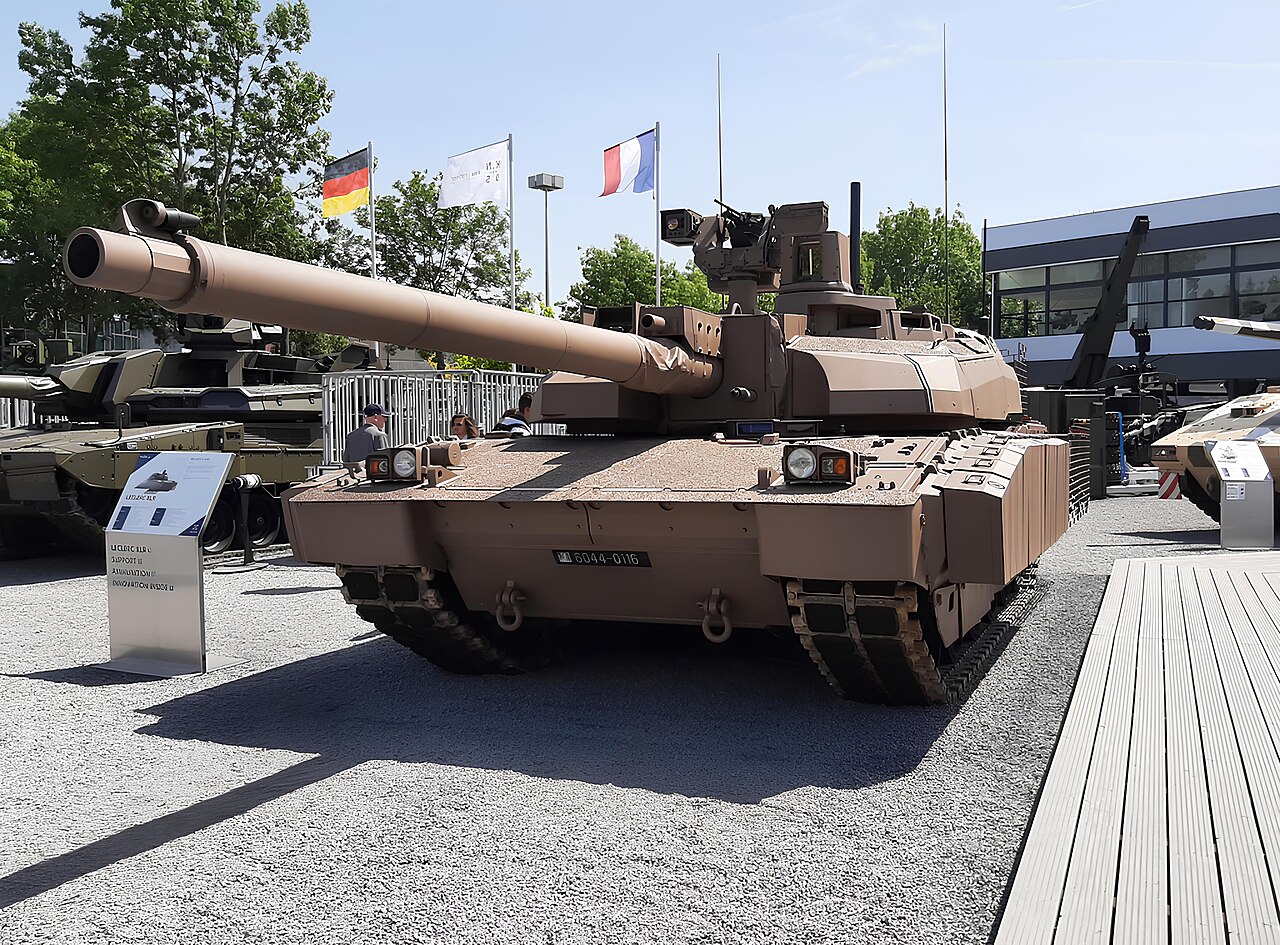
Challenger 3 and Leclerc XLR are Europe’s two heavily rebuilt Western tanks, a roughly 66-tonne British four-man design against a roughly 58-tonne French three-man design, and they reach the same 120mm gun by very different routes. Both are upgrades of 1990s hulls, both are small fleets, and the choice between them comes down to whether a mission needs armor and firepower growth or mobility and networking.
Challenger 3 vs Leclerc XLR specs
| Item | Challenger 3 | Leclerc XLR |
|---|---|---|
| Builder | Rheinmetall BAE Systems Land (RBSL) | KNDS France |
| Program | 148 Challenger 2 hulls rebuilt, GBP 800 million contract (2021) | About 200 Leclercs renovated under SCORPION |
| Crew | 4 (commander, gunner, loader, driver) | 3 (commander, gunner, driver); autoloader |
| Combat weight | About 66 tonnes with modular armor | About 57-59 tonnes with XLR kits |
| Main gun | 120mm Rheinmetall L55A1 smoothbore | 120mm CN120-26 smoothbore, 52 calibers |
| Engine | Perkins CV12 V12 diesel, about 1,200 hp | SACM V8X-1500 hyperbar diesel, 1,500 hp |
| Power to weight | About 18 hp per tonne | About 26 hp per tonne |
| Road speed | Around 60 km/h | About 72 km/h |
| Networking | Digital turret architecture, open electronics | SCORPION SICS battle management and CONTACT radios |
| Timeline | Full operating capability targeted for 2030 | First XLRs reached the army in 2023 |
For deeper single-tank detail, see our guides to the Challenger 3 and the Leclerc XLR.
Which has better firepower
Challenger 3 has the longer gun. The L55A1 is a 55-caliber smoothbore that fires the German-led NATO family of rounds, including DM73 kinetic penetrators and programmable DM11 multi-purpose rounds. That ends the isolation of the old rifled L30 gun, which used ammunition no other NATO army fielded.
The Leclerc’s 52-caliber gun is shorter but remains a first-class weapon, and its autoloader gives a steady rate of fire with 22 rounds ready to shoot. France produces its own 120mm ammunition, and in NATO gunnery competitions Leclerc crews have long been among the quickest shooters. On paper the British gun has a slight muzzle-energy advantage, but the French tank can deliver more rounds per minute and needs one fewer crew member.
Which has better protection and mobility
The Challenger 3 gets a new modular armor package on the heaviest hull in NATO, carrying a pedigree from the Challenger 2’s Chobham-derived protection. The design is built to add upgrade kits, and an active protection system has been trialed, although fleet-wide fitting depends on funding. Weight is the price: about 18 horsepower per tonne makes it the slowest tank of this group, and bridges and rail loading are more demanding.
The XLR adds flank and belly kits, a jammer against radio-triggered bombs, laser warning and a remote weapon station, but leaves the armor level of the base tank largely unchanged. Its engine, about 26 horsepower per tonne, gives it the best mobility among Western heavy tanks. France has studied an active protection system for the fleet without fielding one, a gap that matters after the lessons of active protection system performance in Ukraine.
Challenger 3 vs Leclerc XLR by mission
| Mission | Better fit | Why |
|---|---|---|
| Heavy breakthrough | Challenger 3 | Heavier armor, longer gun, higher crew redundancy |
| Fast maneuver and pursuit | Leclerc XLR | Higher power to weight and road speed |
| Networked combined-arms operations | Leclerc XLR | SCORPION links tanks, scouts and infantry today |
| Sustained combat with crew fatigue | Challenger 3 | Four-man crew shares loading, observation and maintenance |
| Cost and logistics | Leclerc XLR | Smaller, lighter and in a single-nation supply chain |
| NATO ammunition commonality | Challenger 3 | L55A1 joins the German ammunition family |
Which tank is better
Neither wins across the board. Challenger 3 is the more powerful and better-protected tank, and the Leclerc XLR is the more agile and better-networked one. Both face the same strategic problem: fleets of 148 and 200 tanks leave little margin for attrition, unlike the hundreds of Leopard 2 and Abrams tanks fielded by bigger armies. For how they fit in the larger picture, see our top 10 main battle tanks ranking.
Challenger 3 vs Leclerc XLR frequently asked questions
Which is heavier, Challenger 3 or Leclerc XLR?
Challenger 3, at roughly 66 tonnes against about 58 tonnes for the Leclerc XLR.
Which tank has the bigger gun?
Challenger 3 has the 55-caliber L55A1; the Leclerc XLR uses a 52-caliber 120mm gun.
Does the Leclerc have an autoloader?
Yes. A 22-round autoloader replaces the loader and allows a three-man crew.
How many Challenger 3 tanks will the UK have?
148, converted from Challenger 2 hulls, with full operating capability targeted for 2030.
Do either of these tanks have active protection?
Not fleet-wide. Active protection has been trialed for Challenger 3 and studied in France, but neither is confirmed as standard fit.
- UK Ministry of Defence and RBSL program statements
- KNDS France and French Army public information on the Leclerc XLR
- Wikipedia – Challenger 3 and Leclerc (accessed October 2026)
- Defence & Tech reporting on Western main battle tank programs