Boeing Awarded $131.2B F-15 Eagle Crest Framework Contract
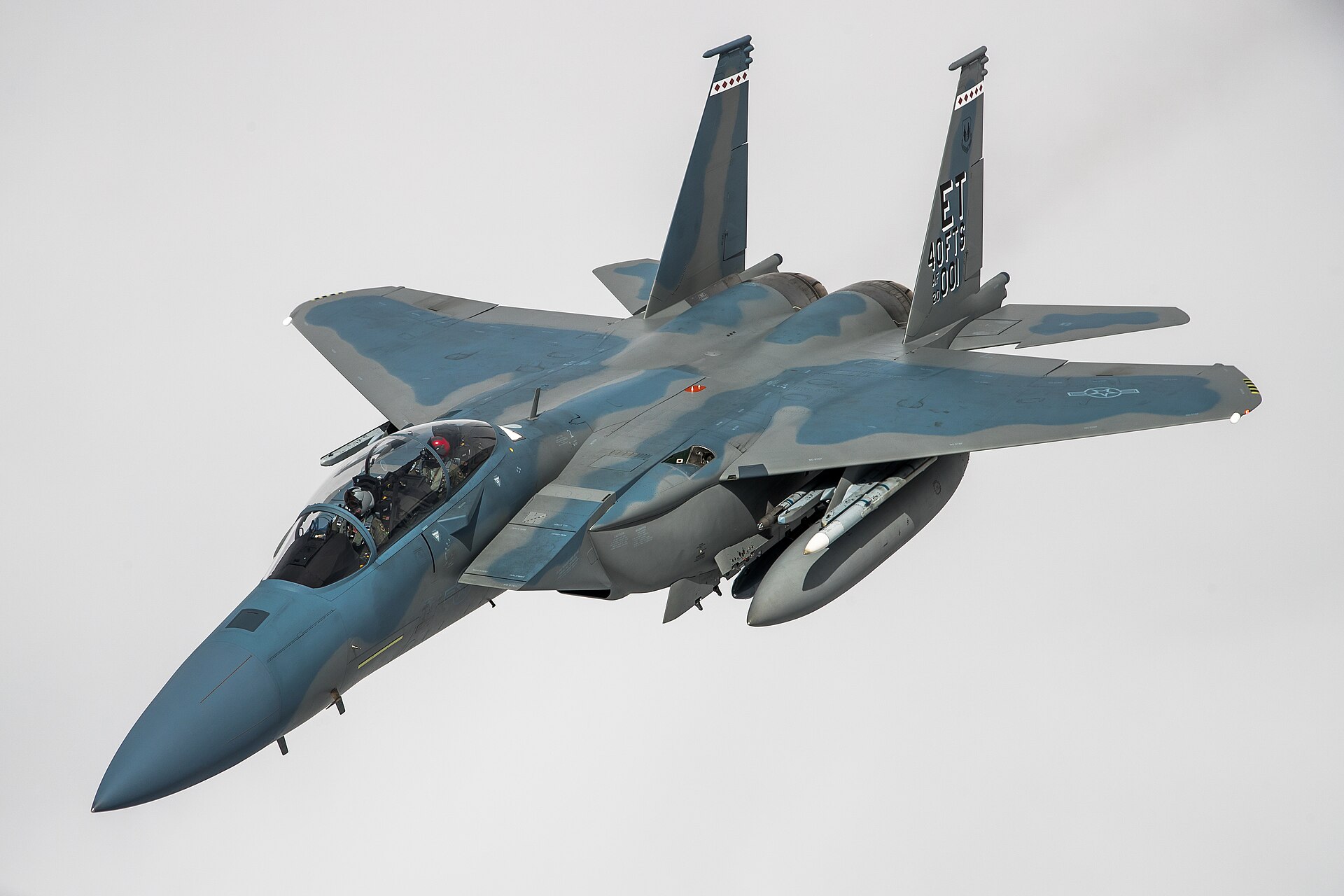
The U.S. Department of War has awarded Boeing an indefinite-delivery, indefinite-quantity contract with a ceiling of $131.23 billion covering production, modernisation and long-term support of the F-15 fighter, a framework known as Eagle Crest that ties together nearly every strand of the programme for the next decade.
The award was disclosed in the department’s Aug. 25 daily contract announcements. It is a sole-source acquisition, meaning the government negotiated directly with Boeing rather than opening the work to competition — an unremarkable choice for an aircraft only one company builds, but an unusual one at this scale.
What the ceiling actually buys
The figure deserves a caveat that headlines rarely carry. An indefinite-delivery, indefinite-quantity contract is a purchasing mechanism, not a purchase. It sets the maximum the government may spend through the vehicle; what is actually spent depends on funded task orders, annual appropriations and how many foreign customers place orders through it. At award, the department obligated $343,740 in fiscal 2026 research, development, test and evaluation funds — roughly one two-hundred-thousandth of the ceiling.
What Eagle Crest does is remove the friction. Instead of negotiating separate contracts for airframes, avionics integration, retrofit kits, depot standing-up and software drops, the government and Boeing now work inside a single pre-negotiated structure. For a programme with customers on four continents and a production line that has repeatedly come close to shutting down, that predictability is the point.
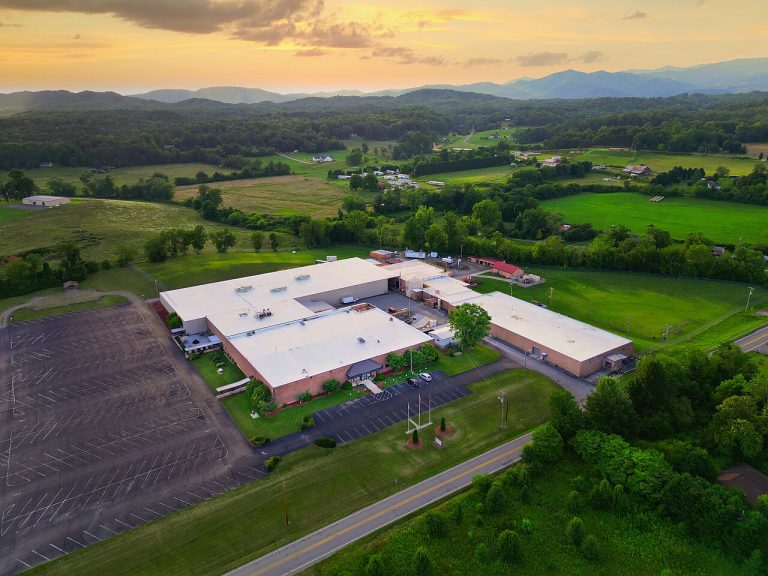
The ordering period runs through August 2031, with an option to extend to August 2036. Authorised work continues to August 2037. Boeing’s St. Louis, Missouri, plant is the designated work location.
Scope: build, upgrade, sustain
The framework covers new-build F-15EX Eagle II aircraft, systems integration, fleet upgrades and retrofits, component refurbishment, software development, depot maintenance — including standing up organic depot capability inside the U.S. military — and combat-readiness support.
That last cluster matters more than it sounds. Organic depot capability means the services can perform heavy maintenance themselves rather than routing airframes back through the manufacturer, which shortens turnaround and reduces long-term cost. Building that capacity is slow and expensive, and it is the kind of investment that only makes sense if the fleet is expected to fly for a long time.
A programme that keeps growing
The F-15EX entered U.S. Air Force service as a hedge. The original plan was modest — on the order of 100 aircraft, enough to replace the oldest F-15C/D air superiority jets in the Air National Guard while the F-35 fleet matured. Successive budget cycles have pushed that number upward, with reporting on the fiscal 2027 request pointing toward a substantially larger buy intended to replace ageing F-15E Strike Eagles and shore up the service’s magazine depth.
The logic behind the growth is unglamorous but sound. The F-15EX is not stealthy and was never meant to be. What it offers is payload, range and cost-per-flying-hour that a fifth-generation fighter cannot match: a large weapons load carried a long way, at a price that permits buying enough of them. In a scenario built around long-range missile exchanges rather than penetrating contested airspace, the aircraft with the most pylons has a role. Planned basing includes Kadena Air Base in Japan, where the type replaces retiring F-15C/Ds, and Seymour Johnson Air Force Base in North Carolina.
The export dimension
Eagle Crest is also an export instrument. The contract identifies potential foreign military sales to Japan, Israel, Saudi Arabia, South Korea and Singapore — all existing F-15 operators — and names Indonesia and Poland as prospective customers.
Indonesia signed for F-15EX aircraft in 2023 but has moved slowly on funding. Poland has been rebuilding its air force around the F-35 and FA-50 and has not committed to the type. Their inclusion in the contract’s FMS list is a planning provision rather than a sale, but it signals where Boeing and the U.S. government expect demand to come from.
For those customers, the framework is genuinely useful. Foreign military sales cases normally require their own contract negotiations, which can add years. Ordering through an existing vehicle compresses that timeline considerably — a meaningful advantage at a moment when European and Asian air forces are trying to field capability faster than their procurement systems were designed to allow.
Why it matters
The F-15 first flew in 1972. That a contract of this size is being written for it in 2026 says something about how air forces are actually planning. The assumption through the 2010s was that fourth-generation fighters would fade as fifth-generation fleets grew. Instead, high-end fighters have proven expensive and slow to deliver in quantity, munitions stockpiles have turned out to matter more than platform sophistication in sustained conflict, and the demand for aircraft that can carry a lot and fly often has held up.
Eagle Crest locks in a production and support base for the F-15 into the late 2030s. Whether the full ceiling is ever approached is beside the point. The framework’s existence tells allied planners that the line will be open, the parts will be available and the upgrade path will be funded — which, for anyone deciding what to buy, is often the more important information.
Sources
- U.S. Department of War, daily contract announcements, Aug. 25, 2026
- Defence Industry Europe, “U.S. signs agreement worth more than $131 billion with Boeing for F-15 production, upgrades and global fleet support services”
- GovConWire, “Boeing Lands Potential $131.2B Air Force F-15 Eagle Crest Contract”
- Defence Blog, “Pentagon awards Boeing $131.23 billion F-15 Eagle Crest deal”
- Defence Security Asia, “Boeing Secures $131 Billion F-15 Deal as Fighter Demand Surges”