
Who Builds the F-47? Boeing, St. Louis and the Team Behind the Fighter
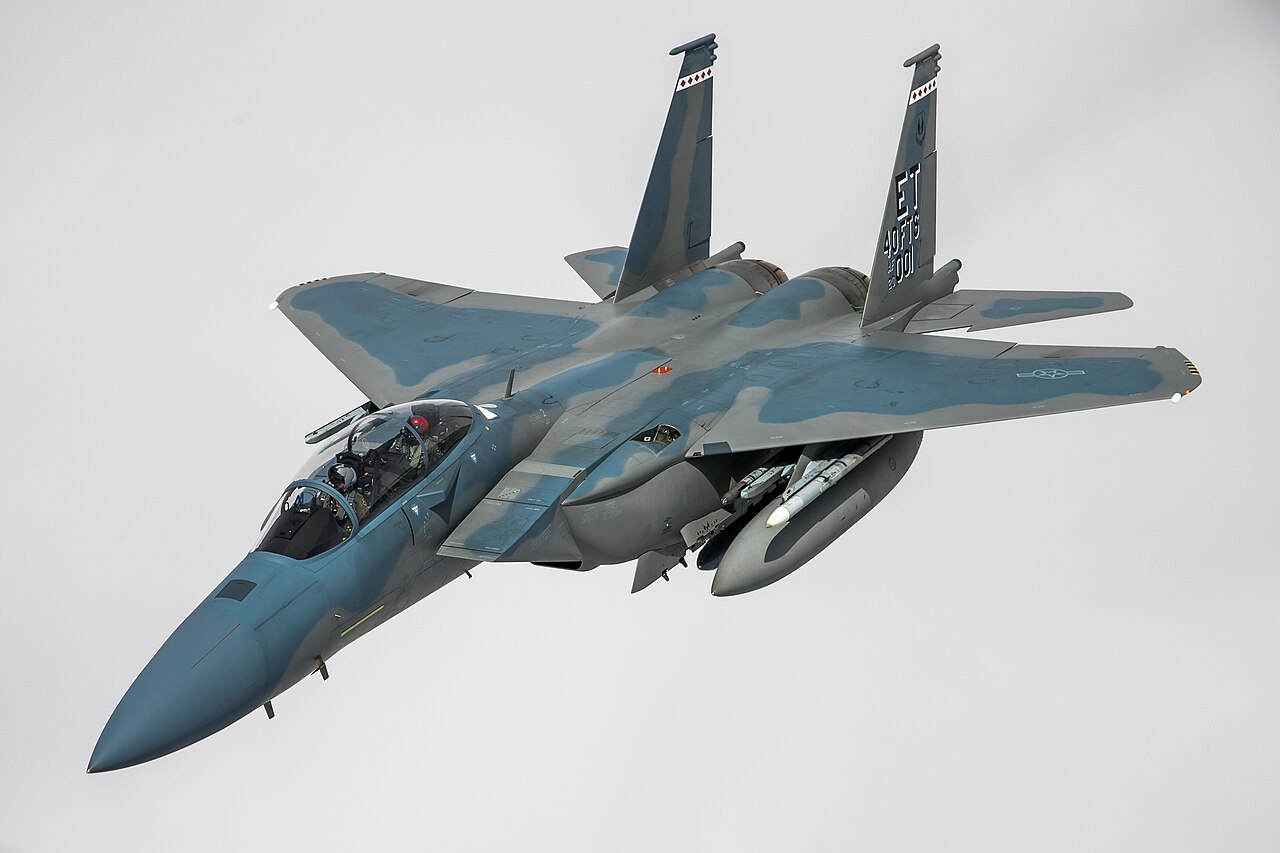
The F-47 is being built by Boeing at its military aircraft plant in St. Louis, Missouri, the former McDonnell Douglas factory that has produced American fighters since the 1940s. The design comes from Phantom Works, Boeing’s advanced projects division, and the engine will come from either GE Aerospace or Pratt & Whitney.
Most other suppliers are classified. This article sets out what is known about the industrial team, the $1.8 billion factory being built for the aircraft, and why Boeing’s own record makes the programme a test for the company.
Boeing is the prime contractor
Boeing Defense, Space & Security won the engineering and manufacturing development contract on 21 March 2025, beating Lockheed Martin. Northrop Grumman had withdrawn from the competition in 2023. The award is a cost-plus-incentive-fee contract reported to be worth more than $20 billion.
It was a turning point for the company. Boeing’s current fighters, the F-15 and F/A-18, were inherited from McDonnell Douglas when the two merged in 1997. Its last attempt at a new fighter, the X-32, lost the Joint Strike Fighter contest to Lockheed Martin’s X-35 in 2001. The F-47 is the first clean-sheet fighter Boeing has won. For the aircraft itself, see what the F-47 is.
The St. Louis factory
Final assembly will take place next to St. Louis Lambert International Airport, where Boeing is spending about $1.8 billion on new buildings. The first phase includes an 880,000 square foot Advanced Combat Aircraft Assembly building and a facility for measuring radar signature. In total the expansion adds more than one million square feet.
Parts of the complex are due to open in 2026, with completion targeted for 2030. Boeing committed the money before it knew it had won, a gamble its defence chief, Steve Parker, has called the most significant investment in the history of the business. Boeing employs more than 16,000 people in the St. Louis region.
The same site builds the F-15EX, the T-7A trainer and the last F/A-18 Super Hornets, whose production is ending. The first F-47 has been in build there since 2025.
Who supplies what
| Element | Company | Status |
|---|---|---|
| Airframe and integration | Boeing | Under contract since March 2025 |
| Design | Boeing Phantom Works | Flew a classified demonstrator from 2019 |
| Engine | GE Aerospace (XA102) or Pratt & Whitney (XA103) | Both in development; no choice announced |
| Radar and mission systems | Not disclosed | Classified |
| Drone wingmen | General Atomics, Anduril | Separate programme |
The engine is the largest piece outside Boeing’s control. Both candidates come from the Next Generation Adaptive Propulsion programme, and neither will be ready for integration before about 2030, as we explain in when the F-47 will fly.
The Air Force has also said it wants more control over the aircraft’s software and data than it has on the F-35, using an open architecture that lets it change suppliers of mission systems over the aircraft’s life.
Boeing’s record is the risk
Boeing’s recent defence programmes have been troubled. The KC-46 tanker, the T-7A trainer and the new Air Force One were all taken on at fixed prices and have cost the company billions in overruns, with deliveries running years late.
The F-47 contract is different. Under a cost-plus arrangement the government pays the actual development costs, so the financial risk sits largely with the taxpayer. That removes the incentive to cut corners that fixed-price deals created, but it also means cost growth lands on the Air Force budget. A strike by about 3,200 machinists at the St. Louis plants lasted three months in 2025.
Two sixth-generation fighters, one company
On 29 September 2026 the Navy chose Boeing to build its F/A-XX carrier fighter as well. Boeing says the St. Louis expansion was sized for both aircraft, and Parker said that delivering two advanced fighters in parallel “was always our plan”.
The concentration is unusual. The two most important American combat aircraft programmes of the 2030s now depend on one company and largely one site, while Lockheed Martin, which built both fifth-generation fighters, has neither. We compare the aircraft with its predecessor in F-47 vs F-22.
Frequently asked questions
Who makes the F-47?
Boeing. Its Defense, Space & Security division is the prime contractor, and the design comes from its Phantom Works advanced projects unit.
Where is the F-47 built?
At Boeing’s plant in St. Louis, Missouri, next to Lambert International Airport, where a $1.8 billion expansion is under way.
Who makes the F-47’s engine?
The engine will be either the GE Aerospace XA102 or the Pratt & Whitney XA103. The Air Force has not announced a choice.
Did Lockheed Martin bid for the F-47?
Yes. Lockheed Martin was the losing finalist. Northrop Grumman withdrew from the competition in 2023.
Has Boeing built a stealth fighter before?
Not a production one. Boeing was a major partner on the F-22 and flew classified demonstrators, but the F-47 is its first stealth fighter as prime contractor.
Is Boeing also building the Navy’s new fighter?
Yes. The Navy selected Boeing for the F/A-XX on 29 September 2026, and it will also be built in St. Louis.
- The War Zone – Full F-47 Production Line Not Too Far Away: USAF General: twz.com
- St. Louis Public Radio – Boeing wins contract for next-generation F-47 fighter jet: stlpr.org
- Boeing – U.S. Navy Selects Boeing for F/A-XX Program: boeing.mediaroom.com