DroneShield Wins Up to $500 Million in US Domestic Shield Counter-Drone Work
DroneShield has been awarded a three-year indefinite delivery, indefinite quantity contract worth up to $500 million to supply counter-drone systems under the US Joint Interagency Task Force 401’s Domestic Shield initiative. The Sydney-based company announced the award on 30 September from its US base in Warrenton, Virginia.
The contract is a purchasing vehicle rather than a firm order. It sets up a faster route for military installations, critical infrastructure and other priority sites to buy DroneShield equipment, but the $500 million figure is a ceiling and no money is committed to specific deliveries yet.
A Faster Buying Route for Homeland Counter-Drone Kit
Domestic Shield is a JIATF-401 program aimed at getting counter-UAS capability to defense-critical sites across the United States more quickly. DroneShield said the award gives it a streamlined pathway to deliver its systems against those requirements.
“Defending against small UAS threats is an immediate homeland defense requirement, and rapidly fielding proven technology is critical to the mission,” said Nate Webb, the company’s director of strategic partnerships. Army Brig. Gen. Matt Ross, who directs JIATF-401, said the task force works with industry to “identify the right capabilities for specific operational requirements and rapidly deliver those capabilities to the warfighter.”
DroneShield said it will announce material orders placed under the contract in line with its disclosure obligations. As an ASX-listed company, it has to tell investors when an order is large enough to matter, so the first task orders should show how much of the ceiling is likely to be used.
DroneSentry-X Mk2 Already in the Field
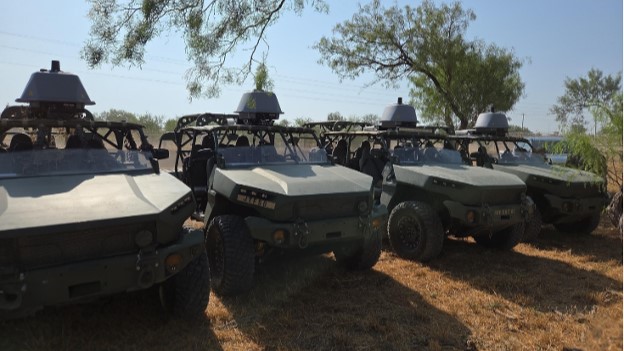
This is not DroneShield’s first work with the task force. The company has already delivered DroneSentry-X Mk2, a vehicle-mounted counter-UAS system designed to work on the move, in support of JIATF-401 requirements. DroneShield said installation and acceptance of that equipment has been completed, and its capabilities are also listed on the task force’s Counter-UAS Marketplace, a catalogue set up to speed access to vetted technologies.
The company describes its portfolio as covering dismounted, mobile and fixed-site use. It includes radio frequency sensing, electronic countermeasures, command-and-control software, artificial intelligence and multi-sensor integration. DroneShield says the architecture is modular, so its equipment can run on its own or alongside third-party sensors and effectors.
Several Vendors Are Sharing the Same Program
DroneShield is not alone under the Domestic Shield umbrella. AeroVironment announced its own three-year, $500 million IDIQ for the same program, with a first task order of $80.5 million for Titan multi-sensor systems at Air Force Global Strike Command sites, according to the company’s release.
The Army has also just opened a much larger door. It awarded a counter-drone IDIQ with a ceiling of up to $7 billion, and Allen Control Systems secured a place on that contract with its Bullfrog system. Earlier this month the Pentagon also began a year-long laser counter-drone assessment at five US bases.
Multiple-award vehicles like these let the government buy from several suppliers without running a new competition each time, but a place on the contract is only a hunting licence. Revenue depends on which vendors win the individual task orders, and DroneShield has said only that it will disclose material ones as they come.
Source: European Security & Defence (DroneShield release); AeroVironment.