SIGINT, ELINT and COMINT Explained, How Signals Intelligence Works

SIGINT, ELINT and COMINT describe the three best-known ways militaries turn radio waves into intelligence: SIGINT is the umbrella term, COMINT listens to communications and ELINT studies non-communication signals such as radar. The discipline is more than a century old, dating to the 1917 Zimmermann Telegram, and it now runs on satellites, ships, aircraft and ground stations around the world.
What is SIGINT
Signals intelligence is the collection and analysis of electromagnetic emissions to learn about an adversary. It covers everything from enemy radio chatter to the radar pulses of a fighter jet, and it is distinct from imagery or human intelligence. Its appeal is that it can reveal intentions and locations without anyone entering the target area, and that it yields a steady stream of data, not a single snapshot.
SIGINT proved itself in both world wars. British cryptanalysts broke German Enigma traffic at Bletchley Park in the Second World War, and American codebreakers did the same with Japanese naval ciphers. After the war, the United States, Britain, Canada, Australia and New Zealand formed the Five Eyes partnership to share the work, a structure that still underpins Western intelligence.
SIGINT vs ELINT vs COMINT
| Branch | Targets | Typical output |
|---|---|---|
| COMINT (communications intelligence) | Voice, text and data sent by radio, phone or network | Message content, who talks to whom, unit locations |
| ELINT (electronic intelligence) | Non-communication emitters such as radars and beacons | Radar type, frequency, pulse pattern, location |
| FISINT (foreign instrumentation signals intelligence) | Telemetry from missile and aircraft tests | Performance data on weapons under test |
| SIGINT | All of the above | Combined picture of adversary activity |
A useful test is this: if the signal carries a message between people, it is COMINT; if it is a radar or other emission that does not carry a message, it is ELINT. The same aircraft can collect both at once. In practice the boundary blurs, for example when a datalink carries both targeting data and routine traffic.
How does signals intelligence work
Collection begins with antennas and receivers that scan the radio spectrum. Direction-finding uses several receivers to triangulate a transmitter’s position, while timing differences between arrival at different sensors can locate a source even when it transmits briefly. ELINT then measures parameters such as frequency, pulse repetition interval and scan pattern, which act as a fingerprint for a radar type and, sometimes, for a specific unit.
The raw data goes to analysts and software. Encrypted communications are attacked with cryptanalysis, but even when content stays secret, traffic analysis can show which units are active, how they are organized and when activity spikes before an operation. Matching emissions against libraries of known emitters builds an electronic order of battle, a map of where an adversary’s radars and command posts are. That work supports electronic warfare, since a jammer cannot be tuned without knowing the enemy’s radar parameters.
What platforms collect SIGINT
| Platform type | Examples | Strength |
|---|---|---|
| Aircraft | RC-135 Rivet Joint (USAF), RC-135W Airseeker (RAF), EP-3E (US Navy, retiring) | Mobile, close to targets, real-time analysis |
| Ships | German Navy Oste class (Oker A53, Alster A50, Oste A52) | Long endurance near coasts |
| Satellites | Classified geosynchronous and low Earth orbit systems | Global coverage, hard to block |
| Ground stations | Fixed listening sites and mobile tactical units | Persistent, low cost |
| Drones | High-altitude and tactical uncrewed aircraft with ESM payloads | Endurance without risking crews |
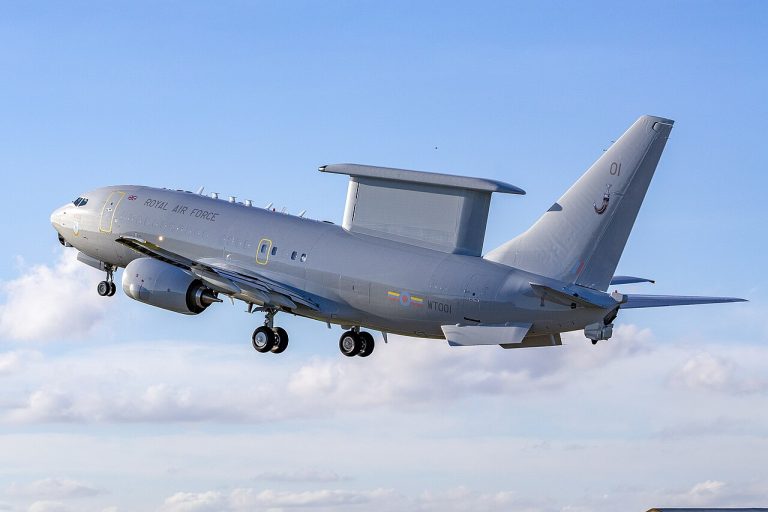
The RC-135 Rivet Joint is the most famous airborne example, flown by the US Air Force with a reported fleet of about 17, while Britain operates three RC-135W Airseeker aircraft. Ships like the German Navy’s Oste-class vessels listen to coastal signals, and satellites provide the broadest reach. Tactical units on the ground use smaller systems, including those that detect and locate counter-battery radar emissions.
SIGINT in modern warfare
The war in Ukraine has made the discipline highly visible. Early in the invasion, Russian units were reported to use unencrypted or poorly secured radios, giving Ukrainian and Western listeners valuable material. Both sides now use drones and ground sensors to locate emitters and then direct artillery or strikes, which has forced commanders to limit transmissions and move often. Operator-reported figures on how many command posts have been hit through emission tracking should be treated with caution, since neither side publishes verified data.
The contest extends to space, where communications links can be intercepted or jammed, a theme covered in our explainer on military satellite communication bands. Stealth aircraft and low-probability-of-intercept radars exist partly to shrink the window in which SIGINT collectors can catch them.
SIGINT, ELINT and COMINT frequently asked questions
What is the difference between SIGINT and ELINT?
SIGINT is the broad category, while ELINT is the part that targets non-communication signals such as radar.
What is COMINT?
Communications intelligence, the interception and analysis of messages and related data.
What is an example of ELINT?
Recording the frequency and pulse pattern of an air-defense radar to work out its type and how to jam it.
Who does SIGINT?
National agencies such as the US National Security Agency, Britain’s GCHQ and their counterparts worldwide, plus military units.
Is SIGINT the same as electronic warfare?
No. SIGINT collects information, while electronic warfare acts on the spectrum by jamming, deceiving or protecting.
- US and allied public intelligence doctrine and terminology
- Public descriptions of RC-135 and German Navy Oste-class platforms
- Wikipedia – Signals intelligence (accessed October 2026)
- Defence & Tech reporting