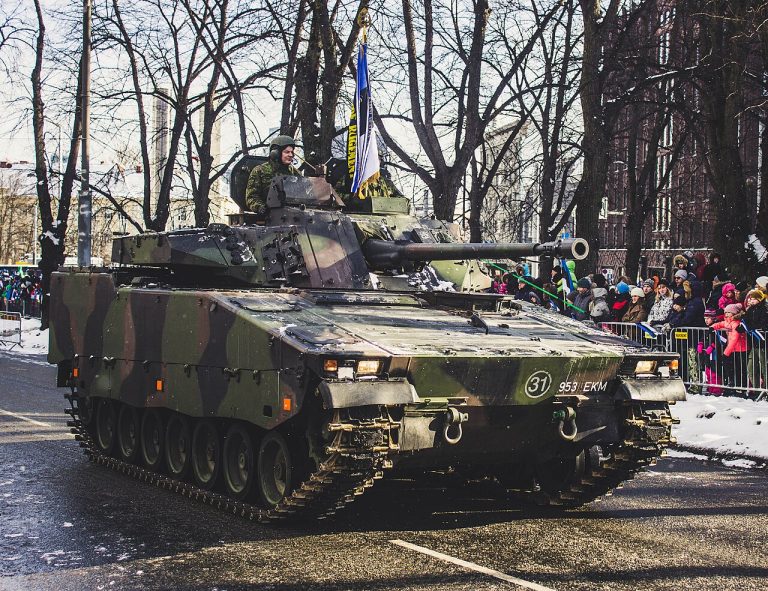
CV90 vs Lynx KF41 vs AS21 Redback, the Big IFV Shootout
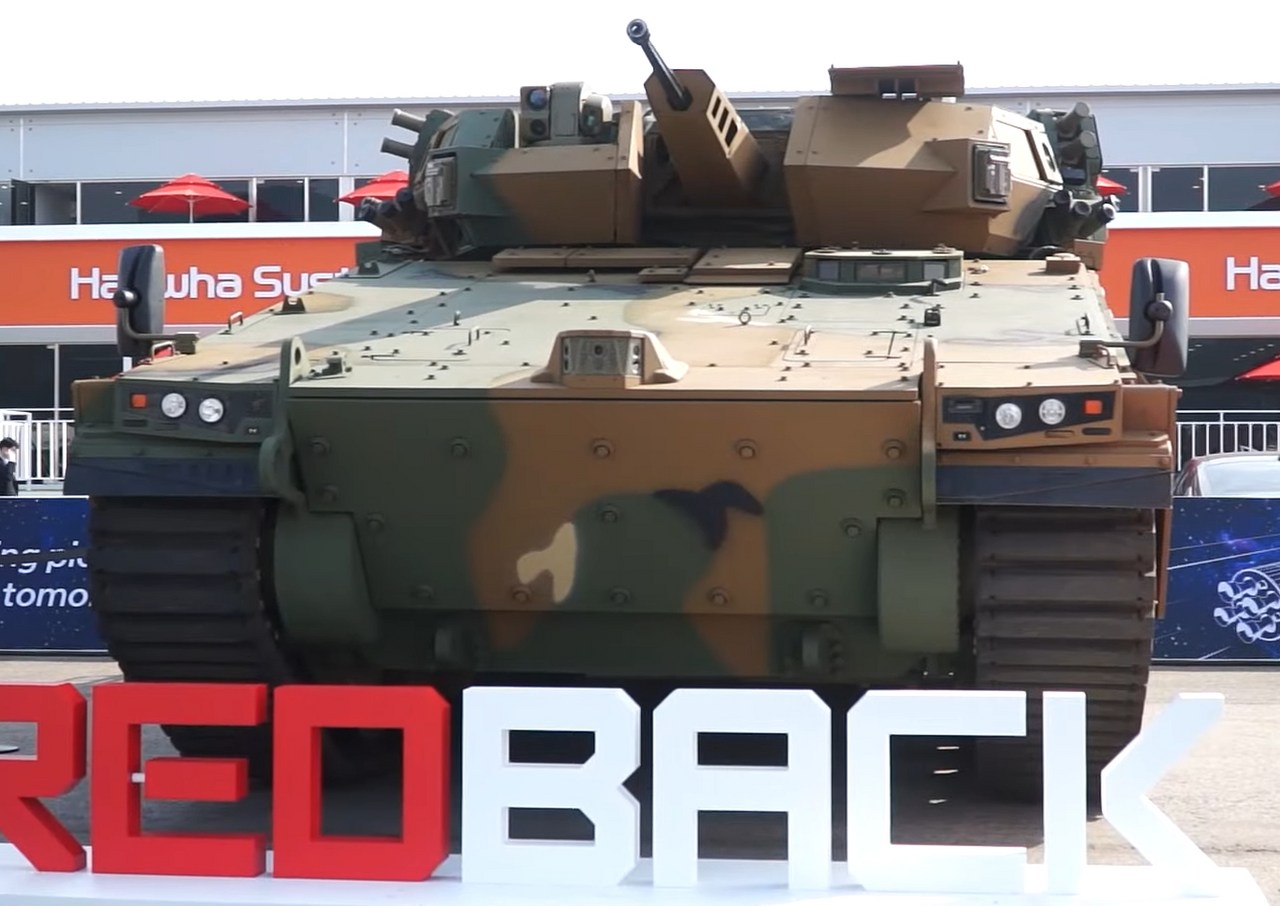
The CV90, the Lynx KF41 and the AS21 Redback are the three infantry fighting vehicles splitting the Western world’s biggest armor contracts, nearly 800 vehicles ordered between the Czech, Slovak, Hungarian and Australian programs alone. One is a forty-year veteran, one a German clean-sheet design, one a Korean-Australian hybrid, and each wins a different kind of competition.
The three IFVs at a glance
| Item | CV90 MkIV | Lynx KF41 | AS21 Redback |
|---|---|---|---|
| Builder | BAE Systems Hägglunds (Sweden) | Rheinmetall (Germany) | Hanwha Aerospace (South Korea/Australia) |
| Combat weight | ~35–37 t | ~44 t, growth to ~50 t | ~42 t |
| Crew + dismounts | 3 + up to 8 | 3 + up to 8 | 3 + 8 |
| Main gun | 30/35/40mm options | 30 or 35mm Lance 2.0 turret | 30mm in a two-man turret |
| ATGM option | Yes (customer dependent) | Yes | Yes |
| Engine | ~1,000 hp Scania | ~1,140 hp Liebherr | ~1,000 hp MTU-derived |
| First in service | 1994 (family), MkIV from 2020s | 2023 (Hungary) | Mid-2020s (Australia) |
Firepower and turrets compared
All three center on a stabilized autocannon with programmable airburst ammunition, the round that turned IFV guns into counter-drone weapons. The Lynx’s Lance 2.0 turret from Rheinmetall takes either 30mm or 35mm and integrates anti-tank missiles and loitering-munition options. The CV90 MkIV’s D-series turret offers similar calibers with the most combat-informed fire control in the class, while Sweden’s own vehicles keep the harder-hitting 40mm Bofors. The Redback’s two-man turret mounts a 30mm with an integrated anti-tank missile launcher and a mast-mounted sight. On paper the differences are marginal; in practice integration maturity decides, and there the CV90’s decades of fielded fire control count.
Protection and survivability
Weight tells the story. The Lynx and Redback, seven to nine tonnes heavier than a CV90 MkIV, buy modular armor packages sized for front-line assault under artillery and ATGM threat. The Redback adds composite rubber tracks and an in-arm suspension that cut vibration and acoustic signature, and both newer designs were specified from the start for active protection systems, the Lynx offering Rheinmetall’s StrikeShield. The CV90 counters with a lower silhouette, signature management and combat-proven mine survivability, Ukrainian crews’ operator-reported accounts of surviving repeated strikes are its best advertisement. Verdict: the newer hulls carry more armor headroom; the CV90 carries more evidence.
Mobility, capacity and growth
The CV90’s compact hull and low ground pressure still make it the vehicle of choice for snow, bog and forest, the terrain it was literally designed for. The Lynx’s bigger hull and 1,140 hp powerpack give it the class’s largest growth margin, command, ambulance, recovery and even air-defense variants share the chassis, including a Skyranger 30 configuration. The Redback sits between, sized for Australian distances and Korean production economics. For electrical power and electronics growth, the two newer designs hold the edge; for getting eight soldiers through a Baltic winter, the Swede does.
Who has won which contract
| Program | Outcome |
|---|---|
| Australia Land 400 Phase 3 | Redback won in 2023, 129 vehicles, beating the Lynx in extensive trials |
| Czech Republic | CV90 MkIV, 246 vehicles with heavy local production |
| Slovakia | CV90 MkIV, 152 vehicles with 35mm guns |
| Hungary | Lynx KF41, 218 vehicles, local plant at Zalaegerszeg |
| Italy | Lynx selected as the basis of the A2CS family, with a program that could exceed 1,000 vehicles |
| US XM30 (OMFV) | Lynx-based American Rheinmetall design in the final two against General Dynamics |
| Ukraine | Donated CV9040s in combat; Lynx deliveries and local assembly announced; further buys discussed |
The pattern is readable. Nations wanting a proven vehicle with deep local workshare pick the CV90, made by BAE Systems‘s Swedish arm. Nations buying into an industrial future with Germany, or building plants at home, pick the Lynx. Australia’s Redback pick leaned on trials performance and the Korean production machine behind Hanwha Aerospace, the same combination that conquered the self-propelled howitzer market.
Verdict by mission profile
For Nordic and Baltic terrain, and for armies that want combat-proven equipment this decade, the CV90 MkIV remains the rational pick. For armies planning a whole vehicle family with maximum protection and electronics growth, and willing to accept a newer, heavier design, the Lynx KF41 is the strongest platform. The Redback is the value-engineering answer, near-Lynx protection, Korean delivery speed and pricing, and it will only get more competitive as Australian production matures. There is no wrong answer here, which is exactly why all three keep winning.
Frequently asked questions
Which is better, CV90 or Lynx?
The Lynx offers more armor and growth margin; the CV90 offers lower weight, proven systems and a combat record. Czech and Slovak evaluations went CV90; Hungary and Italy went Lynx.
Why did Australia choose the Redback?
Hanwha’s AS21 beat the Lynx KF41 in Australian trials in 2023 on a mix of performance, risk and industrial offer, resulting in a 129-vehicle order.
How heavy is the Lynx KF41?
Around 44 tonnes in IFV configuration, with a chassis rated for growth toward 50 tonnes, per manufacturer figures.
Has any of the three fought in Ukraine?
The CV90 has, Swedish-donated CV9040s with operator-reported strong performance. Lynx deliveries to Ukraine have been announced, and the Redback has not been engaged.
What gun do these IFVs use?
All mount 30–40mm autocannons with airburst ammunition, the CV90 offers 30/35/40mm, the Lynx 30/35mm in the Lance 2.0 turret, the Redback a 30mm.
- Manufacturer literature from BAE Systems Hägglunds, Rheinmetall and Hanwha (manufacturer claims noted)
- National procurement announcements, Czech Republic, Slovakia, Hungary, Australia, Italy
- Wikipedia – CV90, Lynx (Rheinmetall) and AS21 Redback (accessed October 2026)
- Defence & Tech reporting on European IFV competitions