Top 10 Loitering Munitions in the World in 2026
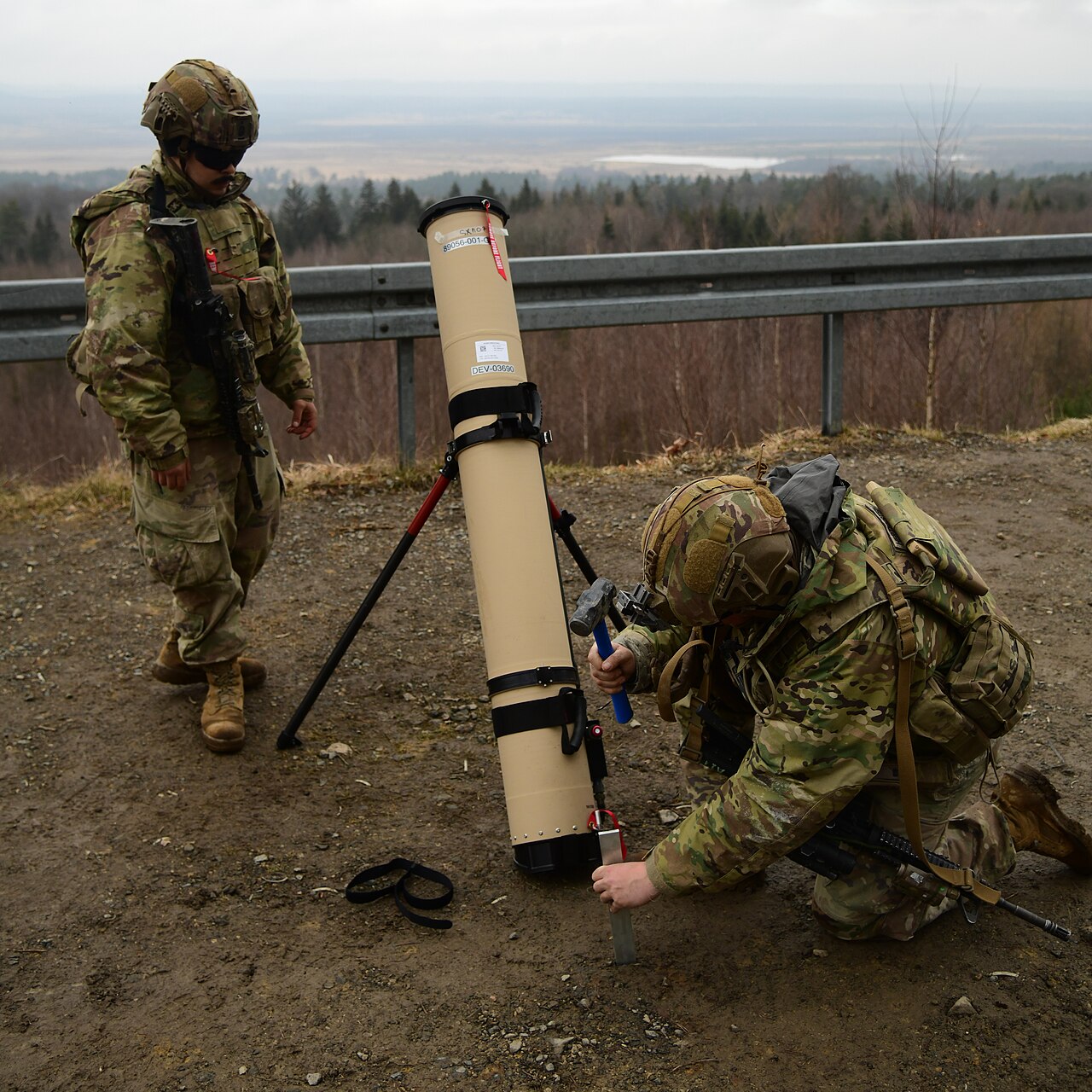
Loitering munitions have gone from niche curiosity to the defining precision weapon of the 2020s, and this ranking orders the ten best of 2026 across seven producing nations. Ukraine’s battlefields have generated more combat data on these systems in four years than the previous three decades produced, and that record, alongside range, warhead options and production scale, drives the list below.
How this ranking works
Systems are weighed on demonstrated combat effectiveness first, with Ukraine and Russia figures treated as operator-reported or manufacturer claims rather than verified fact, then on range and endurance, warhead flexibility, resistance to jamming, production scale and cost. Fielded systems outrank prototypes, and a cheap munition built in thousands outranks a brilliant one built in dozens. Consistent with this site’s editorial policy, companies and platforms headquartered in Israel are excluded from consideration.
The top ten loitering munitions
| Rank | System | Nation | Edge |
|---|---|---|---|
| 1 | Switchblade 600 | USA | Anti-armor warhead, 40 km class reach, scaled US and allied orders |
| 2 | ZALA Lancet | Russia | Operator-reported artillery killer, cheap, continuously iterated |
| 3 | Shahed-136 / Geran-2 | Iran / Russia | Mass production and 1,000+ km claimed range at drone prices |
| 4 | Altius-600M | USA | Tube-launched from air, ground and sea, modular payloads |
| 5 | Warmate | Poland | Combat-proven, widely exported, man-portable |
| 6 | Kargu-2 | Türkiye | Autonomous-capable quadcopter with swarm development |
| 7 | Switchblade 300 Block 20 | USA | Backpack precision for infantry squads |
| 8 | Virtus OWE-V | Germany | VTOL one-way effector designed from Ukraine feedback |
| 9 | KUB-2 | Russia | Kalashnikov’s compact delta-wing striker, manufacturer claims |
| 10 | FH-901 | China | Export-marketed Switchblade analog, manufacturer claims |
The Switchblade 600 takes first on the combination hardest to replicate: a Javelin-derived anti-armor warhead, roughly 40 km of reach with the latest software, and AeroVironment’s production scale backed by US Army and allied programs of record, part of why AeroVironment has become the West’s benchmark loitering-munition house. Russia’s Lancet ranks second on sheer battlefield consequence: operator-reported footage shows it destroying artillery, air defenses and parked aircraft deep behind Ukrainian lines, and successive versions have added range and claimed terminal autonomy.
The Shahed-136, produced in Russia as Geran-2 at a reported scale of thousands per month, is third because mass is a capability: it forced every European air defense debate of the past three years. Anduril’s Altius-600M, Poland’s battle-tested Warmate and the Kargu-2 from Turkish firm STM, famous from a UN report on autonomous use in Libya, anchor the middle order. The backpackable Switchblade 300, Stark’s Ukraine-informed Virtus, Kalashnikov’s KUB-2 and China’s export-oriented FH-901 complete the ten, the last two ranked on manufacturer claims more than documented performance.
What Ukraine taught loitering munitions
Three lessons dominate. First, electronic warfare is the real counter: operator-reported loss rates to jamming exceed losses to any interceptor, which is why fiber-optic control and terminal autonomy are the current arms race. Second, loitering munitions did not replace artillery, they completed the kill chain, with cheap reconnaissance drones like those from Quantum Systems finding targets that Lancets and Switchblades then finish. Third, cost asymmetry matters more than capability: a munition cheap enough to expend on a truck changes tactics in a way an exquisite one never will, a dynamic explored in our loitering munitions explainer.
| System | Warhead class | Range | Basis of figures |
|---|---|---|---|
| Switchblade 600 | Anti-armor, Javelin-derived | About 40 km | Manufacturer figures |
| ZALA Lancet | HEAT / fragmentation, 3-5 kg | 40-70 km, by version | Manufacturer claims, operator-reported use |
| Shahed-136 / Geran-2 | About 50 kg blast-fragmentation | 1,000+ km | Manufacturer claims |
| Altius-600M | Multi-mission, about 3 kg payload | 440 km class endurance-range | Manufacturer figures |
| Warmate | HE or HEAT, about 1.4 kg | Around 30 km | Manufacturer figures, combat use reported |
Loitering munition prices and the cost curve
Reported prices span two orders of magnitude: tens of thousands of dollars for a Switchblade 300 or Warmate, figures around $35,000 claimed for Lancet, and Shahed-type airframes estimated anywhere from $20,000 to $70,000 depending on who is counting and where they are built. Western unit costs remain multiples of Russian and Iranian equivalents, and closing that gap, through automotive-style production of the kind Stark, Anduril and a wave of startups promise, is now the industry’s central competition. The next edition of this list will likely be decided less by seeker performance than by factory throughput.
Loitering munitions frequently asked questions
What is the best loitering munition in 2026?
The AeroVironment Switchblade 600, on its anti-armor warhead, roughly 40 km reach and scaled production for US and allied forces.
What is the difference between a loitering munition and a drone?
A loitering munition is expendable, built around a warhead and destroyed in the attack; a drone is designed to return and be reused.
How much does a loitering munition cost?
From tens of thousands of dollars for man-portable types to low hundreds of thousands for anti-armor systems, with Shahed-type airframes estimated at $20,000-70,000.
How effective is the Lancet in Ukraine?
Operator-reported footage credits it with hundreds of strikes on artillery and air defenses; independent verification of overall effectiveness is limited.
What counters loitering munitions?
Electronic warfare above all, plus gun-based air defense, nets and interceptor drones; jamming resistance is the current design battleground.
- Wikipedia – articles on the ranked systems (accessed October 2026)
- Manufacturer product literature (claims noted as such)
- Open-source reporting on loitering munition use in Ukraine (operator-reported)
- Defence & Tech reporting on the drone and munitions market