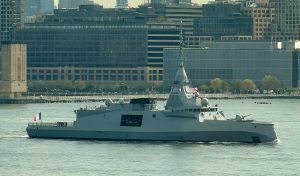

Nuclear Propulsion at Sea, Inside the Six-Nation Club
Nuclear propulsion is the dividing line of naval power: six nations own it, everyone else works around it. A reactor that never refuels at sea turns a submarine into a creature of pure endurance and a carrier into a global airfield. Here is how naval reactors actually work, what they cost, and why the club is finally, through AUKUS, admitting a seventh member.
How a naval reactor works
Nearly every naval reactor is a pressurized-water design: fission heats a primary water loop kept under pressure so it never boils, which hands its heat to a steam generator driving turbines for propulsion and electricity. US and UK boats run highly enriched cores, above 90 percent U-235, dense enough to power a hull for its entire life, while French designs use lower enrichment and periodic refueling, a deliberate trade of logistics for proliferation posture. Modern plants add natural-circulation modes, coolant moving by convection at low power, no pumps, erasing the machinery noise that passive sonar lives on.
What nuclear buys, and what it costs
| What it buys | What it costs |
|---|---|
| Unlimited submerged endurance; food is the limit | Boats from $3-4 billion; carriers past $13 billion |
| Sustained 25-30+ knot transits no AIP boat approaches | Reactor infrastructure, training pipelines, decommissioning bills for decades |
| No snorkeling, no fuel logistics across oceans | Political thresholds, safety regimes, port-access friction |
| Power headroom for big sonars, lasers, catapults | Industrial base only six nations have sustained |
Submarines, where nuclear changes everything
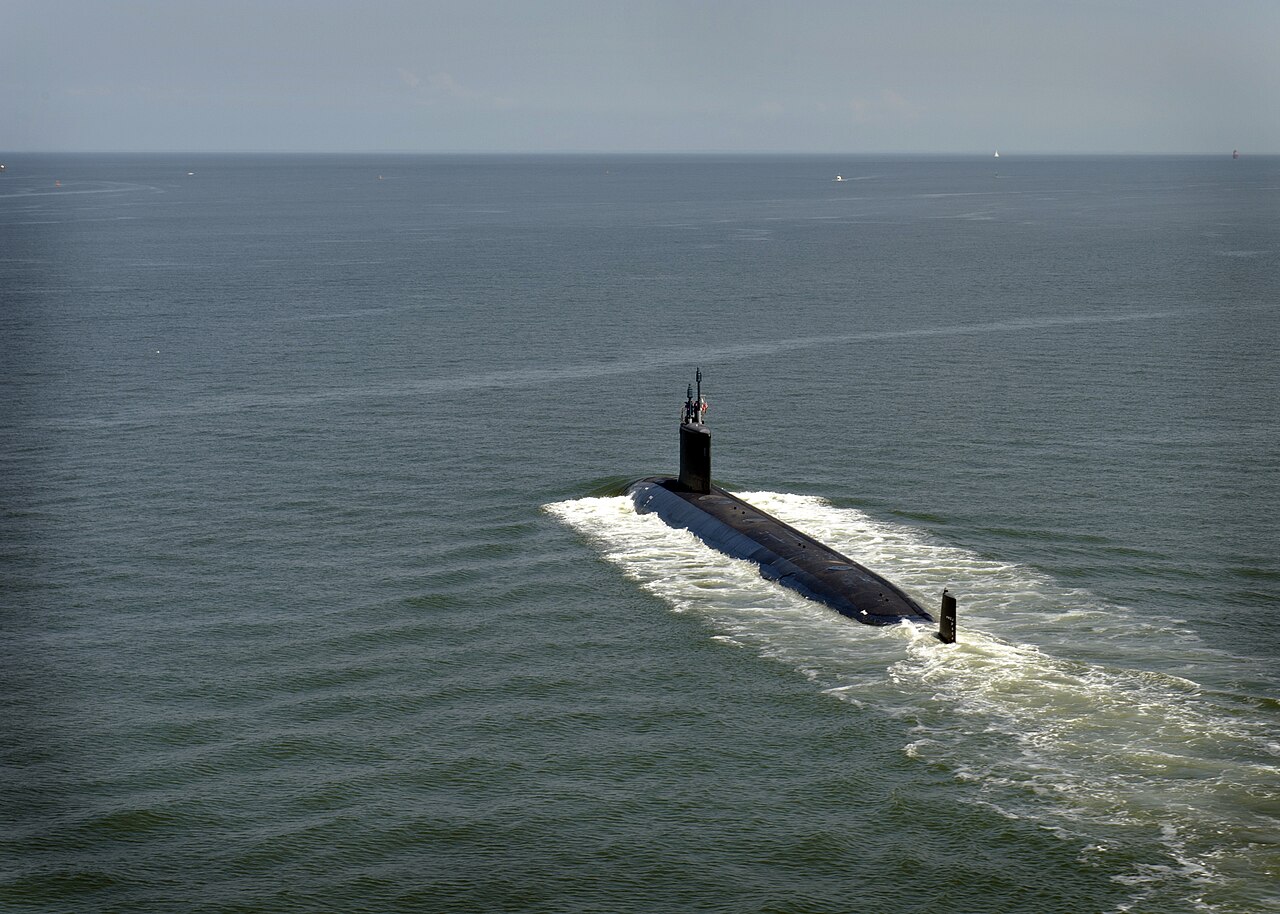
Underwater, the reactor abolishes the diesel boat’s central drama: there is no battery clock, no snorkel window, no trade between hiding and moving. Attack boats shadow fleets across oceans; missile boats vanish for three-month deterrent patrols that are the backbone of five nations’ second-strike forces. The AIP alternatives have narrowed the ambush gap in coastal water, but blue-water persistence, the ability to be anywhere, fast, indefinitely, remains nuclear’s unshared monopoly, which is exactly why Australia judged it worth a generational program to acquire.
Carriers and the surface story
On the surface the calculus is tighter: only the US, with eleven nuclear carriers, and France’s Charles de Gaulle sail nuclear flattops, buying unlimited range, catapult steam and power for ever-hungrier systems, while Russia’s nuclear Kirov cruisers remain the eccentric exception. Everyone else concluded conventional carriers suffice where fleet oilers exist, and the cancelled nuclear cruisers of the Cold War agree. The surface lesson is blunt: nuclear pays underwater always, above water only at superpower scale.
The quieting race, nuclear edition
Reactor noise defined Cold War hunting, and its suppression defines the modern generation: rafted plants, pump-jets, natural circulation at patrol speeds and electric-drive experiments have pushed boats like the Virginia and Suffren toward the ocean’s ambient hum. The stakes compound with range: a boat audible only inside its own weapons reach has functionally won the sensor duel, which is why adversary programs chase decibels as budget lines and why passive arrays’ processing gains matter as much as any new hull. In the nuclear club, silence is the entry fee’s compounding interest.
The club and its AUKUS expansion
Six navies operate nuclear boats, the US, Russia, China, the UK, France and India, with China’s fleet growing fastest and India pairing leased experience with indigenous boomers. AUKUS makes Australia the first non-nuclear-weapons state admitted: Virginia-class boats transferring in the 2030s ahead of the joint SSN-AUKUS build, with naval-grade HEU under safeguards as the arrangement’s most argued precedent. Iran-adjacent debates and Brazil’s long-running program show the same truth from the other side, the reactor, not the hull, is the hard part, industrially and politically alike.
Frequently asked questions
How does a nuclear submarine work?
A pressurized-water reactor heats a sealed loop that raises steam for turbines, driving the boat and its electronics for years per core, or a hull lifetime on HEU designs.
Which countries have nuclear submarines?
The US, Russia, China, the UK, France and India, with Australia joining via AUKUS transfers and construction.
Why are nuclear submarines quieter at low speed?
Natural-circulation reactor modes move coolant without pumps, deleting a key machinery noise source.
Why doesn’t every navy go nuclear?
Cost, multi-billion hulls atop reactor infrastructure, plus political and industrial thresholds few states can cross; AIP covers many missions cheaper.
Do nuclear ships refuel?
US and UK submarine cores last the ship’s life; French designs refuel periodically by design; carriers mid-life refuel in massive overhauls.
- Wikipedia – Nuclear marine propulsion (accessed October 2026)
- Public program documentation on Virginia, Columbia, Barracuda and AUKUS
- Defence & Tech submarine and carrier coverage