
ICEYE, the Finnish Radar Fleet Watching the World’s Wars
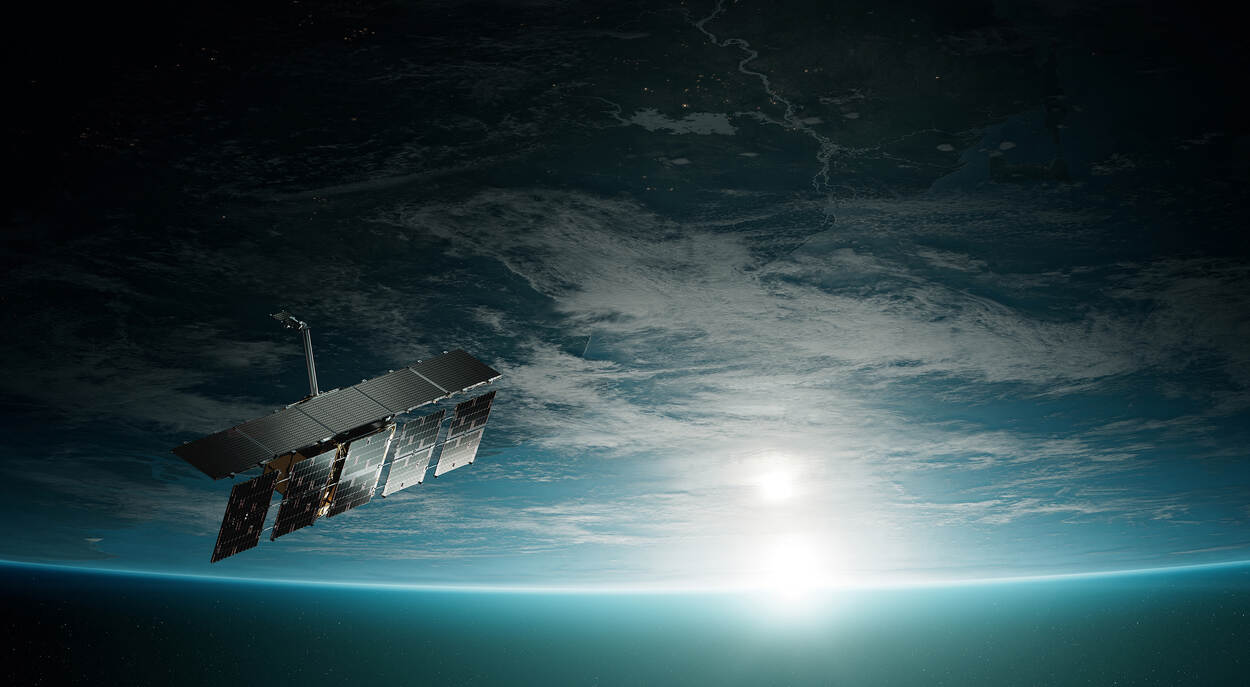
ICEYE built the world’s largest radar-satellite fleet out of a Finnish university project, and its through-cloud imaging has watched the war in Ukraine since 2022. Profitable, 76 satellites launched, and holding a German contract worth up to €2.7 billion, the Espoo company turned small SAR satellites from a science experiment into defense infrastructure that mid-sized nations can now simply buy.
ICEYE at a glance
| Item | Detail |
|---|---|
| Founded | 2014, spun out of Aalto University, Espoo, Finland |
| Sites | Espoo, Warsaw, Irvine (California), Bordon (UK) |
| Employees | 900+ |
| Funding | More than $650 million raised through 2025 |
| 2025 results | About €200 million revenue; profitability reached after doubling sales |
| Fleet | 76 SAR microsatellites launched by 2026, the largest commercial radar constellation |
Why SAR changed the game
Synthetic aperture radar images by echo, not light: it sees through cloud, rain and darkness, the conditions that blind optical satellites exactly when militaries care most. ICEYE’s insight was that SAR, historically the preserve of billion-dollar national systems, could shrink to 100-kilogram microsatellites launched by the batch, trading single-image perfection for revisit rates, dozens of passes where legacy systems managed one. Persistence, it turned out, is what wars and floods actually demand.
From data seller to fleet seller
The business pivoted from selling images to selling sovereignty. Poland, Finland, Greece, the Netherlands, Sweden, Portugal and Japan have ordered dedicated satellites or constellations flown under national control, and Germany’s 2026 agreement, €1.76 billion with options beyond €2.7 billion, is the model’s coronation: a major power outsourcing a reconnaissance layer to a startup’s production line. Manufacturing has scaled to match across Finland, Poland, where the new Warsaw technology center concentrates operations, and a growing US plant for the American market.
Ukraine, the proving ground
In August 2022 a Ukrainian crowdfunding campaign bought Kyiv access to the fleet, the celebrated ‘people’s satellite’, and ICEYE imagery has fed Ukrainian targeting and monitoring since, the first war fought with commercially contracted radar reconnaissance at its core. The episode rewrote procurement psychology: capability once gated behind alliance intelligence-sharing became something a foundation could order, and every ICEYE government deal since cites the Ukrainian precedent, just as rivals from legacy primes to new constellations now chase the market it validated.
Beyond defense, the insurance engine
Half of ICEYE’s story is civilian: its flood and wildfire analytics, built on the same constellation, sell parametric-insurance triggers and disaster response to insurers and governments from Insurity-linked US carriers to Asian agencies. The dual market smooths defense’s lumpy cycles and, crucially, funds revisit-rate improvements defense customers then inherit. Few defense-space firms have a commercial second engine this real, and it shows in the balance sheet that turned profitable while pure-defense peers still burn capital.
The constellation economy
ICEYE’s risks are the sector’s: satellite lifetimes of a few years make the fleet a treadmill, refresh or shrink; launch dependence prices SpaceX’s manifest into every plan; and competition thickens from national programs and funded startups on three continents. Its moats are production tempo, no rival launches radar satellites faster, the analytics stack sold to insurers and disaster agencies as a civilian second engine, and incumbency with NATO-aligned customers at the exact moment European rearmament budgets for space. Profitability, rare in new space, suggests the moats are holding.
Frequently asked questions
What does ICEYE do?
It builds and operates SAR imaging microsatellites, sells radar imagery and delivers dedicated satellites and constellations to governments.
Why is SAR imaging important?
Radar sees through clouds and darkness, giving reliable imaging when optical satellites cannot.
How many satellites has ICEYE launched?
76 by 2026, the largest commercial SAR constellation.
Is ICEYE profitable?
Yes; about €200 million revenue in 2025 with profitability, unusual among space startups.
What is ICEYE’s role in Ukraine?
Since 2022 its constellation has supplied Ukraine radar reconnaissance under a crowdfunded contract, a first for commercial SAR in wartime.
- Wikipedia – ICEYE (accessed October 2026)
- Company announcements on the German contract and Warsaw center
- Public reporting on the Ukraine access agreement