
$1 Billion a Day: Why Trump’s ‘Operation Freedom’ Hit a Strategic Dead End
The tension between the United States and Iran has devolved into a military and economic deadlock in the Strait of Hormuz. Despite costing a staggering $1 billion daily, why did Donald Trump’s ‘Operation Freedom’ fail to deliver the expected results? Here is an analysis of the asymmetric stalemate that is upending US-Iran war scenarios.
As the waters warm in the Strait of Hormuz, global attention is locked on a single question: Is a US-Iran war imminent? “Operation Freedom,” launched by Donald Trump with 15,000 troops, a carrier strike group, and 100 fighter jets, was planned as an overwhelming show of conventional force on paper. However, realities on the ground indicate that this conventional might has crashed into asymmetric barriers.
The Heavy Burden of Defense Economics: $1 Billion Daily
According to leaks from the Pentagon and Congressional sources, the cost of military mobilization in the region has reached a massive $1 billion per day for the US budget. The Trump administration aimed to force Tehran to “beg” at the negotiating table by blockading Iranian ports. Yet, at this juncture, rising oil prices and the risk of a global recession have turned the operation’s cost into a political crisis, rather than just a military one.
The Strait of Hormuz: Just a Strategic Trap?
The biggest risk factor keeping the possibility of a US-Iran war on the table is the Strait of Hormuz. The Tehran administration is playing the Hormuz card to the fullest to secure the relaxation of nuclear sanctions.
Asymmetric Threat: Iran’s naval mines and fast attack craft (FAC) render billion-dollar US destroyers virtually unmaneuverable in narrow waterways.
The Fujairah Attack: Attacks on the UAE’s critical port prove the potential for the conflict to spill beyond the strait and highlight an uncontrolled escalation in the region.
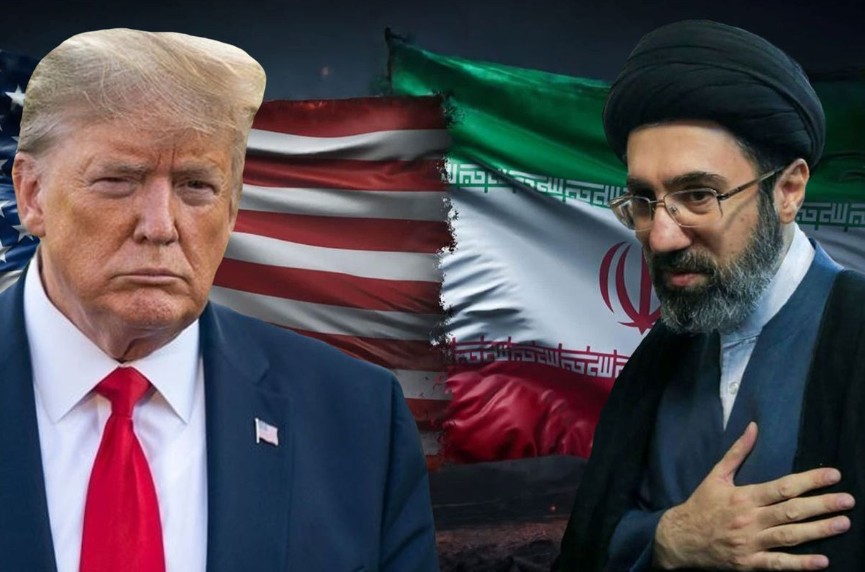
Trump and Khamenei: The Price of No Compromise
According to analysts, at the core of the crisis lies a “fear of appearing weak” rather than sheer military failure.
The Trump Front: Projecting a “strong leader” image to his MAGA base, Trump views withdrawing without extracting concrete nuclear concessions from Iran as political suicide.
The Khamenei Front: Mojtaba Khamenei, striving to maintain his legitimacy in the leadership seat inherited from his father, is forced to yield to the hardliners within the Islamic Revolutionary Guard Corps (IRGC).
Diplomatic Maneuver: 15-Year Nuclear Offer or Tactical Move?
Is Iran’s offer, presented via Pakistan, to “halt uranium enrichment for 15 years” a result of military pressure on the ground, or a stalling tactic by a country in economic freefall? Trump’s response that the offer is “not satisfactory” is the clearest sign that the tension will not dissipate in the short term.
In conclusion; modern defense doctrines show that in critical chokepoints like Hormuz, not only weapons but also economics and psychological warfare are decisive. Trump’s consideration of halting ‘Operation Freedom’ proves that the risk of a US-Iran war cannot be managed by military force alone.