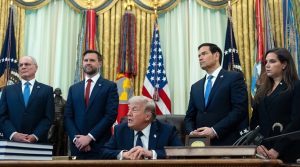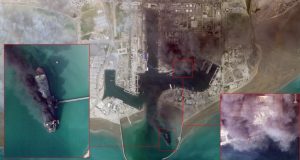

The Mutation of Conflict: Ceasefire as a Strategic Tool
Abdullah Ağar
Strategic Analyst & Military Expert
A ceasefire is rarely the end of a war; it is the moment when a conflict reaches the threshold of becoming uncontrollable and is artificially paused. In these moments, both sides inevitably claim victory. One side claims they “forced” the other into silence, while the other claims they achieved their objectives. But beneath the political posturing lies a deep strategic abyss.
We must read this ceasefire not as a prelude to peace, but as a reconfiguration of goals, force structures, and doctrines. Ceasefires are commodities: they are ‘time’ bought at a heavy price. Parties exhausted by the kinetic intensity of open war use this pause to breathe. They analyze their losses, identify systemic weaknesses, and repair broken supply chains. But this “respite” is seldom for the sake of peace. It is utilized to reposition, re-arm, and analyze the rival’s vulnerabilities for the next engagement. In short, a ceasefire is not a stop; it is the transition of visible movement into invisible preparation.
The Information War and the Battle of Narratives
As the “hot” war cools, the information war reaches a boiling point. We are shifting from the kinetic domain to the cognitive domain. The primary front is no longer a specific geographic coordinate; it is the perception of truth.
In this phase, both sides prioritize the “victory narrative.” The ceasefire becomes a playground for intelligence services, media machines, and psychological operations. The objective is to create an image of the “truth” that favors one’s own system. When open confrontation stops, asymmetric struggle takes its place. This is arguably more dangerous because it is harder to track, and the moment of the next strike becomes mathematically impossible to predict.
“Weakness Engineering”: Iran’s New Doctrine
There is a fundamental shift in the logic of regional deterrence. Traditionally, we lived in an era where “he who controls, wins.” We are now entering an era where “he who disrupts control, defines.”
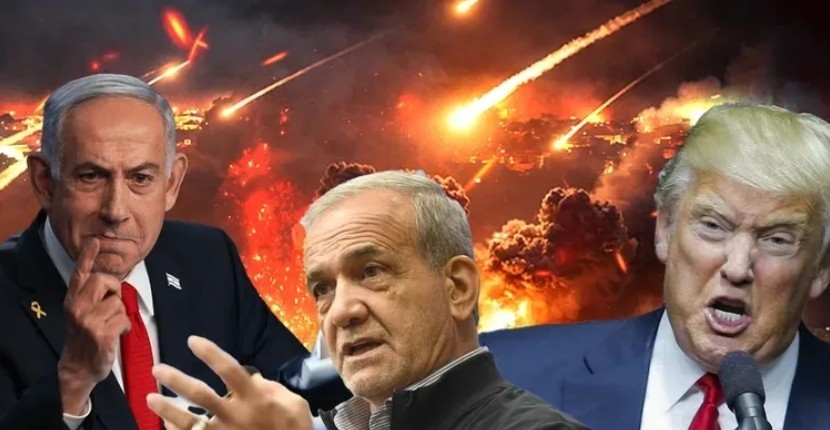
Leaders like Netanyahu and Trump are beginning to realize that Iran is no longer threatening to “win” a conventional war. Instead, Iran is threatening to make the war uncontrollable. This is what I call “Weakness Engineering.” Tehran’s message to the US and Israel is clear: “I will not meet you where you are strong; I will strike where you are fragile, interconnected, and vulnerable. I will disrupt not just your regional order, but the global system you rely on.”
The Global Stakes: Beyond Borders
This struggle is not about geography; it is systemic. It is about how the alliance structure of the Middle East will be shaped and how the global order will be projected through this region. Deep within this conflict lie the questions of:
The future of Asia and the obstruction of China and Russia.
The formalized security architecture of Israel.
The strategic positioning of Turkey within the global system.
While the trenches may be quieter, proxy forces remain active, cyber-attacks are escalating, and economic pressure is intensifying. It is a “managed freeze.”
Regional Implications: A Call for Vigilance
For regional powers like Turkey and Azerbaijan, this ceasefire is not a reason for complacency; it is a call for high-level alertness. In an environment where risks decrease but uncertainty and asymmetry increase, our strategic and geopolitical radars must remain fully operational.
Crises in this region have a “leapfrog effect.” They can jump from the Levant to the South Caucasus in an instant. Energy corridors and security lines become more sensitive. We must move beyond being passive observers and take on the role of active balance-builders.
Conclusion: The Hope within the Risk
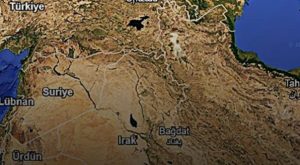
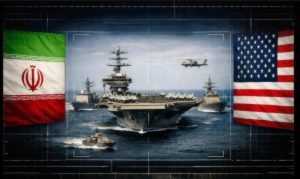
Ultimately, the Iran–US ceasefire is the moment where “war logic” deepens. The map hasn’t changed, but the logic has.
However, within this dark landscape, there is a flicker of hope. The risks associated with a total, uncontrolled war have grown so immense that the fear of the risk itself has become a deterrent. The potential for catastrophe is now so great that it may be the only thing capable of stopping a thousand smaller wars. The question remains: can the actors involved manage this dangerous reality, or will the accumulated energy inevitably lead to a far more powerful explosion?
Abdullah Ağar
Strategic Analyst & Military Expert