
Germany Defense News: The Top 5 Strategic Developments Shaping the Bundeswehr


 React
React
BERLIN — The German Armed Forces (Bundeswehr) are undergoing their most radical transformation since the end of the Cold War. The political promise of the Zeitenwende (Turning Point)—announced in the wake of the Ukraine invasion—has matured from political rhetoric into concrete military capability. Backed by massive funding and a renewed sense of urgency, Berlin is abandoning decades of post-war pacifism to assume its role as the conventional military backbone of Europe.
For defense analysts and geopolitical observers, here are the top five most critical developments currently dominating German Defense News.
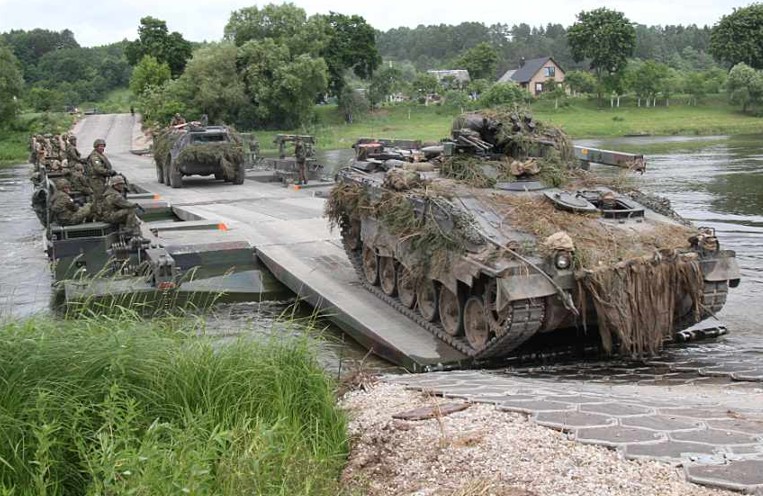
1. The Eastern Flank Fortress: Panzerbrigade 45 in Lithuania In a historic pivot, Germany is executing its first permanent foreign military deployment since World War II. The Bundeswehr is actively standing up Panzerbrigade 45, a combat-ready heavy brigade of nearly 5,000 troops, permanently stationed in Lithuania. This is not a rotational force; it involves building entirely new military infrastructure, schools, and housing on NATO’s highly vulnerable eastern flank. This deployment signals Berlin’s absolute commitment to deterring Russian aggression in the Baltics, cementing Germany as the primary guarantor of Northern European security.
2. The Manpower Crisis: The Push for the “Swedish Model” While procurement is accelerating, the Bundeswehr faces a critical manpower shortage, struggling to reach its target of 203,000 active personnel. In response, Defense Minister Boris Pistorius is aggressively pushing to overhaul the nation’s recruitment strategy. The Ministry of Defense is actively exploring the implementation of a “Swedish Model” of selective conscription. This hybrid national service framework would require all young adults to register, allowing the military to draft the most highly motivated and physically capable candidates, effectively breaking the decades-old taboo against mandatory military service in Germany.
3. The Iron Dome of Europe: ESSI Goes Operational Germany has successfully positioned itself as the leader of the European Sky Shield Initiative (ESSI), a unified, multi-layered air and missile defense architecture now backed by over 20 European nations. Moving beyond standard NATO systems, Berlin is securing the ultimate high-altitude intercept tier by integrating the Israeli-US Arrow 3 hypersonic missile defense system into its arsenal. Combined with domestic IRIS-T SLM batteries for short-to-medium range and Patriot PAC-3s, Germany is actively constructing an impenetrable, integrated aerospace shield over Central Europe.
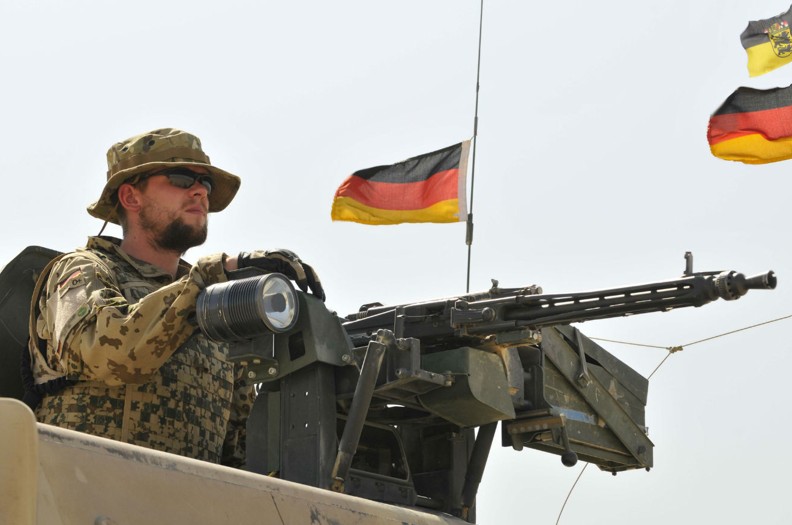
4. The Heavy Armor Renaissance: The Leopard 2A8 Procurement The war in Ukraine has violently reaffirmed the absolute necessity of heavy Main Battle Tanks (MBTs) in conventional land warfare. To backfill vehicles donated to Kyiv and modernize its armored core, the Bundeswehr has initiated massive procurement contracts for the new Leopard 2A8. Featuring integrated active protection systems (APS) to defeat anti-tank guided missiles and drones, upgraded digitized turrets, and enhanced armor, the 2A8 is rapidly becoming the gold standard for European ground forces, driving a lucrative renaissance for the German defense-industrial base.
5. Aerospace Modernization: The F-35 and FCAS Balancing Act The Luftwaffe is executing a complex, dual-track modernization of its combat air power. To immediately secure Germany’s nuclear sharing role within NATO, Berlin is procuring a fleet of F-35A Lightning II stealth fighters to replace the aging Tornado. Simultaneously, Germany remains locked in the politically sensitive, multi-billion-euro Future Combat Air System (FCAS) program alongside France and Spain. Despite industrial friction between Dassault and Airbus, Berlin continues to fund this 6th-generation “system of systems,” recognizing that maintaining sovereign European aerospace technology is critical for long-term strategic autonomy.
React