
What is an Aeroballistic Missile? The Physics of the Hypersonic Air-Launch
In recent global conflicts, few weapons have generated as much geopolitical anxiety and media speculation as the “hypersonic missile.” However, much of the mainstream reporting frequently misidentifies a specific, highly lethal class of weaponry: the Aeroballistic Missile.
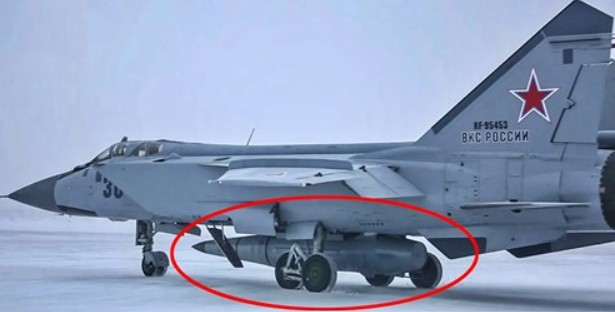
Weapons like the Russian Kh-47M2 Kinzhal or the Israeli Rampage are often branded as bleeding-edge hypersonic glide vehicles. In reality, their underlying technology is much older, relying on a brilliant piece of aerospace engineering that combines the raw power of a ballistic rocket with the altitude of a fighter jet.
So, what exactly is an aeroballistic missile, and why does launching it from the sky make it so dangerous?
The Core Concept: A Ballistic Missile with Wings
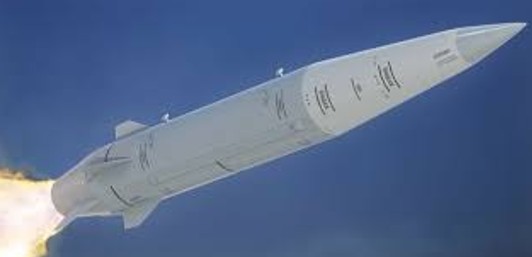
Simply put, an Aeroballistic Missile—formally known as an Air-Launched Ballistic Missile (ALBM)—is a standard, solid-fueled ballistic missile that has been modified to be carried and dropped by an aircraft, rather than being fired from a stationary ground silo or a mobile launch truck.
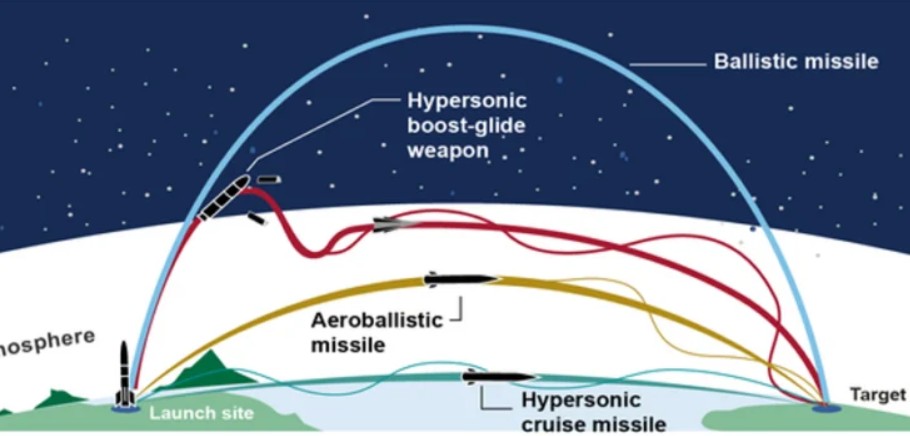
Once released from the aircraft, the missile’s rocket motor ignites, and it follows a standard ballistic (parabolic) trajectory toward its target. However, the true lethality of an aeroballistic missile lies in a physics concept known as the Kinematic Advantage.
Understanding the Kinematic Advantage
When a traditional Short-Range Ballistic Missile (SRBM) is launched from the ground, it faces two massive physics problems:
Zero Initial Velocity: It starts at 0 km/h and must use a massive amount of its rocket fuel simply to overcome its own dead weight and the initial pull of gravity.
Atmospheric Drag: It must fight its way through the troposphere—the thickest, densest layer of the Earth’s atmosphere. Pushing through this dense air creates extreme aerodynamic drag, robbing the missile of speed and energy.
An aeroballistic missile entirely bypasses both of these problems.
Instead of launching from the ground, the missile is carried by a supersonic interceptor (like a MiG-31K) or a strategic bomber. When the aircraft releases the missile, it is already flying at altitudes exceeding 15,000 meters (50,000 feet) and traveling at speeds of Mach 2.
Free Speed: The missile inherits the speed of the carrier aircraft. It begins its flight already traveling at supersonic velocities, meaning it doesn’t have to waste fuel accelerating from zero.
Thin Air: At 50,000 feet, the atmosphere is incredibly thin. The missile faces almost zero aerodynamic drag during its critical boost phase.
The Hypersonic Result
Because the aeroballistic missile saves all the rocket fuel it would have otherwise wasted fighting gravity and thick air, it can use 100% of its propellant to accelerate to staggering speeds. This allows a relatively standard ballistic missile to achieve hypersonic terminal velocities (often exceeding Mach 5 or Mach 10) as it plunges back down toward its target.
Furthermore, because the launch platform is an aircraft, the missile’s launch origin is highly unpredictable. A ground-based radar cannot monitor a static silo; it must scan the entire sky for an aircraft that could release its deadly payload from hundreds of miles away in any direction.
In summary, an aeroballistic missile does not rely on exotic new scramjet engines. It relies on the ruthless efficiency of physics—using an aircraft as the ultimate, reusable first-stage booster rocket to deliver a devastating, unstoppable strike.