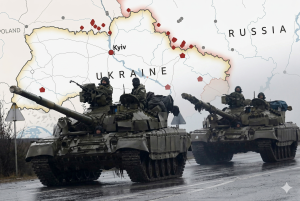

The Architecture of Asymmetric Warfare: Understanding the Global Proxy Web


 React
React
The classic image of war—two uniformed armies clashing on a clearly defined battlefield—is largely a relic of the 20th century. Today, direct conventional warfare between major state powers carries the unacceptable risks of nuclear escalation and mutual economic destruction. To project power, bleed adversaries, and establish regional hegemony without crossing the threshold of all-out war, nations have turned to a complex, shadowy alternative: The Proxy War.
But the proxy wars of the 2020s are not the covert guerrilla skirmishes of the Cold War. They are highly sophisticated, technologically augmented campaigns of asymmetric warfare.
What is a Modern Proxy War?
At its core, a proxy war occurs when a major power instigates or heavily funds a conflict without becoming directly involved in the primary hostilities. Instead of deploying their own conventional troops, “State Sponsors” provide funding, intelligence, ideological frameworks, and—crucially—advanced weaponry to non-state actors, local militias, or private military companies.
The primary strategic benefit for the sponsor state is plausible deniability. It allows a nation to aggressively harass an adversary while technically maintaining diplomatic distance, thereby avoiding direct retaliation.
The Middle East: The Epicenter of Proxy Conflict
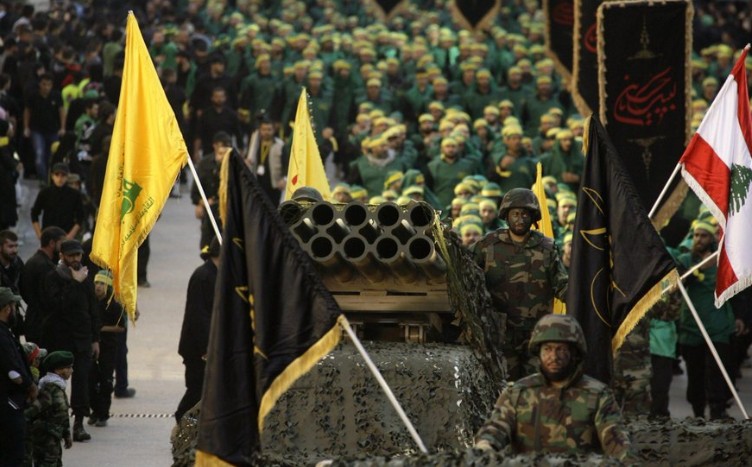
Nowhere is the architecture of proxy warfare more visible than in the Middle East. Iran’s “Axis of Resistance” is arguably the most successful and studied proxy network in modern military history. Rather than attempting to match the multi-billion dollar conventional air forces of its regional rivals or the naval supremacy of the United States, Tehran has cultivated a massive network of allied militias across Lebanon (Hezbollah), Yemen (the Houthis), Iraq, and Syria.
These groups act as forward operating bases. They allow their sponsor to project power hundreds of miles beyond its own borders, creating a strategic “ring of fire” around adversaries without risking a direct strike on its homeland.
The Multipolar Proxy Web: Beyond the Axis of Resistance
However, Iran is far from the only actor utilizing this architecture. Proxy warfare is actively utilized by nearly all regional and global powers to secure their strategic interests:
-
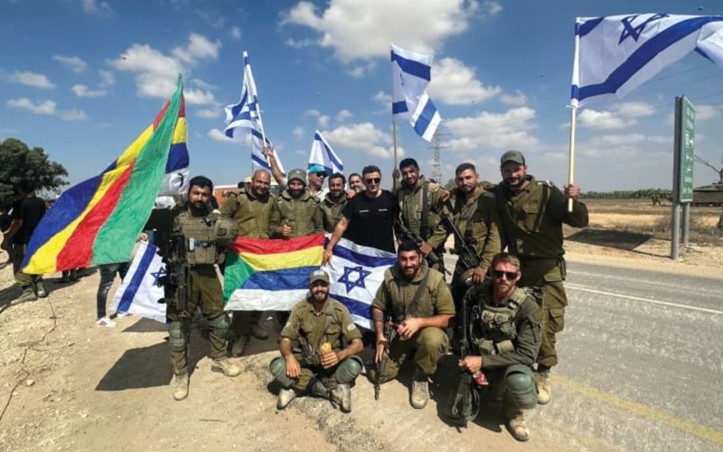
Israel’s Buffer Strategy: While Israel possesses unquestionable conventional military superiority, it has historically recognized the tactical necessity of proxy engagement. During the heights of the Syrian Civil War, Israel provided covert support, funding, and medical aid to various local rebel militias in southern Syria. This was a calculated proxy strategy designed to maintain a physical buffer zone near the Golan Heights, ensuring that Iranian-backed forces remained far from Israeli borders.
-
The Western Vacuum and the Genesis of ISIS: Furthermore, the genesis of extremist groups like ISIS cannot be separated from Western actions. While not a conventional “state-sponsored proxy” in the traditional sense, the catastrophic power vacuums and systemic instability caused by Western military interventions in Iraq and Syria undeniably served as the incubator for these radical non-state actors. This catastrophic foreign policy failure was so profound that it became heavily weaponized in US domestic politics, with prominent figures like Donald Trump famously accusing the Obama administration of effectively “founding” ISIS through their geopolitical negligence.
-
The UAE’s Regional Expansion: Regional players like the United Arab Emirates (UAE) have aggressively adopted proxy warfare as a primary tool for projecting power. To secure critical maritime routes and expand its influence, the UAE has provided substantial financial and military backing to the Rapid Support Forces (RSF) in Sudan and the Southern Transitional Council (STC) in Yemen. By utilizing heavily armed local factions, the UAE effectively shapes the geopolitical landscape of the Red Sea and the Horn of Africa without deploying its own standing army.
-
Russia’s Corporate Mercenaries: On a global scale, Russia has institutionalized the proxy model through Private Military Companies (PMCs) like the Wagner Group (now rebranded under the Africa Corps). By deploying these state-sponsored mercenaries to conflict zones in Libya, Mali, and the Central African Republic, Moscow secures lucrative resource contracts and disrupts Western influence, all while maintaining official diplomatic deniability in the halls of the United Nations.
The Drone Revolution: A Strategic Force Multiplier
What makes modern proxy warfare truly dangerous is the democratization of lethal technology. The introduction of cheap, autonomous drone technology has fundamentally altered the math of asymmetric warfare. A proxy group can now launch a swarm of drones costing perhaps $20,000 each to target a multi-million dollar air defense system or a vital energy refinery.
This paradigm presents an unsolvable economic and tactical nightmare for conventional militaries. When a superpower has to fire a $2 million interceptor missile to shoot down a $20,000 proxy drone, the non-state actor is winning the economic war, regardless of whether the drone hits its target.
Conclusion: The Permanent State of Gray Zone Conflict
Proxy warfare is not a temporary phase of geopolitical instability; it is the new permanent state of global competition. We have firmly entered an era of “Gray Zone” conflict. Until conventional militaries develop drastically cheaper, directed-energy defense systems to counter cheap drone swarms, the geopolitical leverage will remain firmly in the hands of the state sponsors who master the dark art of the proxy network.
React