China’s Anti-Ship Missiles: YJ-21, YJ-18, YJ-12 and Carrier Killers
No country has invested more in sinking ships than China. Its anti-ship arsenal ranges from the subsonic YJ-83 on small patrol boats to the supersonic YJ-12 and YJ-18, the hypersonic YJ-21 and the DF-21D and DF-26 ballistic missiles designed to hit aircraft carriers more than 1,500 kilometres away. Together they form the core of what US planners call China’s “anti-access” strategy: making the seas near China too dangerous for American warships.
This guide sets out China’s main anti-ship missiles, who launches them and how they would be used.
What anti-ship missiles does China have?
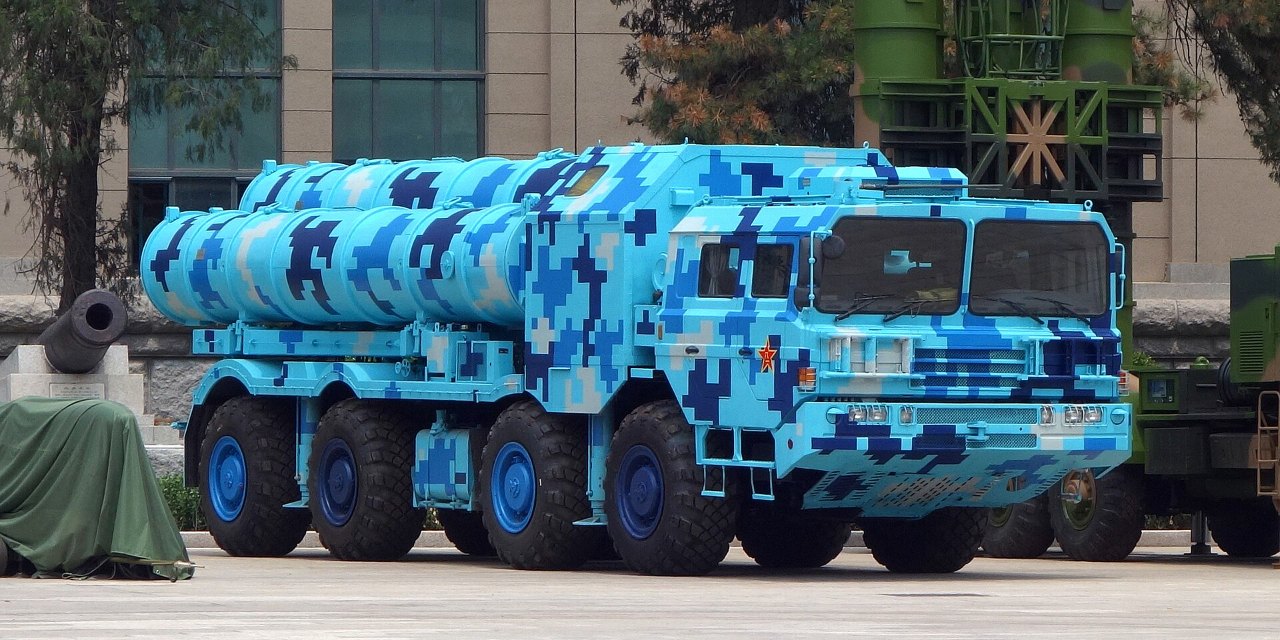
Chinese anti-ship missiles carry the prefix YJ, short for Ying Ji, or “eagle strike”. They can be launched from ships, submarines, aircraft and trucks, and they are designed to be fired in large salvos from several directions at once, so that a ship’s defences are overwhelmed. Above them sit the land-based anti-ship ballistic missiles of the PLA Rocket Force.
| Missile | Type | Range (est.) | Launched from |
|---|---|---|---|
| DF-26 / DF-26D | Anti-ship ballistic missile | About 4,000 km | Road-mobile launchers |
| DF-21D | Anti-ship ballistic missile | About 1,500 km | Road-mobile launchers |
| YJ-21 | Hypersonic missile | About 1,000-1,500 km | Type 055 destroyers, H-6 bombers |
| YJ-17 / YJ-19 / YJ-20 | Hypersonic anti-ship missiles | Up to about 1,400 km (YJ-19, claimed) | Shown at 2025 parade |
| YJ-18 | Cruise missile with supersonic final dash | About 540 km | Destroyers and submarines |
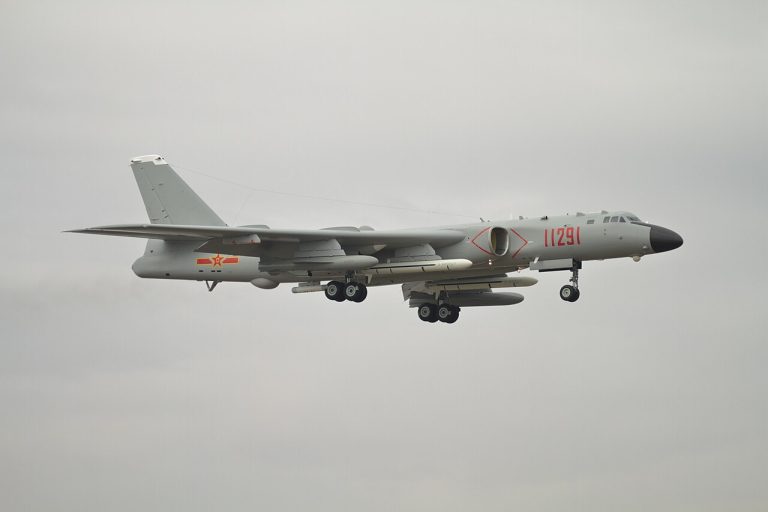
| YJ-12 | Supersonic cruise missile | About 400-500 km | H-6J bombers, J-16, ships |
| YJ-83 / YJ-62 | Subsonic cruise missiles | About 180-400 km | Frigates, corvettes, coastal batteries |
| YJ-15 | Supersonic missile | Medium | Shown at 2025 parade |
The “carrier killers”: DF-21D and DF-26
The DF-21D, first displayed in 2015, was the world’s first ballistic missile designed to hit a moving ship. It is fired high into the atmosphere and its warhead manoeuvres as it descends at very high speed towards its target. The DF-26, with a range of about 4,000 kilometres, extends that threat as far as Guam. Both depend on satellites, over-the-horizon radars and drones to find their targets far out at sea. Our guides to the DF-21D and DF-26 cover them in detail.
YJ-21 and YJ-18
The YJ-21 is the most dangerous of China’s ship-launched missiles. Fired from the vertical cells of the Type 055 destroyer and from H-6 bombers, it is believed to reach hypersonic speed and dive steeply onto its target, leaving defenders very little time. The YJ-18 takes a different approach: it cruises at low level at subsonic speed and then accelerates to about three times the speed of sound in the last few dozen kilometres. It arms Type 052D and Type 055 destroyers and, in a torpedo-tube version, Chinese submarines. These ships are described in our guide to Chinese warships, and the hypersonic types in our guide to Chinese hypersonic missiles.
YJ-12 and coastal missiles
The YJ-12 is a large ramjet-powered missile that flies at more than three times the speed of sound. Carried by H-6J bombers and J-16 fighters, it gives the navy and air force a way to strike ships from beyond the range of their air defences. Along the coast, truck-mounted batteries of YJ-12B and YJ-62 missiles cover the Taiwan Strait and the approaches to China’s ports. China also exports anti-ship missiles widely, including the C-802 family, a version of which Iran and its allies have used in the Middle East.
How does China compare?
The US Navy has long relied on the subsonic Harpoon and is only now fielding longer-range weapons such as the Naval Strike Missile, the LRASM and an anti-ship Tomahawk. China has more types, with longer ranges and higher speeds. Our ranking of the best anti-ship missiles compares them, and Taiwan’s own answer to China’s fleet is described in our guide to the Hsiung Feng III.
Frequently asked questions
What anti-ship missiles does China have?
China’s main anti-ship missiles include the DF-21D and DF-26 ballistic missiles, the YJ-21 hypersonic missile, the YJ-18, YJ-12 and YJ-83 cruise missiles and new hypersonic types such as the YJ-19.
What is China’s “carrier killer”?
The term usually refers to the DF-21D and DF-26 ballistic missiles, which are designed to hit aircraft carriers at sea.
What is the YJ-21?
A Chinese hypersonic anti-ship missile launched from Type 055 destroyers and H-6 bombers, believed to dive onto ships at very high speed.
How far can Chinese anti-ship missiles reach?
The DF-26 reaches about 4,000 kilometres, the DF-21D about 1,500 kilometres and the YJ-18 about 540 kilometres.
Can China sink a US aircraft carrier?
China has built missiles specifically for that purpose, but hitting a moving carrier far out at sea would require it to find and track the ship in wartime, which is far from certain.
Does China export anti-ship missiles?
Yes. The C-802, C-705 and other export versions have been sold widely, especially in the Middle East and Asia.
- US Department of Defense – Military and Security Developments Involving the People’s Republic of China 2025: media.defense.gov
- Naval News – Chinese military parade details new naval missiles, drones (September 2025): navalnews.com
- Defense One – China’s new missiles: parade showpieces or showstoppers? (September 2025): defenseone.com