How Many Aircraft Carriers Does the UK Have? Queen Elizabeth Class
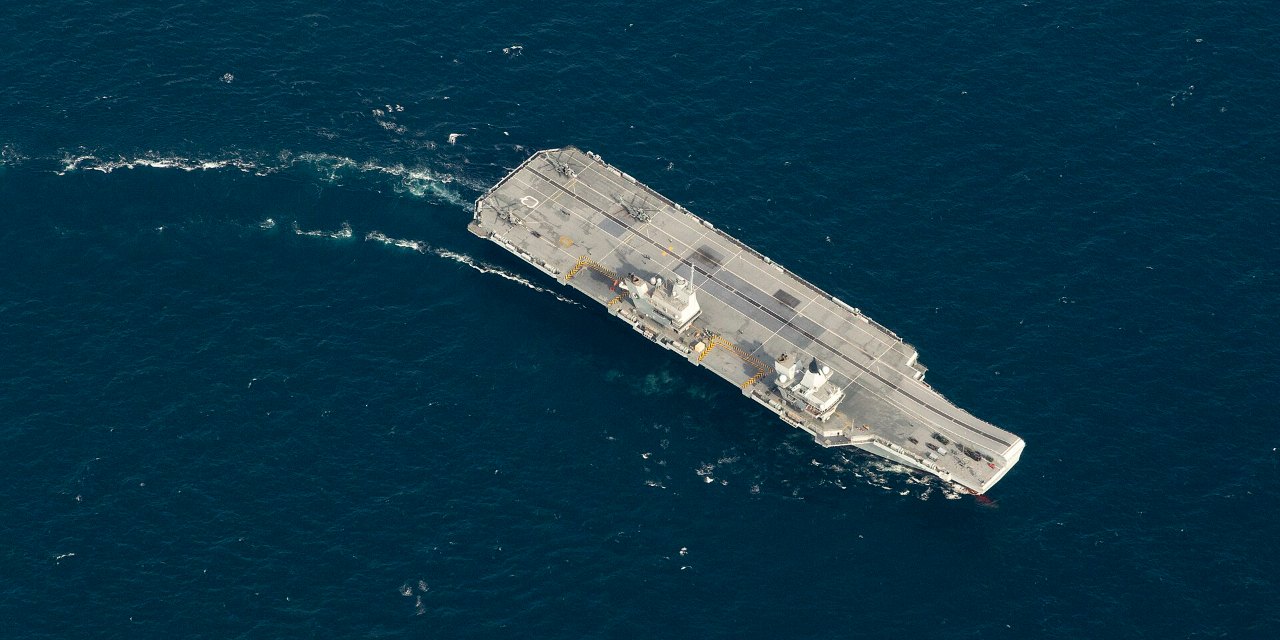
The United Kingdom has two aircraft carriers, HMS Queen Elizabeth and HMS Prince of Wales. They are the largest warships the Royal Navy has ever built, and they make Britain one of only a handful of countries able to send fixed-wing jets to sea. In 2025 HMS Prince of Wales led an eight-month deployment to the Pacific and back, and by November it carried 24 British F-35Bs, the most ever embarked on either ship.
This guide explains what the carriers are, what they carry, how they are used and the criticism that follows them.
How many aircraft carriers does the UK have?
Two, of the same class. Britain has not had more than one carrier fully available at a time for most of their service, because one is usually in maintenance or training.
| Ship | Pennant | Commissioned | Home port | Status in 2026 |
|---|---|---|---|---|
| HMS Queen Elizabeth | R08 | December 2017 | Portsmouth | In maintenance and refit |
| HMS Prince of Wales | R09 | December 2019 | Portsmouth | Returned from world deployment in November 2025 |
| Item | Figure |
|---|---|
| Displacement | About 65,000 tonnes |
| Length | 284 m |
| Flight deck width | 73 m |
| Speed | Over 25 knots |
| Crew | About 700 for the ship; about 1,600 with an air wing |
| Aircraft | Usually up to 24 F-35Bs plus helicopters; more in surge |
| Launch method | Ski-jump ramp, no catapults |
| Cost | About £3 billion each |
How are they designed?
The ships were built by the Aircraft Carrier Alliance, a partnership of BAE Systems, Babcock, Thales and the Ministry of Defence, from blocks made in six yards and assembled at Rosyth in Scotland. They have two islands, one to steer the ship and one to control flying, so that the funnels of the two engine rooms can be spaced apart. They have no catapults or arrester wires. Aircraft take off from a ski-jump and land vertically, which is why the F-35B, described in our guide to British fighter jets, is the only jet they can operate.
The decision to build them without catapults has been argued over for fifteen years. It made the ships cheaper to run and simpler to man, but it limits them to short take-off aircraft and helicopters and rules out the heavier airborne early-warning planes and tankers of a US or French carrier.
Operation Highmast: the 2025 deployment
HMS Prince of Wales left Portsmouth in April 2025 at the head of the UK Carrier Strike Group, with escorts, a tanker and a Norwegian frigate. Over 222 days it sailed through the Mediterranean, the Red Sea and the Indian Ocean to Australia, Japan and back, exercising with more than 40 countries. In November, in the Mediterranean, it embarked 24 F-35Bs for an Italian-led exercise, and on 17 November the Ministry of Defence declared the carrier strike group fully operational. The ship returned to Portsmouth on 30 November.
What do the carriers carry?
A typical air group combines F-35Bs from the RAF’s 617 Squadron and the Royal Navy’s 809 Naval Air Squadron with Merlin helicopters for anti-submarine warfare and airborne early warning, and Wildcats for surface search. The ships can also carry Chinooks or Apaches for amphibious operations. Escorts usually include a Type 45 destroyer for air defence, a Type 23 frigate for anti-submarine work and an Astute-class attack submarine. Weapons carried by the jets are in our guide to British missiles.
The Royal Navy wants a hybrid air wing, in which drones fly beside the F-35s. It has tested jet-powered target drones and cargo drones from the ships, and the 2025 Strategic Defence Review backed the idea. Drones that can take off from a ski-jump and do useful work at sea are still at an early stage.
Are the carriers worth it?
The case against them is familiar. Two ships cost about £6 billion to build and far more to run, and Britain has struggled to fill them with aircraft and to provide enough escorts. Both have spent long periods in repair, including a broken propeller shaft on HMS Prince of Wales in 2022 and another on HMS Queen Elizabeth in 2024. Critics say large ships are vulnerable to modern missiles and drones.
The case for them is that nothing else Britain has can put fighter aircraft where there is no friendly runway, and that a carrier gives allies a reason to train and plan with the Royal Navy. The 2025 deployment, which took a fully armed air wing round the world and back, was the strongest argument the navy has yet made.
Frequently asked questions
How many aircraft carriers does the UK have?
Two: HMS Queen Elizabeth and HMS Prince of Wales, both of the Queen Elizabeth class.
How big are the UK aircraft carriers?
About 65,000 tonnes and 284 metres long, the largest ships ever built for the Royal Navy.
How many jets can a Queen Elizabeth-class carrier carry?
It normally operates up to 24 F-35Bs plus helicopters, and can carry more for short periods.
Do the UK carriers have catapults?
No. They use a ski-jump ramp, so they can operate only short take-off and vertical landing jets such as the F-35B.
How much did the UK aircraft carriers cost?
About £6 billion for the two ships, or roughly £3 billion each.
Where are the UK carriers based?
Portsmouth, although major dockings take place at Rosyth in Scotland, where the ships were assembled.
- Navy Lookout – CSG25 and Operation Highmast coverage (2025): navylookout.com
- European Security & Defence – HMS Prince of Wales embarks 24 F-35Bs (November 2025): euro-sd.com
- UK Ministry of Defence – UK armed forces equipment and formations 2026: gov.uk
- UK Defence Journal – Britain is about to have two aircraft carriers at sea: ukdefencejournal.org.uk