
What Missiles Does Turkey Have? Tayfun, Bora, Atmaca and SOM
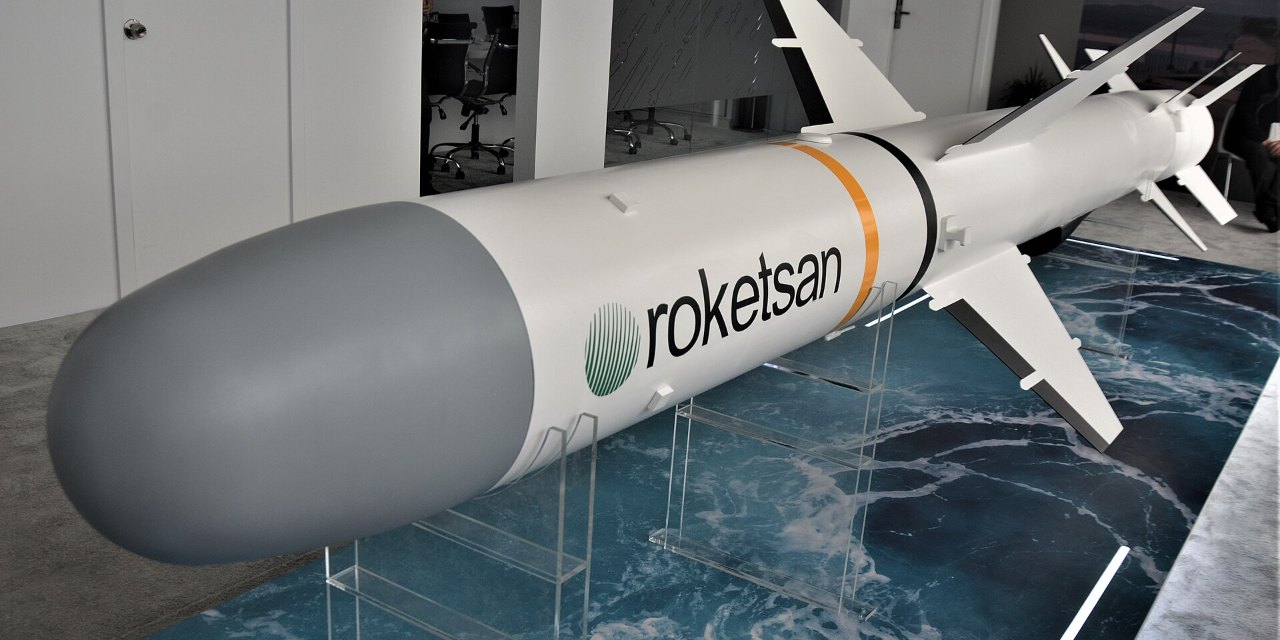
Turkey builds almost every class of missile it fields, from the 280 km Bora and the Tayfun ballistic missile family to the Atmaca anti-ship missile and the air-launched SOM. In May 2026 it went a step further and showed a mock-up of an intercontinental missile, the Yıldırımhan, with a claimed range of more than 6,000 km.
This guide sets out the main Turkish missiles by role, with their ranges, their status and what is still on the drawing board. It is the first in a series on Turkey’s weapons.
What missiles does Turkey have?
Turkish missiles fall into five groups: ballistic missiles, cruise missiles, anti-ship missiles, air-to-air missiles and surface-to-air interceptors. Nearly all come from two organisations. Roketsan, founded in 1988, builds most of them, and the state research institute TÜBİTAK SAGE designs the air-launched weapons. The interceptors belong to the Steel Dome air defence network and are covered later in this series, so this article concentrates on the weapons that strike.
| Missile | Role | Launched from | Range |
|---|---|---|---|
| Bora (Khan) | Short-range ballistic missile | 8×8 truck launcher | 280 km |
| Tayfun Block 1 | Short-range ballistic missile | 8×8 truck launcher | About 800 km; 561 km shown in test |
| Tayfun Block 4 | Ballistic missile, in production | 8×8 truck launcher | 1,000 to 1,500 km |
| Cenk | Medium-range ballistic missile, in development | Road-mobile trailer | Not disclosed |
| Atmaca | Anti-ship cruise missile | Ships, submarines, coastal batteries | About 250 km |
| Kara Atmaca | Ground-launched cruise missile | Truck launcher | 400 km |
| SOM | Air-launched cruise missile | F-16, F-4E | More than 250 km |
| Gezgin | Long-range cruise missile, in development | Ships, submarines, ground launchers | Estimated above 1,000 km |
| Gökdoğan | Radar-guided air-to-air missile | F-16 | More than 65 km |
| Bozdoğan | Infrared air-to-air missile | F-16 | More than 25 km |
Ballistic missiles: Bora, Tayfun and Cenk
The ballistic force started with imports. Turkey bought American ATACMS in the 1990s and built the 150 km J-600T Yıldırım from a Chinese design. Bora, in service since 2017, was the first fully Turkish missile: a 2.5-tonne weapon with a 470 kg warhead and a range of 280 km. More than 900 have been built, and Indonesia took delivery of the export version, the Khan, in 2025.
Tayfun changed the picture. It came to light in October 2022, when a test round flew 561 km over the Black Sea in 456 seconds, and it entered production the following year. The family has grown quickly. The Defence Ministry announced in May 2026 that Block 2 had entered the inventory. On 4 July 2026 a Block 3 round fitted with a seeker destroyed a manoeuvring unmanned boat in the Black Sea, an anti-ship capability that only China, Iran and Pakistan are known to field. Block 4, first shown in July 2025, is a different size of weapon: 10 metres long and 7.2 tonnes, with a range put at 1,000 to 1,500 km. Roketsan says it will exceed 1,500 km.
Cenk sits above Tayfun. Turkish officials describe it as a medium-range ballistic missile, and an unmarked missile larger than the Block 4 stood beside it when President Recep Tayyip Erdoğan opened new Roketsan plants on 7 April 2026. Roketsan has not confirmed that this was Cenk, has announced no flight test and has published no range. Outside estimates run to 2,000 km.
One count, compiled by the Turkish daily Sözcü from SIPRI data and reported in March 2026, puts the stock at 322 ballistic missiles of all types. That is the seventh-largest arsenal in the world and about twice the size of Greece’s.
Yıldırımhan: does Turkey have an ICBM?
Not yet. Defence Minister Yaşar Güler was at the SAHA 2026 exhibition in Istanbul on 5 May 2026 when the Yıldırımhan was revealed, but what was revealed was a mock-up. The project belongs to the ministry’s own research centre, MSB ARGE, and not to Roketsan, and its chief designer says the work ran in secret for ten years. Published figures describe a liquid-fuelled missile 17.5 metres long, weighing about 30 tonnes, that would carry a three-tonne conventional warhead more than 6,000 km.
No flight test has been reported and no timetable has been published, although officials say first test results will be announced soon. Service entry is spoken of for the 2030s. If it is built, Turkey would be the fourth NATO member with a missile of intercontinental reach, after the United States, Britain and France, and the only one of the four without nuclear warheads to put on it. That is the part that has drawn attention abroad. Turkish commentary has presented the missile as proof of what the country’s industry can now build, and Güler tied it to strategic autonomy.
Cruise and anti-ship missiles: SOM, Atmaca and Gezgin
SOM is the air force’s stand-off weapon. It weighs about 620 kg, carries a 230 kg warhead more than 250 km at high subsonic speed and has been in service since 2017. The SOM-J, a smaller version first designed to fit inside the F-35’s weapons bay, scored a direct hit in a live-warhead test on 21 March 2026 and is intended for the KAAN fighter and for Turkish combat drones. Since 2022 the missile has flown on a Turkish engine, the Kale KTJ-3200, in place of a French one.
Atmaca did the same job for the navy. It began replacing the American Harpoon in 2022, flies about 250 km and was fired from a submarine for the first time in March 2025. Its ground-launched relative, Kara Atmaca, reaches 400 km, and the army received its first rounds on 7 April 2026. Indonesia has ordered Atmaca, with a first batch of 45 reported by Janes.
Gezgin fills the gap at long range. It is a cruise missile in the class of the American Tomahawk, designed by TÜBİTAK SAGE for launch from ships, submarines and ground vehicles. Its range has not been published, and estimates start above 1,000 km. A first launch was reported in May 2025. It is meant to fire from MİDLAS, the Turkish-made vertical launcher on the navy’s new frigates.
Air-to-air missiles: Gökdoğan and Bozdoğan
Until recently every Turkish fighter carried American AMRAAM and Sidewinder missiles. The replacements come from TÜBİTAK SAGE. Bozdoğan is a short-range infrared missile with a range of more than 25 km, and Gökdoğan is a radar-guided missile that reaches beyond 65 km. A single F-16 fired both on 19 October 2025 and hit two target drones. A low-rate production contract signed in 2023 covered 25 of each. A ramjet-powered missile, Gökhan, is in ground testing.
How far can Turkish missiles reach?
Further every year, and that is policy. For most of its history the programme stayed under 300 km, the threshold that the Missile Technology Control Regime sets for exports. Erdoğan has said in public that the 561 km Tayfun flew in 2022 was not enough and named 1,000 km as the next mark. A report cited by the Foundation for Defense of Democracies says he later ordered work on missiles that reach beyond 2,000 km.
The geography explains the interest. A 1,000 km missile launched from Turkish soil covers Greece, Cyprus, Israel, Iraq and western Iran, Tehran included. At 1,500 km, Austria’s Militär Aktuell noted, parts of Bavaria come within range. The programme is now watched in central Europe as well as in Athens.
Production is being scaled to match. The plants Erdoğan opened in April 2026 at Lalahan near Ankara and at Kırıkkale cost more than $1 billion and are meant to raise missile output fivefold. Roketsan’s chief executive, Murat İkinci, says the company took more than $10 billion in new orders in 2025.
Frequently asked questions
What is Turkey’s longest-range missile?
In service, the Tayfun family. Block 4, now in production, is credited with 1,000 to 1,500 km. The Yıldırımhan ICBM, with a claimed range of more than 6,000 km, exists only as a mock-up.
How many ballistic missiles does Turkey have?
About 322, according to a SIPRI-based count published in March 2026. Turkey does not publish a figure of its own.
Does Turkey have hypersonic missiles?
Tayfun exceeds Mach 5 in flight, as most ballistic missiles of its range do. Turkey has not fielded a hypersonic glide vehicle or a hypersonic cruise missile.
What is the range of the Tayfun missile?
A test in 2022 covered 561 km. Block 1 is rated at about 800 km and Block 4 at 1,000 to 1,500 km.
Does Turkey have cruise missiles?
Yes. SOM is launched from aircraft, Atmaca from ships and submarines and Kara Atmaca from trucks. The longer-range Gezgin is in development.
Who makes Turkey’s missiles?
Mostly Roketsan, with air-launched weapons designed by TÜBİTAK SAGE. The Yıldırımhan is a Defence Ministry project.
- Turkish Minute – Turkey has 322 ballistic missiles, SIPRI data (March 2026): turkishminute.com
- Quwa – Tayfun Block 3 becomes Türkiye’s first anti-ship ballistic missile (July 2026): quwa.org
- Militär Aktuell – Roketsan Tayfun Block 4 (April 2026): militaeraktuell.at
- Defence Security Asia – Unidentified missile shown beside Tayfun Block 4 (April 2026): defencesecurityasia.com
- Yetkin Report – What does Türkiye’s ICBM announcement mean? (May 2026): yetkinreport.com
- Foundation for Defense of Democracies – Turkey’s missile ambitions (May 2026): fdd.org
- The Aviationist – Turkey test fires Gökdoğan and Bozdoğan missiles (October 2025): theaviationist.com
- Wikipedia – Tayfun, Bora, Atmaca, SOM and Yıldırımhan entries (specifications and dates): en.wikipedia.org