Embraer Delivers First C-390 Millennium to Uzbekistan Air Force
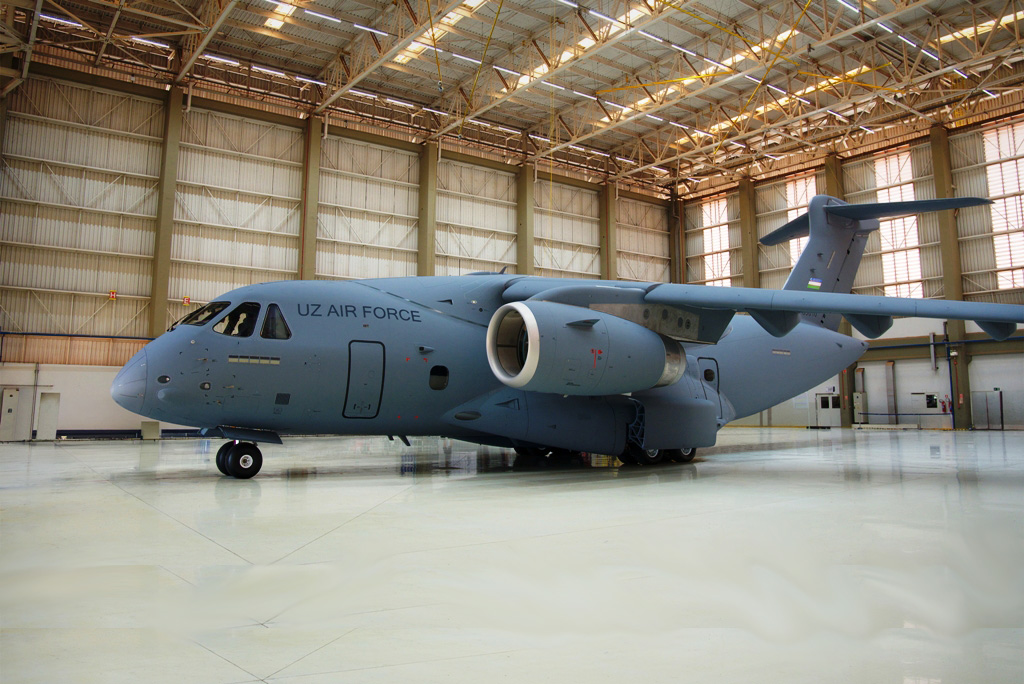
Embraer has handed over the first C-390 Millennium multi-mission transport aircraft to the Uzbekistan Air Force, making the Central Asian country the first operator of the Brazilian airlifter in its region and the latest addition to a customer list that has expanded rapidly across Europe, Asia and Latin America.
The aircraft was delivered on September 25 during an official ceremony at Embraer’s Gavião Peixoto facility in São Paulo state, the company said. The handover covers the first of two aircraft Uzbekistan ordered under a contract signed at the end of 2024, a deal that also includes a training package, logistics support and spare parts.
A Brazilian Air Force slot redirected to Tashkent
The airframe, manufacturer serial number 39000019, was originally allocated to the Brazilian Air Force as FAB 2861, according to aviation tracking publication Air Data News. It flew for the first time on August 6 under the Brazilian test registration PT-CYQ and now carries the Uzbek registration UK39010, with “UZ AIR FORCE” titles on its forward fuselage and the national flag on the tail.
Reassigning a production slot from Brazil helped Embraer meet an export delivery schedule that has become tighter as orders accumulate. Brasília has trimmed its own C-390 commitment several times over the past decade, from 28 aircraft in the original 2014 order to 22 in 2022 and then 19 in late 2023, with deliveries now stretched to 2034. Those reductions have created space on the São José dos Campos and Gavião Peixoto lines for foreign customers.
Uzbekistan’s order was first reported in December 2024 without the customer being named. Embraer confirmed Tashkent as the buyer at the Singapore Airshow in February 2026.
What the Uzbek Air Force is getting
The C-390 Millennium is a twin-turbofan tactical transport designed to fill the gap between turboprop airlifters such as the C-130 Hercules and larger strategic freighters. It can carry up to 26 tonnes of cargo and cruise at up to 470 knots (about 870 km/h), and it is certified to operate from short, unprepared and damaged runways.
Embraer markets the type for troop and cargo transport, paratroop and cargo airdrop, medical evacuation, search and rescue, humanitarian relief and aerial firefighting. A tanker-configured KC-390 variant with underwing refuelling pods is operated by Brazil and has been selected by several other customers, though Embraer did not specify whether the Uzbek aircraft will be fitted for air-to-air refuelling.
At the ceremony, Uzbek Air Force commander Akhmad Jamolovich Burkhonov described the delivery as a significant step in the modernisation of his service. Embraer Defense & Security chief executive Bosco da Costa Júnior said the company was honoured to welcome Uzbekistan into the growing C-390 operator community.
Replacing a Soviet-era transport fleet
Uzbekistan’s military airlift has long relied on aging Soviet-designed aircraft, principally Ilyushin Il-76 freighters and Antonov turboprops, whose sustainment has become more complicated since Western sanctions on Russia disrupted spare-parts supply chains across the former Soviet space. A Western-certified jet transport offers Tashkent higher availability, modern avionics and access to a support network that is not dependent on Russian industry.
The acquisition also fits a broader pattern of diversification in Uzbek defence procurement. Earlier this month, Uzbekistan emerged as the second export customer for China’s J-10CE multirole fighter, while it continues to operate Russian-origin combat aircraft and helicopters. Buying transports from Brazil, fighters from China and maintaining legacy Russian fleets gives Tashkent a spread of suppliers that limits reliance on any single capital.
For a landlocked country bordering Afghanistan, the airlifter’s ability to move troops, equipment and relief supplies quickly into austere airstrips has direct operational value, whether for border security contingencies, disaster response in mountainous regions or participation in multinational humanitarian missions.
A widening operator base
With Uzbekistan’s entry, the C-390 has been selected by Brazil, Portugal, Hungary, the Netherlands, Austria, the Czech Republic, Sweden, Slovakia, Lithuania, South Korea, the United Arab Emirates and Colombia, according to Embraer. Several of those customers are NATO members, and Embraer has promoted the aircraft as a NATO-compatible alternative in European tactical airlift competitions.
The Central Asian sale gives Embraer a foothold in a region where Russian and, increasingly, Chinese suppliers have traditionally dominated, and it could position the aircraft for further opportunities among neighbouring states that are reassessing their own Soviet-legacy transport fleets. The second Uzbek aircraft is due to follow under the same contract; Embraer has not publicly disclosed its delivery date.
Sources
- Embraer – “Embraer delivers first C-390 Millennium to the Uzbekistan Air Force” (press release, September 2026): https://www.embraer.com/media-center/en/?mediatype=NEWS&detail=32824
- Air Data News – “C-390 originally built for Brazilian Air Force delivered to Uzbekistan”
- Infodefensa – Embraer delivers first C-390 Millennium to Uzbekistan Air Force (September 28, 2026)
- Spot.uz – “Uzbekistan receives first C-390 Millennium aircraft from Embraer” (September 28, 2026)