
India, Armenia Discuss Local Production of Guided Pinaka Mk-II Rockets

Lead
India and Armenia are discussing setting up local production and assembly of the guided Pinaka Mk-II rocket system inside Armenia, according to a report published October 7, 2026, by the Indian defense portal IDRW. If realized, the arrangement would make Armenia the first foreign country to manufacture any version of India’s domestically developed multi-barrel rocket system, deepening a defense-export relationship that began with India’s first major rocket-artillery sale abroad.
What Happened
IDRW, an India-based open-source defense reporting outlet, said an Indian defense entity is in talks with Armenian counterparts to provide “technology support, manufacturing know-how, production assistance and training to Armenian personnel” for the Pinaka Mk-II guided rocket. The proposed model, per the report, could be phased: initial assembly using Indian-supplied components, followed by a gradual increase in locally sourced parts as Armenian industry builds capacity.
Critically, IDRW itself cautions that “no final agreement has been announced, and the extent of Armenian manufacturing would depend on negotiations between the two sides.” The rocket variant, production volumes, and the scope of any technology transfer have not been finalized publicly. Neither India’s Ministry of Defence nor Armenia’s Ministry of Defence has issued an official statement confirming the talks, and Defense & Tech was unable to independently verify the report through government channels at the time of publication. The claim should be treated as a reported development sourced to Indian open-source defense media rather than a confirmed government-to-government deal.
The report is consistent with, and appears to build on, discussions first reported in May 2026 by IDRW and picked up by Armenian and regional outlets, in which Armenia was described as exploring domestic production lines for both Pinaka rockets and 155mm artillery shells to reduce its dependence on imported ammunition during any future conflict.
The Product/System
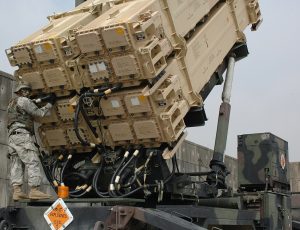
Pinaka is a multi-barrel rocket launcher developed by India’s Defence Research and Development Organisation (DRDO) through its Armament Research and Development Establishment (ARDE), with production handled by a mix of government-owned Yantra India Limited ordnance factories and private manufacturers, including Solar Defence and Aerospace Limited and Economic Explosives Limited. Each battery fields six launcher vehicles capable of firing a salvo of 12 rockets in roughly 44 seconds, supported by loader vehicles, command posts and DIGICORA meteorological radars for improved accuracy.
The system has evolved through several variants: the baseline Mk-I (around 37–40 km range), an enhanced Mk-I (up to 45–60 km), and a guided version using DRDO-developed navigation, guidance and control kits that extends accurate strike range to roughly 75 km, with test-fired variants reportedly reaching beyond 90 km. The Mk-II airframe itself is built for a 60 km maximum range using a higher-energy propellant while remaining compatible with existing Mk-I launchers. India’s Ordnance Factory Bhusawal flagged off the first lot of guided Pinaka pods, confirmed bound for an Armenian end-user, on March 9, 2026. The arrangement reported by IDRW would extend a broader pattern in which DRDO has already approved transferring missile technology to private Indian firms, now potentially extending that model to a foreign partner.
Who Uses It
Pinaka is in operational service with the Indian Army, which has ordered multiple regiments’ worth of the system. Armenia is the system’s only confirmed foreign operator to date, having taken delivery of base Mk-I and enhanced variants between July 2023 and November 2024, followed by the guided version from 2026. No other country has signed a confirmed Pinaka purchase; reported expressions of interest from Saudi Arabia, Vietnam and Indonesia remain at an exploratory stage, according to Indian trade and defense media, and do not constitute confirmed orders.
Export/Procurement History
Armenia’s Pinaka relationship traces back to a September 2022 contract worth approximately $245–265 million for four batteries — 24 launchers in total — alongside other Indian equipment such as Akash air defense systems, Swathi counter-battery radars and ATAGS/MArG howitzers. The deal, signed in the wake of renewed tension with Azerbaijan, marked India’s first major rocket-artillery export and a milestone in New Delhi’s push to grow from arms importer to arms exporter. Base-variant deliveries were completed by late 2024, and the guided Pinaka began shipping to Armenia in 2026, with the Bhusawal factory flag-off in March serving as the clearest confirmed milestone in that pipeline.
Global Competitors
In the multi-barrel rocket launcher class, Pinaka competes internationally with Russia’s Smerch and Tornado-S systems, China’s AR-series and PHL-series launchers marketed heavily across Asia and Africa, South Korea’s Chunmoo, Turkey’s Roketsan TRG-300 Kaplan and T-122 Sakarya, and the US-made M142 HIMARS and M270 systems that dominate Western and NATO-aligned markets. Pinaka’s range places it between older Soviet-era Grad and Smerch-class systems, and its guided variant is positioned to compete on precision with HIMARS-class munitions at a lower unit cost — a pitch India has used in its broader defense-export push into Africa and Southeast Asia.
Why It Matters
For Armenia, localizing even part of Pinaka production would address a strategic vulnerability exposed by its 2020 war with Azerbaijan: dependence on a single foreign supplier for ammunition that can be consumed rapidly in sustained combat. A domestic assembly line, even a partial one using Indian-supplied components, would shorten resupply timelines and reduce exposure to shipping routes and export-licensing delays during a crisis.
For India, a Pinaka manufacturing arrangement in Armenia — if finalized — would be a notable step beyond straightforward arms sales toward defense-industrial partnerships, a model New Delhi has promoted as part of its “Make in India” defense-export strategy, which India has also used to court African buyers with systems like the Astra Mk1 and Akash-NG showcased at AAD 2026. It would also reinforce India’s position as a credible alternative supplier for a Caucasus region already navigating competing defense partnerships, as Armenia seeks to diversify away from Russian or Western rocket-artillery systems amid the broader realignment of regional arms markets.
What Happens Next
Because talks remain unconfirmed by either government, the near-term marker to watch is whether India’s Ministry of Defence, DRDO, or Armenia’s Ministry of Defence issue any official statement, memorandum of understanding, or contract disclosure. Given the precedent of the March 2026 Bhusawal flag-off ceremony — a public, photographed event — any concrete manufacturing agreement would likely be accompanied by a similar visible milestone rather than remaining purely in diplomatic channels. Defense & Tech will revisit this story if either side confirms a signed arrangement.
FAQ
Has India confirmed it will help Armenia manufacture Pinaka rockets?
No. As of this report, the only public confirmation comes from the Indian defense portal IDRW, which states explicitly that no final agreement has been announced. Official confirmation from India’s or Armenia’s defense ministries is still pending.
What is the Pinaka Mk-II rocket system?
It is a 214mm multi-barrel rocket launcher developed by DRDO, built in a guided variant with a strike range of roughly 75 km, designed to fire salvos of up to 12 rockets in under a minute.
Why would Armenia want local production instead of just buying more rockets from India?
Reported rationale centers on reducing dependence on a single foreign supplier for ammunition that is consumed quickly in sustained combat, securing wartime resupply against shipping or export-licensing disruptions.
Is Armenia the only country operating the Pinaka system?
Yes, Armenia is currently the only confirmed foreign Pinaka operator. Saudi Arabia, Vietnam and Indonesia have been reported as interested parties, but none has a confirmed purchase.
Who else makes competing multi-barrel rocket systems?
Comparable systems include Russia’s Smerch/Tornado-S, China’s AR- and PHL-series launchers, South Korea’s Chunmoo, Turkey’s TRG-300 Kaplan, and the US M142 HIMARS/M270 family.
Sources
- Raunak Kunde, “Pinaka Mk-II: India, Armenia Discuss Local Manufacturing,” IDRW, October 7, 2026 — idrw.org — primary report on the localization talks; explicitly notes no final agreement.
- IDRW, “India’s Ordnance Factory Bhusawal Flags Off First Lot of Guided Pinaka Pods Likely Bound for Armenia,” March 9, 2026 — idrw.org — confirms the first guided Pinaka shipment and names OFBH Executive Director Niranjan Lal.
- Eurasianet / Armenian Mirror-Spectator, “Armenia Wants to Localize Production of Indian Munitions,” May 18–21, 2026 — mirrorspectator.com — earlier report on Armenia’s interest in localizing Pinaka and 155mm shell production.
- Caliber.az, “Armenia, India Discussing Localisation of Pinaka Rocket Production” — caliber.az — regional (Azerbaijani) outlet corroborating the localization reporting.
- Army Recognition, “First Delivery of Pinaka MLRS to Armenia Showcases India’s Rising Defense Exports” — armyrecognition.com — background on the original 2022 contract and delivery timeline.
- DRDO, “Pinaka Mk-I and Mk-II” official technical page — drdo.gov.in — official specifications for range and system design.