MiG-29 Fulcrum: Specs, Variants, Operators and Its Combat Record in Ukraine
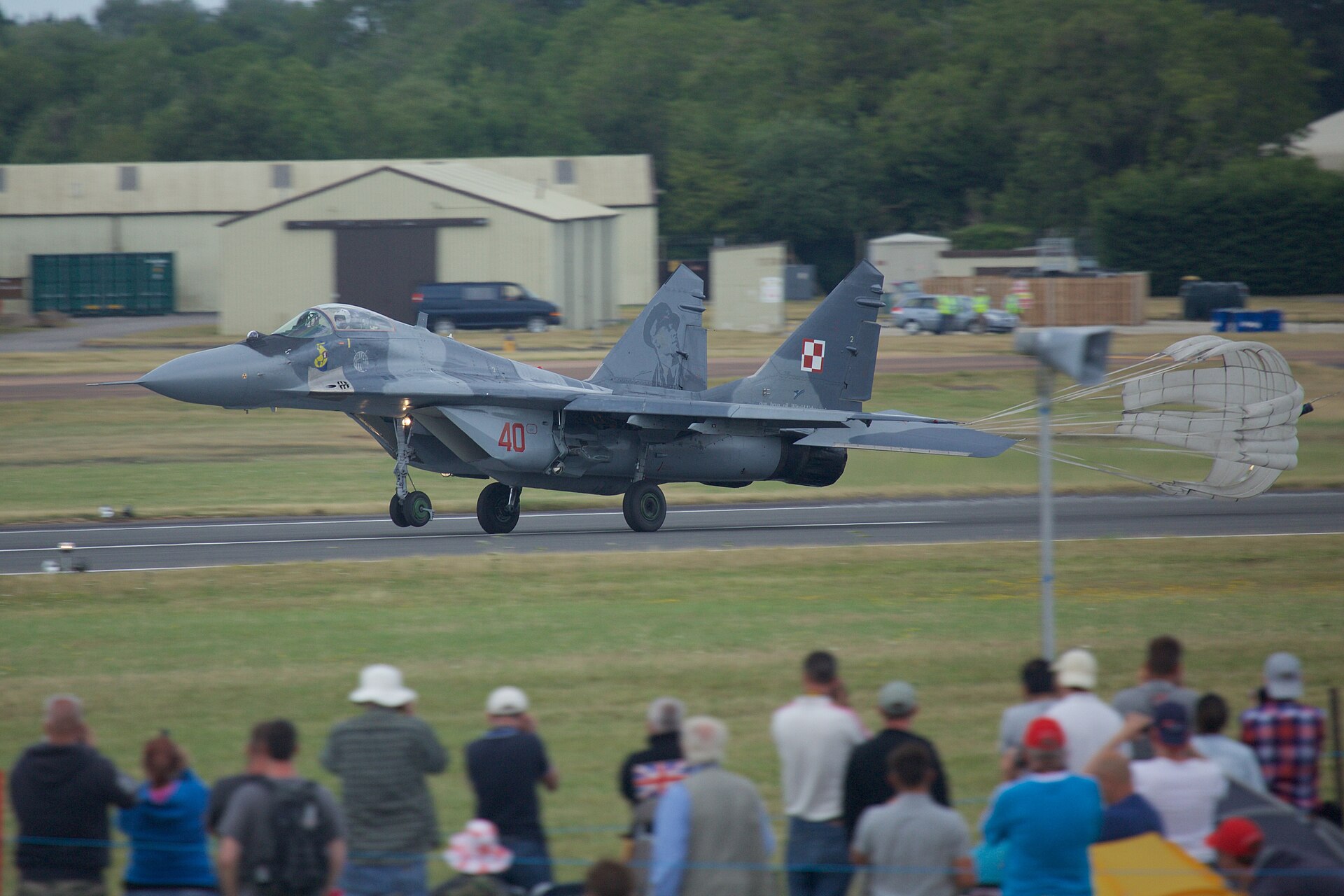
The Mikoyan MiG-29, known to NATO as the “Fulcrum,” is one of the most widely flown fighters in history. Designed in the 1970s as the Soviet answer to the F-16, it was built in large numbers and exported to dozens of countries. In 2026 it is still in front-line service from Ukraine to India, and Ukraine has turned it into a launcher for Western missiles and bombs.
- Maker: Mikoyan (Russia); first flight 1977
- Top speed: about Mach 2.25; engines: 2x RD-33
- More than 1,600 built
- Main variants: MiG-29SMT, MiG-29K/KUB, MiG-35
- Ukraine adapted it for HARM, JDAM-ER and Storm Shadow
Design and specs
The MiG-29 first flew in 1977 and entered Soviet service in 1983. It is a twin-engine, highly maneuverable fighter powered by two Klimov RD-33 turbofans, giving it a top speed of around Mach 2.25 and a service ceiling of about 18,000 meters. It carries a 30 mm GSh-30-1 cannon and R-73 and R-27 air-to-air missiles, with an infrared search-and-track system and a helmet-mounted sight that gave it a dangerous edge in close-range dogfights. Its main weakness was short range, a limitation later versions tried to fix.
Main variants
More than 1,600 MiG-29s were built. The upgraded MiG-29SMT added more fuel and multirole avionics, while the MiG-29K and KUB are carrier-based versions flown by India’s navy and Russia. The MiG-35 is the latest evolution, but it has found few buyers. Many operators, including India, Poland and Bulgaria, carried out their own upgrades.
Who still flies it?
The Fulcrum remains in service with Russia, India, Algeria, Iran, North Korea, Egypt, Serbia, Bangladesh, Azerbaijan and others. Several NATO countries that inherited MiG-29s, including Poland and Slovakia, have retired or donated theirs as F-16s and F-35s arrive.
Ukraine’s MiG-29: a Soviet jet with Western weapons
Ukraine entered the war with dozens of MiG-29s and received more from Poland and Slovakia in 2023. To keep them relevant, Ukrainian engineers adapted the jets to carry US AGM-88 HARM anti-radar missiles, JDAM-ER guided bombs and even Storm Shadow cruise missiles, a remarkable feat of integration on an aircraft never designed for Western systems.
How it compares
Against modern Western fighters such as the F-16 Block 70 or Rafale, the MiG-29 lags in radar, electronics and range. But it remains fast, agile and cheap to operate, which explains why so many air forces have kept it flying for four decades.
The future
Russia’s MiG company has struggled to sell new versions, and most operators are looking to replace the Fulcrum with Su-30, Su-35, Rafale, F-16 or Chinese J-10C fighters. Still, with hundreds in service, the MiG-29 will remain a familiar sight for years to come.
Featured image: Ronnie Macdonald from Chelmsford and Largs, United Kingdom / CC BY 2.0, via Wikimedia Commons