
CENTCOM Meaning: What is the U.S. Central Command and What is Its Role in the Middle East?
As global news networks continuously report on military operations, airstrikes, and geopolitical tensions in the Middle East, one acronym dominates the headlines: CENTCOM. For those searching for the “CENTCOM meaning,” understanding this organization is crucial to grasping how the United States projects military power and manages security in one of the world’s most volatile regions.
Whenever a major security crisis, drone strike, or naval deployment occurs in the Middle East, the official statements usually come from CENTCOM. But what exactly does this military command do, and what is its area of responsibility?
What Does CENTCOM Stand For?
The acronym CENTCOM stands for the United States Central Command. It is one of the eleven unified combatant commands of the U.S. Department of Defense.
Established in 1983, CENTCOM was created as a direct response to the complex security challenges of the Cold War and the Iranian hostage crisis. Its primary mission is to direct and enable military operations and activities with allies and partners to increase regional security and stability in support of enduring U.S. interests.
The Area of Responsibility (AOR)
The “central” in Central Command refers to its geographic Area of Responsibility (AOR), which sits squarely between the European, Africa, and Indo-Pacific Commands.
CENTCOM’s AOR is immense and strategically vital. It covers 21 countries across the Middle East, Central Asia, and parts of South Asia. The key nations operating within this security umbrella include:
Afghanistan
Egypt
Iran
Iraq
Israel
Pakistan
Saudi Arabia
Syria
Yemen
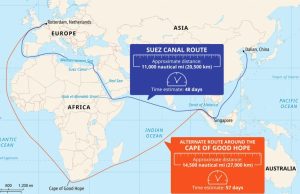
The command is responsible for managing military operations across critical maritime chokepoints, including the Strait of Hormuz, the Suez Canal, and the Bab el-Mandeb Strait. These waterways are essential for global trade, particularly the transit of energy resources.
Strategic Importance in Modern Conflict
Understanding the CENTCOM meaning goes beyond geography; it is about operational reality. Headquartered at MacDill Air Force Base in Tampa, Florida, with a forward headquarters at Al Udeid Air Base in Qatar, CENTCOM is continuously engaged in active combat and deterrence missions.
In recent years, CENTCOM has been the primary command responsible for the wars in Afghanistan and Iraq, the campaign to defeat ISIS in Syria, and ongoing operations to deter Iranian influence and protect international shipping from Houthi attacks in the Red Sea. The command integrates forces from all branches of the U.S. military—Army, Navy, Air Force, Marine Corps, and Space Force—to execute rapid response missions, airstrikes, and joint training exercises with regional allies.
Ultimately, CENTCOM is the sword and shield of U.S. foreign policy in the Middle East and Central Asia.