BAE Systems Develops Passive Radar That Tracks Drones Using TV and Mobile Signals

BAE Systems has developed a passive radar that tracks drones and aircraft without sending out a signal of its own, using existing television, radio and mobile network transmissions instead. The company announced the system on November 17 and said live trials will run through 2027.
The radar comes from BAE Systems’ Digital Intelligence & Land business in the United Kingdom. BAE said the unit is small enough to be deployed from an SUV, which it says makes it usable in almost any urban environment.
BAE Systems Unveils a Passive Radar That Never Transmits
| Item | Detail |
|---|---|
| Developer | BAE Systems, Digital Intelligence & Land business |
| System | Passive radar (BAE’s press headline calls it a “ghost radar”) |
| Concept | Detects and tracks airborne objects using existing TV, radio and mobile network transmissions |
| Targets | Small drones up to larger aircraft |
| Output | 3D air picture: speed, heading, range, altitude |
| Deployment | Small enough to be carried in an SUV |
| Status | In development; live trials through 2027 |
| Announced | November 17, 2026 (BAE Systems reference 134/2026) |
“We’re harnessing the signals that all of us use already in our day to day lives,” said Chris Shepherd, product manager for counter-uncrewed systems at BAE Systems’ Digital Intelligence & Land business. The company said the technology can use TV and radio transmissions without disturbing them.
How a Radar That Never Transmits Works
A conventional radar sends out energy and listens for the echo. The same emission can tell anyone with the right receiver where the radar is. A passive radar drops the transmitter and listens to signals already in the air, such as digital television, radio broadcasts and mobile networks, and reads how aircraft and drones disturb them.
BAE said the result is a sensor that is “entirely invisible in the radio frequency domain.” Its product page describes the radar as software-defined and built on commercial off-the-shelf equipment, with track data that can be fused with command-and-control systems. Janes reported that it needs no dedicated spectrum allocation.
BAE positions the radar as a complement to active radars, not a replacement, and said it is exploring target recognition to help identify drones rather than only detect them. The company has not published detection range, frequency bands or weight.
Passive and Active Radar Compared
| Feature | Active radar | BAE passive radar |
|---|---|---|
| Own emissions | Transmits its own signal | None; uses TV, radio and mobile transmissions |
| Visibility to others | Emission can reveal the radar’s position | BAE says it is invisible in the radio frequency domain |
| Spectrum | Needs its own transmit frequencies | No dedicated spectrum allocation (Janes) |
| Where it fits | Primary sensor in most air defence networks | Positioned by BAE as a complement to active radars |
| Status | In service across many types | In development; trials through 2027 |
Where BAE Sees the Radar Being Used
BAE listed several uses. Power stations and air force bases could be protected from drone attacks. A soldier could monitor a battlefield without being detected. Police forces could track and engage targets, and airports and other sites where active radar emissions are restricted could use the sensor.
On price, BAE said the radar is “up to ten times cheaper than many current passive radar offerings.” That is a company claim. No price has been disclosed, and the company has not named the law enforcement, defence and critical infrastructure partners that will take part in the 2027 trials.
The NATO Document Behind the Announcement
Janes reported that a BAE representative confirmed the radar is the same system a September 25 NATO Science and Technology Organization document calls a 3D passive multi-static radar, or PMSR. The document describes it as one sensor in a wider counter-threat system aimed at fixed-wing aircraft, helicopters and NATO Class I to III drones.
That system combines active and passive sensor data with ADS-B reports and DJI Mavic transmission data, according to Janes, with future support planned for ASTERIX data and Link 11, Link 16 and Link 22 tactical data links.
| Date | Event | Source |
|---|---|---|
| September 25, 2026 | NATO STO document describes the 3D PMSR as part of a counter-threat system | Janes |
| November 17, 2026 | BAE Systems issues press release on the passive radar | BAE Systems |
| November 18, 2026 | BAE representative confirms to Janes it is the same system | Janes |
| Through 2027 | Live trials with law enforcement, defence and infrastructure partners | BAE Systems |
BAE Systems Company Profile
| Item | Detail |
|---|---|
| Headquarters | London, England |
| Founded | 1999 (merger of British Aerospace and Marconi Electronic Systems) |
| Employees | About 110,000 (2026) |
| Revenue | About £28.3 billion (2025) |
| CEO | Charles Woodburn |
| Known programmes | Eurofighter Typhoon, F-35 (major partner), Type 26 frigate, Astute and Dreadnought submarines, SSN-AUKUS |
Passive Sensing and the Counter-Drone Race
Radar emissions can give away a position, which matters more as cheap drones and electronic surveillance spread. A sensor that stays silent trades some of the control an active radar offers for a lower signature. Whether that trade works in practice will depend on range and track quality, and BAE has not published either. That reading is analysis, not a company claim.
Detection is only half of the counter-drone problem. Other companies are working on the effector side, such as ASELSAN’s EJDERHA high-power microwave test against 51 drones. BAE has also been busy on sensors elsewhere, having completed Lot 8 LRASM RF sensor deliveries earlier this month.
BAE Passive Radar FAQ
What is the BAE Systems passive radar?
A radar developed by BAE Systems’ Digital Intelligence & Land business that detects and tracks airborne objects without transmitting its own signal.
How does it track targets without transmitting?
It uses existing television, radio and mobile network transmissions as its illumination sources, according to BAE.
What can it detect?
BAE said it tracks targets from small drones to larger aircraft and produces a 3D picture with speed, heading, range and altitude. Detection ranges have not been published.
Is the radar in service?
No. BAE said live trials with law enforcement, defence and critical infrastructure partners will run throughout 2027.
How much does it cost?
BAE has not disclosed a price. It said the radar is up to ten times cheaper than many current passive radar offerings.
- BAE Systems – “New ‘ghost radar’ that hides from enemies developed in UK” (press release, November 17, 2026): baesystems.com
- BAE Systems – Passive Radar product page: baesystems.com
- Janes – “BAE Systems announces development of new passive radar” (November 2026): janes.com
- Army Technology – “BAE Systems unveils SUV-portable passive radar to track aerial threats” (November 18, 2026): army-technology.com
- Wikipedia – BAE Systems (company data)
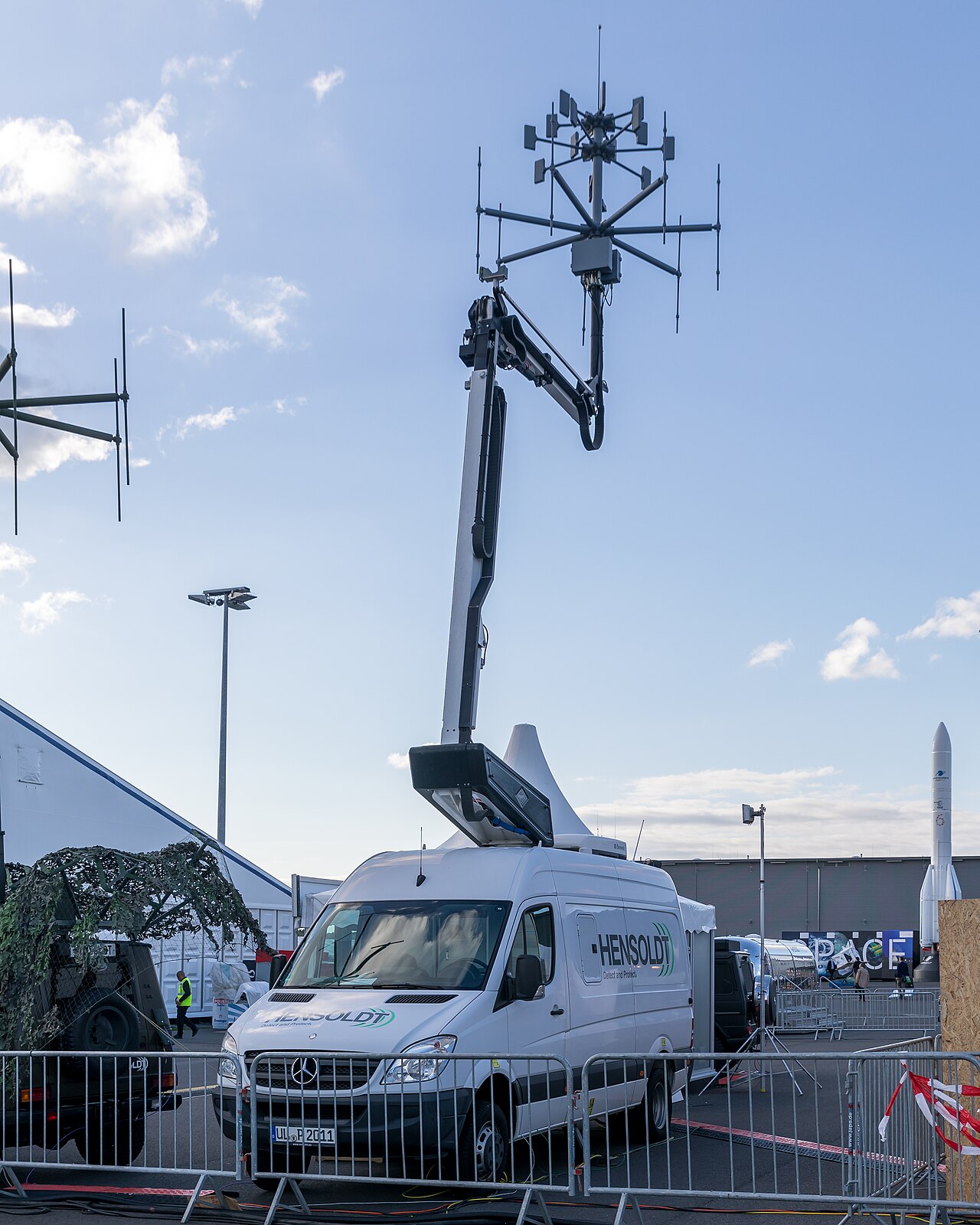
- Image – Matti Blume (MB-one), Hensoldt Twinvis at ILA 2018, Wikimedia Commons, CC BY-SA 4.0