Australia Lays Keel for First Hunter-Class Frigate at Osborne
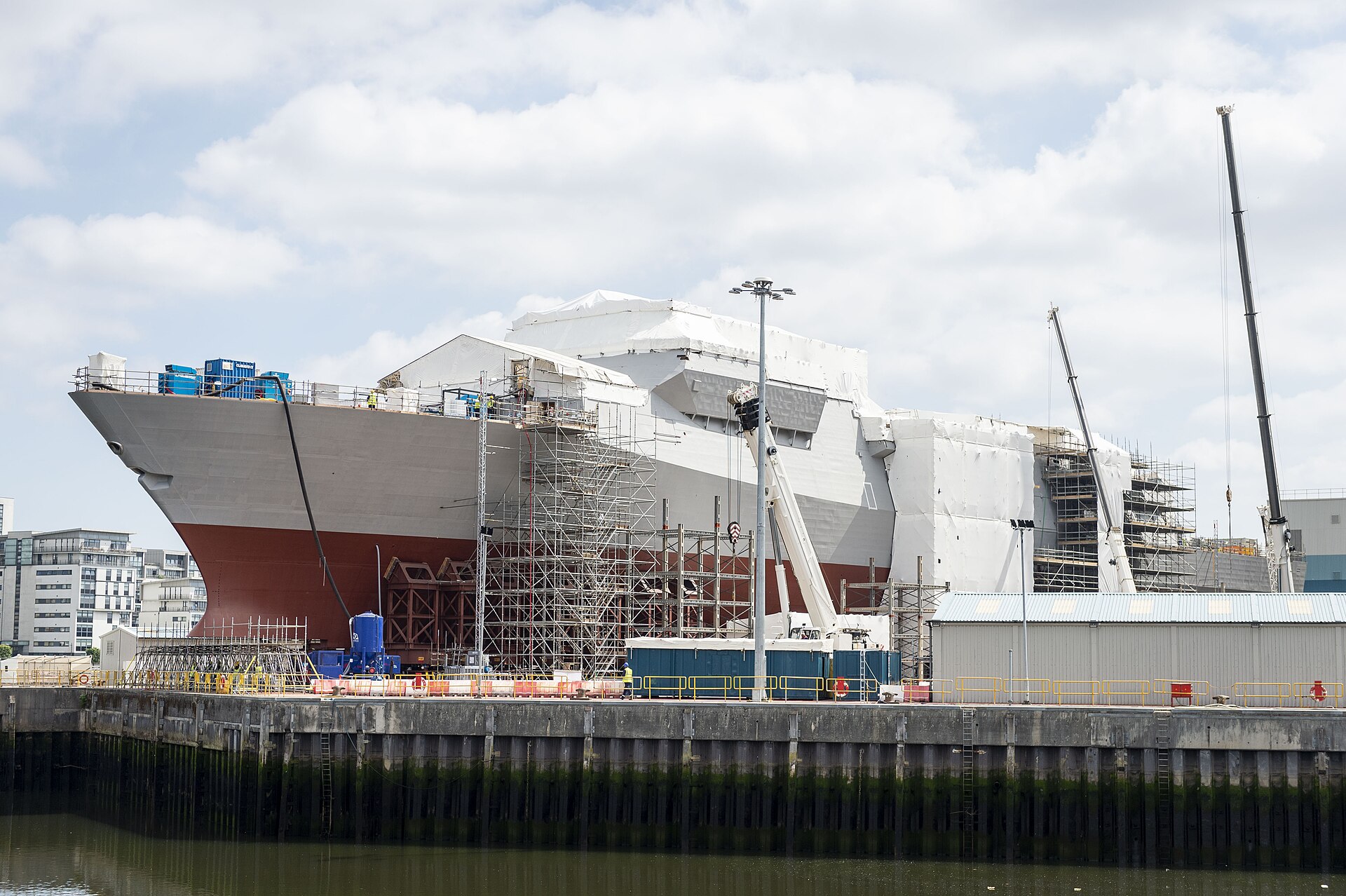
Shipbuilders at BAE Systems Australia laid the keel of NUSHIP Hunter at the Osborne Naval Shipyard in South Australia on 24 August, marking the formal start of hull assembly on the first of the Royal Australian Navy’s next generation of anti-submarine frigates.
The ceremony — in which a commemorative coin was positioned beneath two major hull sections as they were joined — brought together Deputy Prime Minister and Defence Minister Richard Marles, Defence Industry Minister Pat Conroy and Chief of Navy Vice Admiral Matthew Buckley, alongside the yard’s workforce.
Marles described the milestone as tangible progress in bolstering national defence capabilities and enhancing maritime security. Conroy used the occasion to emphasise Australia’s sovereign capacity to manage complex defence infrastructure projects — a pointed framing, given the programme’s history.
A keel laying that is not quite a keel laying
The ceremony is a traditional one, but the modern reality is more incremental than the ritual suggests. Twenty of the ship’s 22 structural blocks were already under construction when the keel was laid; what took place at Osborne was the joining of major pre-fabricated sections rather than the start of construction in any literal sense. Modern warships are built in modules and consolidated late, which is why “keel laying” now functions largely as a programme marker.
That marker still matters. It signals the transition from block fabrication to whole-ship assembly, the point at which schedule risk shifts from the workshops to the integration hall.
What the Hunter class is
The Hunter class derives from the British Type 26 Global Combat Ship, the design BAE Systems is building for the Royal Navy as the City class and which Canada selected for its River-class destroyers. It is an anti-submarine warfare specialist first and foremost, built around acoustic quieting and a sensor fit optimised for finding submarines.
The Australian ships pair a Thales CAPTAS-4 variable-depth sonar — the towed active-passive array designated Sonar 2087 in Royal Navy service — with the CEAFAR active phased-array radar developed by Australia’s CEA Technologies. The combat system is the U.S. Navy’s Aegis, fitted with an Australian interface. That combination of a British hull, a French sonar, an Australian radar and an American combat system is unusual, and it is the source of both the class’s capability and a good deal of its integration difficulty.
Beyond submarine hunting, the ships are intended for area air defence and fleet escort duties.
A programme that has been rewritten
The Hunter programme has not had an easy passage. It was originally to deliver nine ships. Following the 2024 surface fleet review, the buy was cut to six, with the savings redirected toward a larger fleet of smaller general-purpose frigates and other capabilities. By that point the programme was running years behind its original schedule and its cost had grown substantially — public figures put the total in the region of A$45 billion, against earlier estimates roughly A$15 billion lower.
Weight has been the persistent technical thread. The Type 26 baseline grew considerably in the Australian adaptation as the CEAFAR arrays, the Aegis fit and Australian requirements were layered onto the hull. Displacement figures in the public domain sit around 8,800 tonnes at full load, well above the parent design, and margin for future growth has been a recurring subject of scrutiny — a genuine concern for a class expected to serve into the second half of the century and to absorb sensors and weapons that do not yet exist.
First delivery is currently planned for 2032, with the ship entering service in the early 2030s.
The industrial case
For Canberra, the Hunter programme is as much industrial policy as it is naval procurement. The Osborne yard supports more than 2,500 direct jobs, including some 600 skilled tradespeople, with roughly 5,000 further positions across the national supply chain. Continuous naval shipbuilding — keeping a yard and its workforce employed indefinitely rather than in boom-and-bust cycles — has been Australian policy since the mid-2010s, and the Hunter class is its centrepiece in the surface combatant domain.
That logic has costs of its own. Building complex warships in a yard that is simultaneously learning to build them is slower and more expensive than buying from an established producer, and the Hunter programme’s schedule and cost history reflect that trade. The counter-argument, which successive Australian governments have accepted, is that a sovereign capacity to build and sustain major surface combatants is worth paying for — particularly for a country whose strategic geography makes long resupply lines a vulnerability.
Regional context
The Hunter class is one element of a broader Australian naval expansion that also encompasses the AUKUS nuclear-powered submarine pathway, a planned class of general-purpose frigates and upgrades to the existing Hobart-class destroyers. The common driver is the maritime balance in the Indo-Pacific and, specifically, the growth of the Chinese submarine force.
Anti-submarine warfare is a capability that cannot be generated quickly. It depends on quiet hulls, sensitive sonars, trained operators and accumulated tactical knowledge, all of which take a decade or more to assemble. Australia’s decision to accept the cost and schedule of a specialist ASW frigate — rather than buying a cheaper, more general-purpose escort — reflects a judgement that the undersea domain is where the contest will be decided.
Whether six ships is enough to sustain that judgement is a question the surface fleet review left open.
Sources
- Australian Minister for Defence / Minister for Defence Industry, “‘Keel laying’ for Australia’s first Hunter class frigate,” media release, 24 August 2026
- Naval News, “Australia Lays Keel for First Hunter-class Anti-Submarine Frigate,” 24 August 2026
- Defence Industry Europe, “Australia lays keel for first Hunter-class frigate,” 24 August 2026
- Naval Technology, “Keel laid for Royal Australian Navy’s first Hunter-class frigate,” 24 August 2026
- Navy Lookout, analysis of Hunter-class displacement and growth margin, August 2026