AMPV Specs, Variants, Cost and Operators
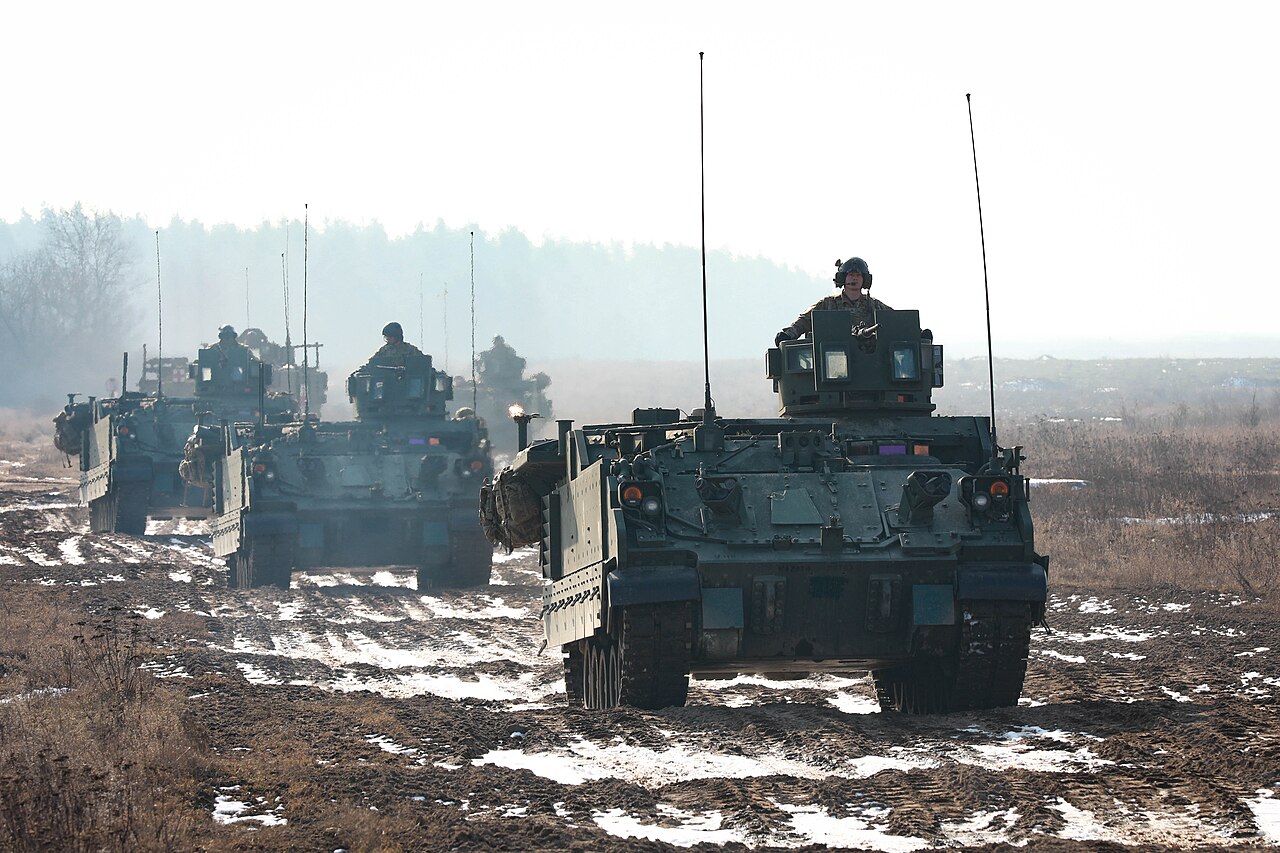
The AMPV is the US Army’s replacement for the Vietnam-era M113, a turretless Bradley-based hull that BAE Systems builds in five variants against an approved requirement of roughly 2,900 vehicles. It is the least glamorous program in the armored force and one of the most consequential, because it carries the medics, mortars and command posts that make an armored brigade actually function.
What is the AMPV
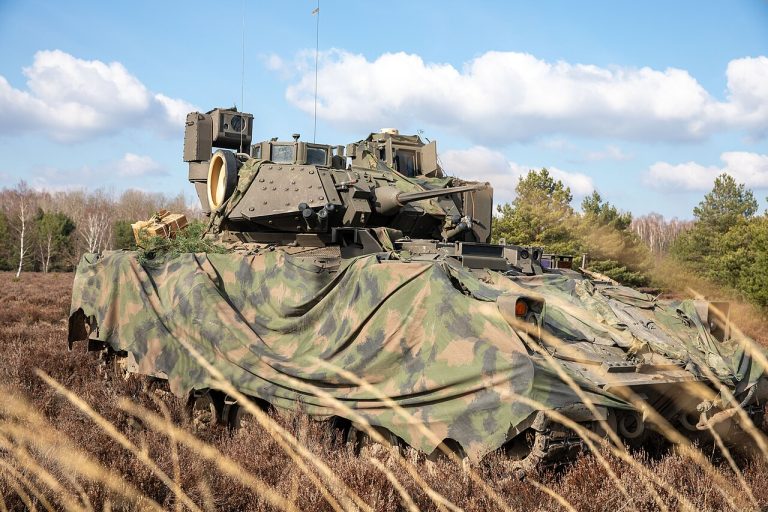
The Armored Multi-Purpose Vehicle exists because the M113 could no longer survive the battlefields it served on. After roadside bombs in Iraq confined the aluminum box to bases, the Army needed a support vehicle with real protection that could keep pace with Abrams and Bradley formations. BAE Systems won the engineering contract in 2014 with a proposal of striking simplicity: take the Bradley hull, delete the turret, raise the roofline where the mission needs it, and reuse the armored brigade’s existing logistics chain. First production vehicles were delivered in 2020 and full-rate production was approved in 2023.
AMPV specifications
| Item | Value |
|---|---|
| Role | Tracked armored support vehicle family |
| Manufacturer | BAE Systems Platforms & Services, York, Pennsylvania |
| Combat weight | Roughly 30 tonnes, varying by variant and armor kit |
| Engine | Cummins VTA-903 series diesel, 675 hp, with Bradley-common drivetrain |
| Road speed | About 61 km/h, matched to Bradley formations |
| Protection | Bradley-level ballistic protection with underbody blast design far beyond the M113 |
| Armament | Typically a protected 12.7mm machine gun mount; mortar carrier fires a 120mm mortar |
| Crew and payload | Varies by variant, from 2-man crew plus troops to full surgical teams |
AMPV variants explained
| Designation | Role | What it does |
|---|---|---|
| M1283 | General purpose | Moves troops and cargo, casualty evacuation under armor |
| M1284 | Medical evacuation | Ambulance for up to six litter or ambulatory patients |
| M1285 | Medical treatment | Mobile protected treatment room, the armored brigade’s forward surgery |
| M1286 | Mission command | Command post with generators, radios and network gear |
| M1287 | Mortar carrier | 120mm mortar fired through roof hatches, the brigade’s hip-pocket artillery |
The variant mix mirrors what the M113 quietly became over 60 years, less a fighting vehicle than the armored brigade’s utility fleet. The mission command version matters most for modernization: modern command posts generate electronic signatures and power demands a 1960 hull was never wired for, and the M1286 gives the network somewhere protected to live, the same logic driving command variants of the wheeled Stryker family.
AMPV vs M113, what changes
Protection is the headline. The AMPV carries Bradley-class armor and a blast-resistant underbody, where the M113’s flat aluminum floor made it notorious against mines. Mobility is the second gain, because the M113 could not keep up with an M1 Abrams moving cross-country, and the AMPV can. The third is growth: the hull has the electrical power and volume for add-ons the Army is already testing, including counter-drone kits and launched-effects experiments. The trade is weight, roughly triple the M113’s, with everything that implies for bridges and transport aircraft.
AMPV production, cost and outlook
BAE builds AMPVs in York, Pennsylvania, with annual low-hundreds production rates funded in recent budgets; unit costs are reported in the mid-single-digit millions of dollars depending on variant and year, and the total program has been valued in the multi-billion range across its life. The Army has also pitched the hull for new roles, showing a turreted counter-drone configuration and studying air-defense and direct-fire versions, which would stretch the family well beyond its support origins. No export customers have been announced so far, though the M113’s hundreds of thousands of worldwide users are an obvious long-term market. The main program risk is the ordinary kind, annual budget trades against higher-profile priorities, since the vehicle itself has met its tests and its schedule with unusual consistency.
AMPV frequently asked questions
What does AMPV stand for?
Armored Multi-Purpose Vehicle, the US Army’s family replacement for the M113 in armored brigade combat teams.
How many AMPVs will the Army buy?
The approved acquisition objective is roughly 2,900 vehicles across five variants, funded incrementally.
Is the AMPV based on the Bradley?
Yes, it reuses the Bradley hull, powertrain and many components, minus the turret, which simplifies logistics in the same brigades.
What variants does the AMPV have?
General purpose, medical evacuation, medical treatment, mission command and 120mm mortar carrier, designated M1283 through M1287.
Does the AMPV replace the Bradley?
No. The Bradley remains the infantry fighting vehicle; the AMPV replaces the M113 in support roles, and the future XM30 will replace the Bradley.
- US Army program information and budget documents on the AMPV
- BAE Systems product literature
- Wikipedia – Armored Multi-Purpose Vehicle (accessed October 2026)
- Defence & Tech reporting on US armored modernization