
Top 10 Attack Submarines in the World in 2026

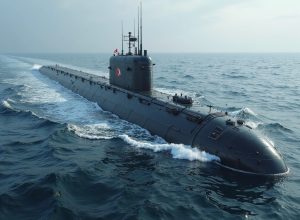
Attack submarines are the quietest form of national power, invisible for months, able to hold fleets and coastlines at risk, and so expensive that only a dozen nations attempt them. This ranking weighs stealth, sensors, weapons and proven operational record to order the ten best hunter-killers in service in 2026.
How this ranking works
Rankings favor acoustic stealth first, because a detected submarine is merely a target, then sensor quality, weapons flexibility and demonstrated operational performance. Published data on submarines is the least reliable in defense, so this list leans on fleet behavior, what navies pay for, escort and how rivals react. Consistent with this site’s editorial policy, companies and platforms headquartered in Israel are excluded from consideration. Conventional boats are judged within their endurance limits, which nuclear propulsion does not share.
The top ten, one to ten
| Rank | Class | Nation | Type | Edge |
|---|---|---|---|---|
| 1 | Seawolf | USA | SSN | Deepest, fastest, quietest of the Cold War apex, three irreplaceable boats |
| 2 | Virginia Block V | USA | SSN | VPM brings 65+ weapons, best sensors in production |
| 3 | Astute | UK | SSN | Sonar 2076 suite, Tomahawk, proven shadowing record |
| 4 | Yasen-M | Russia | SSGN | 40-missile salvos, Zircon integration, genuinely quiet |
| 5 | Suffren | France | SSN | Compact, modern, MdCN land attack, special forces shelter |
| 6 | Type 093B | China | SSGN | VLS-equipped, quieting gains, production scale |
| 7 | Taigei | Japan | SSK | Lithium-ion batteries, superb quieting, crew proficiency |
| 8 | Type 212A / 212CD | Germany-Norway | SSK | Fuel-cell AIP, non-magnetic hull, Baltic mastery |
| 9 | KSS-III Batch 2 | South Korea | SSK | Lithium-ion plus VLS, ballistic missile capability |
| 10 | S-80 Plus | Spain | SSK | New AIP design maturing, ocean-going conventional reach |
The American pair at the top reflects compounding advantages, half a century of continuous quieting research, the world’s best sonar processing and combat systems, and operational tempo no rival matches. Seawolf keeps first place on raw capability, three boats built for deep, fast Arctic duels that remain unmatched, while Virginia Block V takes the production crown, its Virginia Payload Module turning a hunter into an arsenal with more than 65 weapons.
Britain’s Astute class earns third on the strength of its Sonar 2076 suite, often described as the most capable in NATO, and a documented record of shadowing Russian boats. Yasen-M is the reason Western antisubmarine budgets rose, Russian quieting that finally approached Western standards mated to a 40-round missile battery now integrating Zircon, though manufacturer performance claims deserve the usual caution. France’s Suffren rounds out the nuclear top five, smaller than its Anglo-American peers but exquisitely modern.
China’s 093B marks the inflection the Pentagon warns about, vertical launch cells and quieting progress on a hull China can build in numbers, with the follow-on Type 095 expected to close the gap further. The conventional leaders, Japan’s lithium-ion Taigei, the German-Norwegian 212 family with fuel-cell air-independent propulsion, Korea’s missile-armed KSS-III and Spain’s S-80 Plus, dominate the littorals where nuclear size becomes a liability.
The nuclear and conventional divide
Nuclear boats buy unlimited underwater endurance and transit speed at the price of size, cost and acoustic compromises near the surface, which is why they rule the open ocean. Conventional submarines on batteries or AIP are, at creep speeds, the quietest objects in the sea, ideal ambush predators for chokepoints like the Baltic approaches or the first island chain. The ranking’s mix reflects missions, not a single scale, since a Taigei in the Tsushima Strait is a different weapon than a Virginia in the Philippine Sea.
What the Red Sea and Taiwan scenarios demand
Current events are rewriting requirements. Land-attack magazines proved their worth as submarines contributed Tomahawk strikes in Middle East operations, pushing every new class toward vertical launch. A Taiwan contingency, the scenario driving American and Japanese force planning, would be history’s greatest submarine campaign, with allied SSNs tasked to attrit an invasion fleet inside contested acoustic conditions while Chinese boats attempt the reverse. AUKUS, transferring Virginia-class boats to Australia in the 2030s, exists precisely because of that arithmetic.
Frequently asked questions
What is the best attack submarine in the world?
On raw capability the three US Seawolf-class boats; among submarines in production, the US Virginia Block V leads on sensors, quieting and firepower.
Are diesel submarines better than nuclear?
At low speed on batteries they can be quieter, making them superb in chokepoints, but they lack the endurance and transit speed nuclear boats use to dominate open oceans.
How many countries build nuclear attack submarines?
Six operate them, the US, Russia, UK, France, China and India, with Australia set to join via AUKUS in the 2030s.
Why is the Yasen-M considered dangerous?
It combines near-Western quieting with a 40-weapon missile battery including Kalibr, Oniks and Zircon, forcing NATO to re-fund antisubmarine warfare.
- Wikipedia – class articles for all ten submarines (accessed October 2026)
- US Congressional Research Service reports on Virginia and AUKUS
- Naval analysis publications on Yasen-M and Type 093B (manufacturer claims noted)