
X-Bow, the Startup 3D-Printing Its Way Into the Rocket Motor Business
Solid rocket motors have been made essentially the same way since the 1950s, cast in huge facilities that take years to build and certify. X-Bow Systems prints them. The Albuquerque company’s bet, that additive manufacturing can make motor production fast, distributed and cheap, has pulled in Lockheed Martin’s money and more than a quarter-billion dollars of Pentagon contracts.
The problem with casting
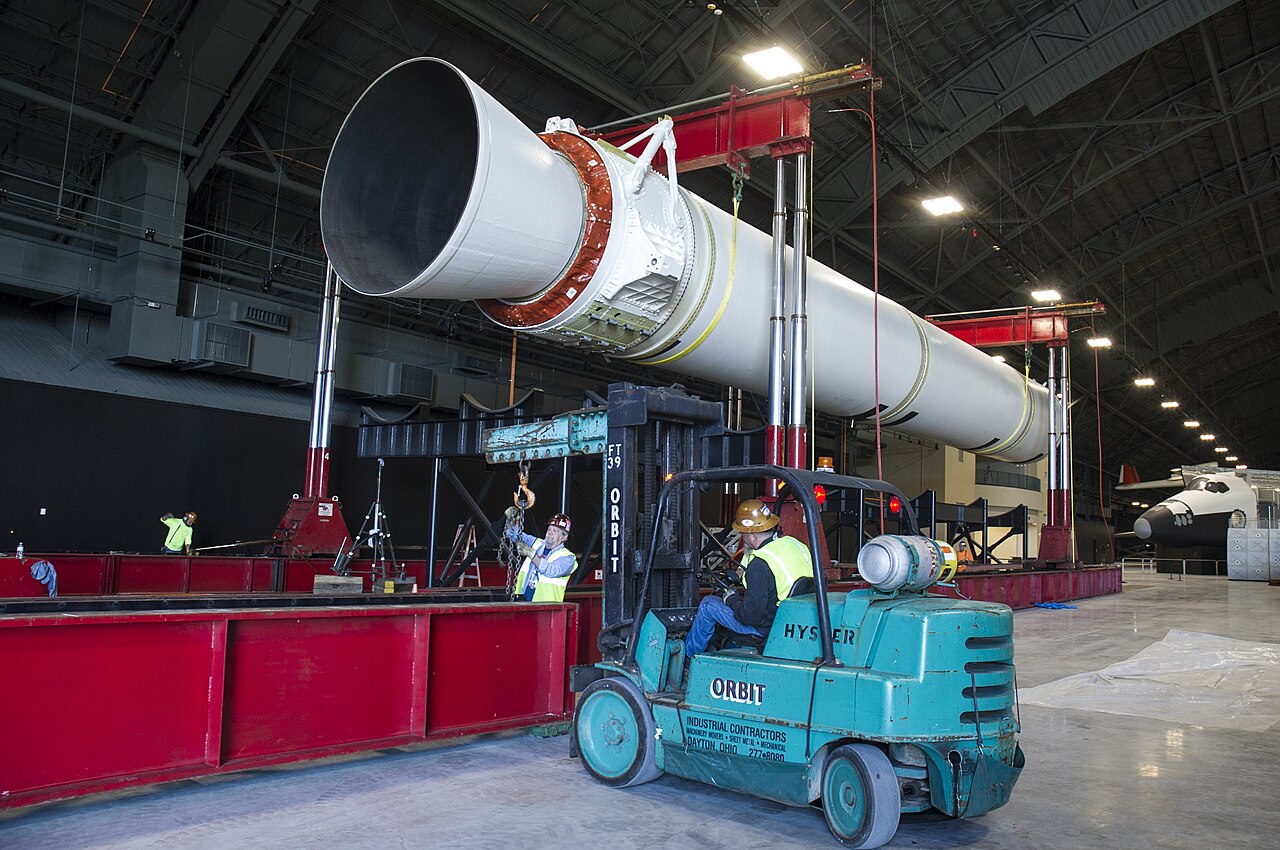
A conventional solid motor is made by mixing propellant like industrial dough and casting it into a case around a mandrel that forms the internal bore geometry. The process demands enormous, explosion-rated facilities, cure times measured in days and tooling unique to each design. Change the motor, change the tooling. That rigidity is survivable in peacetime and crippling in a surge, which is where the American munitions base has lived since 2022.
The consolidation of US motor production into two dominant suppliers left every missile program exposed to the same chokepoint, and left the Pentagon actively shopping for structurally different approaches rather than simply more of the old capacity.
Printing energetics
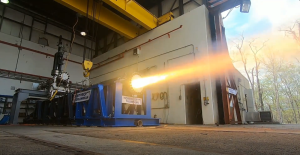
X-Bow’s answer is to additively manufacture the energetic grain itself, depositing propellant in precisely controlled geometries that casting cannot achieve. Printed grains allow internal shapes that tailor thrust profiles digitally, small-batch production without dedicated tooling, and factories that are smaller, cheaper and faster to stand up than casting halls. The company pairs printed energetics with conventionally proven ingredients, aiming for qualification credibility rather than exotic chemistry.
The deeper promise is distribution. If a motor line is a set of machines rather than a monumental facility, production can be replicated across sites, complicating targeting and shortening supply lines, an argument that resonates with war planners thinking about vulnerable single-point factories.
The money finds the bottleneck
| Item | Value | Counterparty |
|---|---|---|
| Series B round | $105M+ | Lockheed Martin (strategic lead), Razor’s Edge, Crosslink, Boeing Ventures |
| SRM manufacturing award | $191M | Pentagon |
| Next-gen GMLRS motor work | $13.9M | US Army |
| Low-cost interceptor | $10.9M | Missile Defense Agency |
The 2025 Series B was the signal event, not for its size but for its lead. Lockheed Martin invested roughly $35 million and signed a strategic agreement positioning X-Bow as an independent motor supplier for its programs, an extraordinary endorsement given that Lockheed buys most of its motors from the incumbents. Boeing’s venture arm joined the same round, meaning two of the largest missile primes are now financially interested in the same alternative supplier.
From motors to interceptors
Like Castelion and Ursa Major, X-Bow is climbing the value chain. The Missile Defense Agency’s award for a low-cost interceptor flight test moves the company from selling propulsion to flying complete rounds, aimed at the cost-exchange problem that haunts every engagement of cheap threats with expensive interceptors. A motor maker that can print its way to a genuinely inexpensive interceptor would arrive at exactly the moment magazine economics dominate defense debates.
The scale-up test
X-Bow’s technology has flown on sounding rockets and test vehicles, but the gap between demonstration and qualified mass production is where propulsion ventures historically die. Energetic additive manufacturing must prove batch-to-batch consistency under the most conservative qualification culture in the industry, and the incumbents are not standing still, both are investing heavily in their own capacity expansions with congressional support.
Still, the structural logic favors new entrants more than at any time in fifty years. Demand exceeds capacity, primes want alternatives badly enough to fund them, and the Pentagon has converted its anxiety about the motor base into contracts. X-Bow has turned a manufacturing thesis into a fundable, contracted business at precisely the right moment.
Hypersonics Work Alongside the Motors
Before the big manufacturing awards, X-Bow built its reputation partly in the hypersonic test economy, supplying sounding rockets and ballistic test vehicles that give Pentagon researchers affordable rides to relevant speeds. Programs like the multi-service hypersonic testbed effort need frequent, cheap flights far more than perfect ones, and a company that can print a motor matched to a specific trajectory in weeks fits that appetite in a way legacy suppliers with production backlogs cannot.
That test work compounds strategically. Every flight qualifies processes and materials under real conditions, building the evidence file that motor qualification demands, while embedding the company inside the same program offices that will buy operational hypersonic weapons at scale later this decade.
Frequently asked questions
What does X-Bow Systems do?
It develops and produces solid rocket motors using additive manufacturing of the propellant grain, plus complete low-cost missile systems for the Pentagon.
Who invested in X-Bow?
Its $105M+ Series B was strategically led by Lockheed Martin with participation from Boeing Ventures, Razor’s Edge, Crosslink Capital and others.
Why print rocket motors?
Printed grains allow tailored thrust geometries, tool-less small-batch production and smaller distributed factories, addressing the US motor capacity shortage.
Where is X-Bow based?
Albuquerque, New Mexico, with energetics and test operations in New Mexico and Texas.
- Washington Technology – X-Bow closes $105M Series B (2025)
- The Defense Post – MDA low-cost interceptor award (Aug 2026)
- Trade reporting on Pentagon SRM manufacturing awards