
Saronic, the $9 Billion Startup Building the Navy’s Robot Fleet
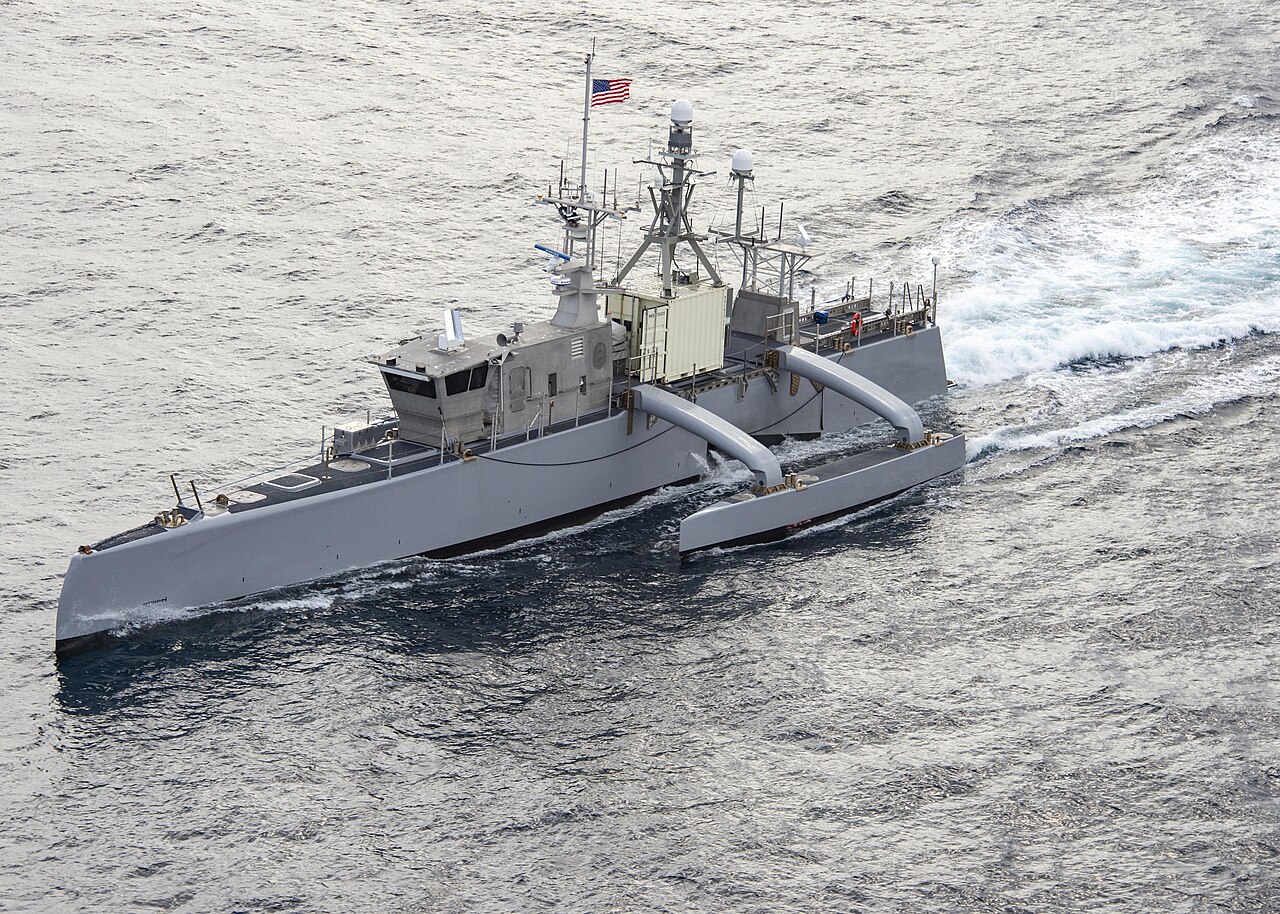
Saronic is the startup betting that America’s naval future is built by the thousand, not the hull: autonomous attack boats from a Texas production line, a $9.25 billion valuation, and plans for a shipyard designed around robots from the keel up. Three years after founding, its Corsairs carry the US Navy’s first big unmanned-fleet production order.
Saronic at a glance
| Item | Detail |
|---|---|
| Founded | 2022, Austin, Texas |
| Funding | $1.75B Series D (Kleiner Perkins-led, March 2026) atop a $600M Series C; $9.25B valuation |
| Products | Spyglass (6 ft), Cutlass (14 ft), Corsair (24 ft) attack/ISR USVs; Marauder, a 150-foot-class autonomous ship |
| Key contract | $392 million US Navy production award for Corsair, February 2026 |
| Facilities | Texas and Louisiana plants; ‘Port Alpha’ next-generation shipyard in site selection |
The boat family, Spyglass to Marauder
Saronic’s catalogue scales like a drone maker’s, not a shipbuilder’s: the man-portable Spyglass for surveillance, Cutlass for heavier payloads, and the 24-foot Corsair, the company’s F-16, built for ISR, electronic warfare or explosive one-way missions at a price the Navy can lose. Above them the Marauder class jumps two orders of magnitude, a 150-foot autonomous vessel for logistics and long-range missions, announced with the Series D as the bridge from drone boats to robot ships.
The Navy breakthrough
February 2026’s $392 million Corsair award, with nearly $200 million obligated at signature, marked the moment unmanned surface vessels crossed from experiment to program, and Saronic beat incumbent yards to it; the follow-on wave was visible within months as the Navy spread a 30-boat medium-USV buy across Saronic and traditional builders, covered in our MUSV order report. Ukraine’s Black Sea campaign supplied the doctrine; Saronic supplied the production line America lacked.
Port Alpha, the shipyard moonshot
The company’s defining wager is industrial: Port Alpha, a purpose-built shipyard for autonomous vessels intended to open within five years, sized in company rhetoric against the atrophy of American shipbuilding itself. The pitch to Washington is blunt, China out-builds US yards by tonnage many times over, and crewed procurement cannot close the gap; a factory stamping out uncrewed hulls might. Execution risk is the entire question, and $1.75 billion buys the attempt.
The attritable-fleet argument
Saronic sits at the center of the Navy’s hedge strategy: thousands of cheap, smart hulls complicating any Pacific calculus, screening crewed fleets ranked in our navy Top 10, and dying affordably where destroyers must not. Critics note unmanned mass has yet to survive contested blue water, and that software fleets inherit software vulnerabilities. The company’s answer is cadence: build, deploy, iterate at startup speed, the model Anduril proved on land and in the air, now pointed at the sea.
Gulf Craft and the Louisiana Foothold
Software companies that decide to build hardware usually discover that the hard part is not the code but the welding. Saronic answered that problem in early 2025 by acquiring Gulf Craft, a veteran commercial shipbuilder in Franklinton, Louisiana, giving the Texas startup an operating yard with decades of aluminum-hull experience on the Gulf Coast. The acquisition was a statement of intent as much as a capacity play. Rather than contracting hulls out and integrating autonomy kits afterward, Saronic wants design, autonomy software and fabrication under one roof, the same vertical-integration logic that let SpaceX compress launch costs.
The Louisiana yard is where the larger end of the product line takes shape, including the 150-foot Marauder class that pushes Saronic from attritable drones toward genuinely ship-sized autonomous vessels. It also serves as a rehearsal for the far bigger Port Alpha project, letting the company make its manufacturing mistakes at a modest scale before committing to a purpose-built autonomous-ship factory.
Capital, Talent and the Defense-Tech Wave
Saronic’s fundraising trajectory tracks the broader repricing of American defense technology. A $175 million Series B in 2024 gave way to a $600 million Series C in early 2025 at a $4 billion valuation, and then the $1.75 billion Series D that lifted the company to $9.25 billion. Investors are effectively underwriting a thesis, which is that the US Navy’s unmanned ambitions are real, funded and too urgent for traditional shipbuilding timelines to satisfy.
The talent flow tells the same story. Saronic recruits heavily from SpaceX, Anduril and the submarine industrial base, blending autonomy engineers with production managers who have actually shipped hardware at rate. Whether the valuation proves prophetic will depend less on prototype performance than on the unglamorous metrics of throughput, cost per hull and software reliability at sea.
Frequently asked questions
What does Saronic build?
Autonomous surface vessels from the 6-foot Spyglass to the 24-foot Corsair attack USV and the 150-foot Marauder class.
How much is Saronic worth?
$9.25 billion after its $1.75 billion Series D in March 2026.
What Navy contracts does Saronic hold?
A $392 million Corsair production award from February 2026, plus a share of the Navy’s 30-vessel medium-USV buy.
What is Port Alpha?
Saronic’s planned next-generation shipyard dedicated to mass-producing autonomous ships, targeted to open within about five years.
Who founded Saronic?
A 2022 Austin founding team led by CEO Dino Mavrookas, a former Navy SEAL, with defense-tech investors behind it.
- Public reporting on the Series D and Navy awards (2025-2026)
- Company announcements on Corsair, Marauder and Port Alpha
- Defence & Tech MUSV coverage