

Turkish Aerospace Company Profile, Products, Employees and Revenue

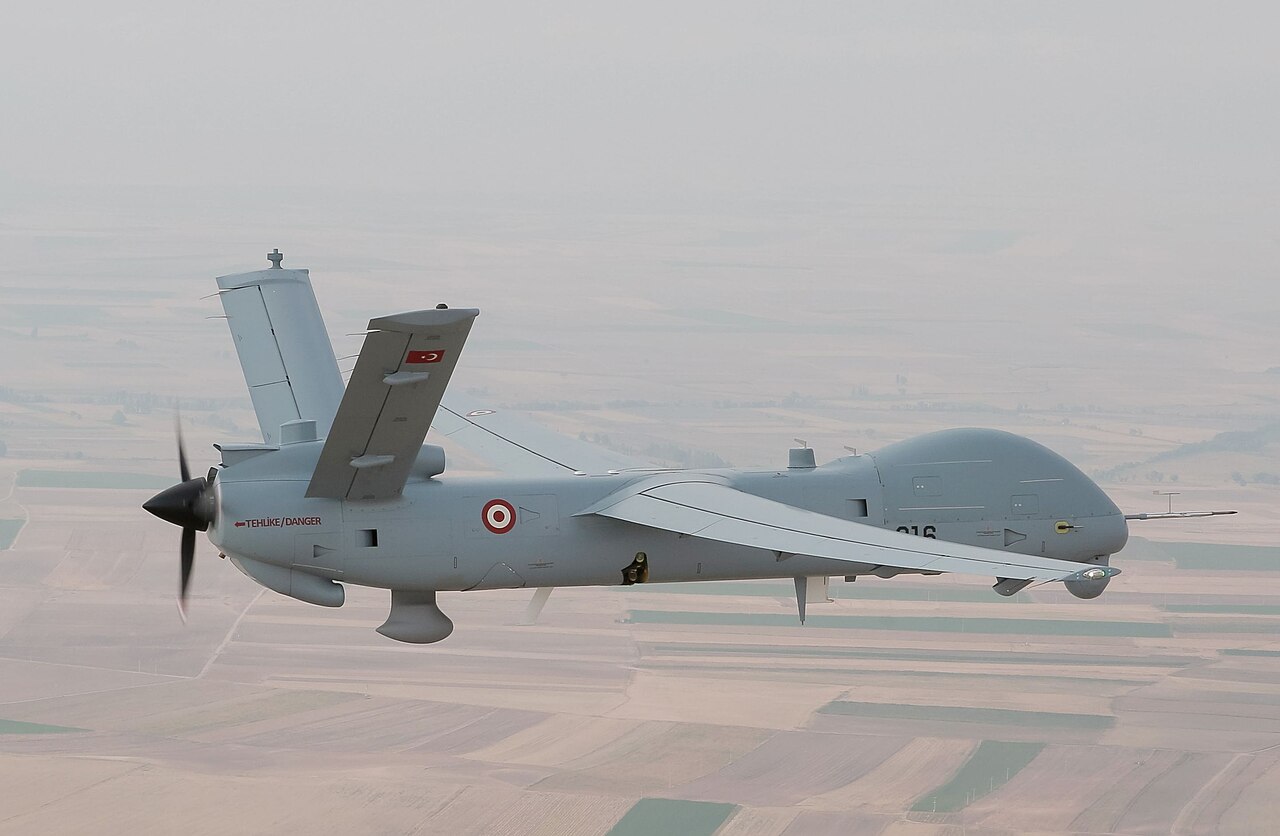
Turkish Aerospace (TUSAŞ, also written TAI) is a Turkish state-linked aerospace and defence company headquartered in Kahramankazan, Ankara, that builds the KAAN fifth-generation fighter, the Hürjet jet trainer, the Anka and Aksungur drones and the T129 ATAK, T625 Gökbey and T70 helicopters. It was founded in 1973 and is owned mainly by the Turkish Armed Forces Foundation and the Defence Industry Agency.
According to Wikipedia, the company had about 17,000 employees in January 2024, including roughly 7,000 engineers, and reported revenue of ₺63.58 billion (about $1.61 billion) for 2023. Its chief executive, Mehmet Demiroğlu, said in May 2025 that revenue had been around $3 billion in 2024, so published figures for the same year differ and this profile shows the range. Recent export wins include 48 KAAN fighters for Indonesia and 30 Hürjet trainers for Spain.
What Does Turkish Aerospace Do?
Turkish Aerospace designs, builds and supports military aircraft, helicopters, unmanned aerial vehicles and satellites, and it makes aerostructures for foreign programmes. It started as a licensed F-16 producer and now develops its own platforms. Wikipedia says the company is organised in six business groups: aviation structurals, aircraft, helicopters, UAV systems, space systems and national combat aircraft.
| Item | Detail |
|---|---|
| Headquarters | Kahramankazan, Ankara, Turkey |
| Founded | 1973 (28 June); joint venture for F-16 production from 1984; current form since 2005 |
| Ownership | Turkish Armed Forces Foundation 54.49%; Defence Industry Agency 45.45%; Turkish Aeronautical Association 0.06% |
| Chairman | Ömer Cihad Vardan |
| President and CEO | Mehmet Demiroğlu |
| Employees | About 17,000, including about 7,000 engineers and 6,000 technicians (January 2024) |
| Revenue | ₺63.58 billion, about $1.61 billion (2023) |
| Listing | Not publicly traded |
| Global ranking | 47th in the Defense News Top 100 (2025, per Envanter Medya) |
How Many Employees Does Turkish Aerospace Have?
The most detailed public figure is about 17,000 employees in January 2024, of whom around 7,000 were engineers and 6,000 technicians, according to Wikipedia. Envanter Medya repeats the 17,000 figure for 2024 to 2025.
The company has offices in the United States, Germany, France, Spain, Azerbaijan, Kazakhstan, Pakistan, Malaysia and Indonesia, and Demiroğlu said in May 2025 it planned to add Algeria, Saudi Arabia, Nigeria and Brazil, according to Hürriyet Daily News.
Turkish Aerospace Revenue and Financial Results
The figures below come from Wikipedia, the company’s chief executive as quoted by the press, and a trade profile. They differ for 2024, so the table attributes each one.
| Year | Revenue | Source |
|---|---|---|
| 2023 | ₺63.58 billion (about $1.61 billion) | Wikipedia |
| 2024 | About $3 billion | Mehmet Demiroğlu, quoted by Hürriyet Daily News |
| 2024 | About $2.2 billion, up about 43% year on year | Envanter Medya |
| 2025 | Target of $4.3 billion | Hürriyet Daily News, May 2025 |
| 2034 | Target of $12 billion | Hürriyet Daily News, May 2025 |
What Are Turkish Aerospace’s Main Products?
The product range spans fighters, trainers, helicopters, drones and satellites. Each platform below links to its own explainer on this site where one exists.
| Product | Type | Key fact |
|---|---|---|
| KAAN | Fifth-generation fighter | First flight 21 February 2024; 20 Block-10 aircraft ordered by Turkey for 2028 to 2030 |
| Hürjet | Advanced jet trainer, light combat variant planned | First flight 25 April 2023; Spain ordered 30 |
| Hürkuş | Turboprop trainer | First flight 2013 |
| Anka | Medium-altitude long-endurance drone | Up to about 30 hours endurance (Anka-S) |
| Aksungur | Twin-engine MALE drone | First flight 20 March 2019; up to 50 hours endurance; 750 kg payload |
| T129 ATAK | Attack helicopter | First flight 28 September 2009; in service since 2014 |
| T625 Gökbey | Utility helicopter | First flight 6 September 2018; first delivery 29 October 2024 |
| T70 | Utility helicopter built under Sikorsky licence | 148 planned, 38 completed (July 2026) |
| Göktürk-1, Türksat 6A | Satellites | See the Göktürk-1 and Türksat 6A explainers |
Which Countries Buy From Turkish Aerospace?
Turkey is the main customer for every platform, but export orders are growing. Indonesia is the first export customer for KAAN and Spain is the first for Hürjet. Anka and Aksungur have several operators across Africa, Central Asia and Southeast Asia, according to Wikipedia.
| Country | Platform | Detail |
|---|---|---|
| Indonesia | KAAN | 48 aircraft over about 10 years; government framework signed 11 June 2025, contract 26 July 2025 (Defense News); reported value about $10 billion |
| Indonesia | Anka | 12 ordered in February 2023 with support and technology transfer for $300 million (Wikipedia) |
| Spain | Hürjet | 30 aircraft signed 28 December 2025 through Airbus Defence and Space; reported at €2.4 billion to €2.6 billion depending on source; deliveries from 2028 |
| Nigeria, Philippines, Somalia | T129 ATAK | Six delivered each as of 2025 (Wikipedia) |
| Tunisia, Kazakhstan | Anka | Tunisia received its first in November 2021; Kazakhstan has three delivered (Wikipedia) |
| Kyrgyzstan, Chad | Aksungur | Two delivered to each (Wikipedia) |
| Egypt, Pakistan, Jordan | F-16 work | Legacy F-16 production or upgrade work; Egypt received 46 aircraft in 1993 to 1995 (Wikipedia) |
History of Turkish Aerospace
| Year | Event |
|---|---|
| 1973 | Company incorporated to reduce Turkey’s dependence on foreign defence suppliers |
| 1984 | Turkish-US joint venture set up for F-16 manufacture |
| 2005 | Turkish shareholders buy out foreign shares; TAI and TUSAŞ merge |
| 2010 | Anka drone first flight |
| 2013 | Hürkuş trainer first flight |
| 2018 | T625 Gökbey first flight |
| 2019 | Aksungur first flight |
| 2023 | Hürjet and Anka-3 first flights |
| 2024 | KAAN fighter first flight on 21 February |
| 2025 | Indonesia KAAN contract; Spain and Airbus agree Hürjet cooperation |
| 2026 | KAAN serial production contract signed on 6 May at SAHA |
Recent Contracts and Developments
The KAAN programme moved into production planning in 2026. The Presidency of Defense Industries and Turkish Aerospace signed a serial production contract on 6 May 2026 for 20 Block-10 aircraft, to be delivered between 2028 and late 2030, according to Aviacionline. The value was not stated. Initial aircraft use US-origin F110 engines, and Defence Turkey reports that US export authorization passed Congress on 9 July 2026.
On Hürjet, Airbus and TUSAŞ signed a cooperation agreement at IDEF in July 2025, per Defense News, and Spain signed the contract on 28 December 2025, according to The Aviationist. Turkish drones and helicopters also feature in wider regional stories on this site, including Baykar’s company profile for the country’s other major drone maker, Aselsan’s Korkut 35 air defence live-fire test, and our earlier overview of TUSAŞ’s fifth-generation and autonomy ambitions.
Turkish Aerospace FAQ
Where is Turkish Aerospace headquartered?
In Kahramankazan, Ankara, Turkey.
Who owns Turkish Aerospace?
The Turkish Armed Forces Foundation holds 54.49%, the Defence Industry Agency 45.45% and the Turkish Aeronautical Association 0.06%, according to Wikipedia. The company is not publicly traded.
How many employees does Turkish Aerospace have?
About 17,000 in January 2024, including around 7,000 engineers and 6,000 technicians.
What is Turkish Aerospace’s revenue?
Wikipedia lists ₺63.58 billion, about $1.61 billion, for 2023. For 2024 the chief executive cited about $3 billion, while another profile gives about $2.2 billion.
What is the KAAN?
Turkey’s fifth-generation stealth fighter, first flown on 21 February 2024. Turkey has contracted 20 Block-10 aircraft and Indonesia has signed for 48.
Which countries have bought the Hürjet?
Spain, which signed for 30 aircraft on 28 December 2025 through Airbus Defence and Space.
What is the difference between TUSAŞ and TAI?
None. TUSAŞ is the Turkish abbreviation and TAI is the English one for the same company.
- Wikipedia – Turkish Aerospace Industries; TAI Kaan; TAI Hürjet; TAI Anka; TAI Aksungur; TAI T625 Gökbey; TAI/AgustaWestland T129 ATAK
- Hürriyet Daily News – TUSAŞ expanding into new markets, aims for $4.3 bln revenue (25 May 2025)
- Envanter Medya – What Is Turkish Aerospace (TUSAŞ)?
- Defence Turkey – Turkish Aerospace highlights KAAN, T-70, T-925 and HÜRJET roadmaps at Farnborough 2026 (22 July 2026); Turkish defense industry assessment for 2025
- Aviacionline – SAHA 2026, KAAN serial production contract
- FW-Mag – KAAN P1 taxi trials
- The Aviationist – Spain signs contract for 30 Hürjets (30 December 2025)
- Defense News – Turkey, Indonesia sign warplane, frigate deals (28 July 2025); Airbus, TUSAŞ sign Hürjet deal (24 July 2025)



[…] aircraft will be delivered to Azerbaijan, the first export deal for the upgraded variant built by Turkish Aerospace (TUSAŞ). The Turkish Air Force took delivery of its first two HÜRKUŞ-II aircraft on 28 September, and 55 […]