
The 6th-Generation Fighter Revolution: Everything You Need to Know About the Boeing F-47 NGAD
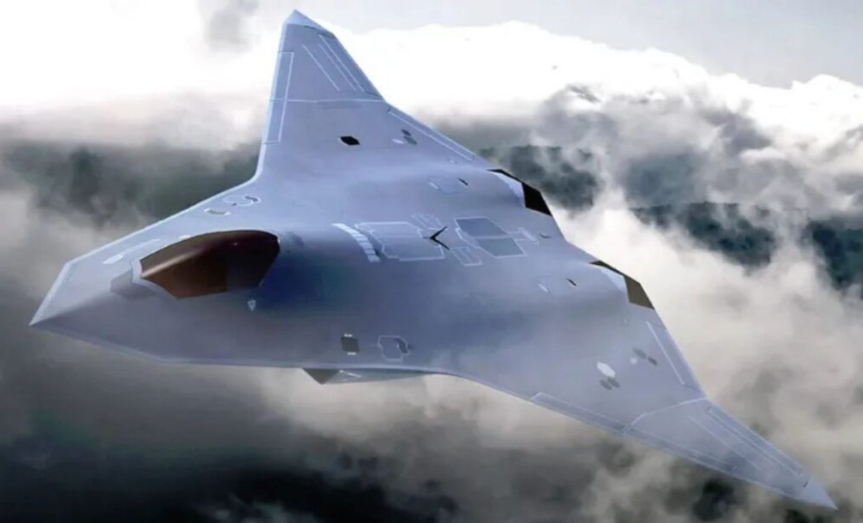
The deck is being reshuffled in the United States Air Force’s (USAF) Next Generation Air Dominance (NGAD) program, designed to replace the legendary F-22 Raptor. With Boeing selected as the prime contractor last year, the 6th-generation air superiority fighter—officially designated as the F-47—is preparing to fundamentally alter the future of aerial warfare using artificial intelligence, autonomous drone swarms (CCA), and adaptive engine technologies. What exactly is the F-47, what are its capabilities, and how will it shift the global balance of power?
While 5th-generation fighters like the F-22 and F-35 have become the standard in modern defense aviation, the United States has already set its sights beyond the horizon. Developed under the USAF’s NGAD program, the F-47 is not just a conventional fighter jet; it is being designed as a flying command center that will manage the skies through digital networks and autonomous systems.
Following the massive Engineering and Manufacturing Development (EMD) contract awarded to Boeing in early 2025, this highly classified project has emerged as America’s ultimate countermeasure against the growing Anti-Access/Area Denial (A2/AD) strategies employed by adversaries like China.
What is the F-47? Why is it Being Developed?
The F-47 is a high-altitude, ultra-stealth, 6th-generation air superiority platform developed specifically for the US Air Force. The primary existential purpose of the F-47 is to phase out the F-22 Raptor and establish absolute American air dominance, particularly across the vast distances of the Indo-Pacific theater.
As USAF leadership has frequently emphasized, the design philosophy of the F-47 relies on a “family of systems” approach rather than a single standalone aircraft.
Standout Technical and Tactical Features of the F-47
Based on recent defense reports and leaked technical parameters, the F-47 will be equipped with capabilities that vastly outpace its predecessors:
Unprecedented Range and Engine Tech: One of the F-22’s biggest drawbacks—its relatively short combat radius—is being resolved in the F-47. The aircraft is expected to have a combat radius exceeding 1,000 nautical miles (approx. 1,900 km). This will be achieved through the Next-Generation Adaptive Propulsion (NGAP) system. These advanced engines, developed by industry leaders like General Electric and Pratt & Whitney, will provide superior thrust at Mach 2+ speeds while increasing fuel efficiency by up to 30%.
Multi-Band Ultra-Stealth: Unlike current stealth aircraft optimized primarily against specific radar bands (like X-band), the F-47 will utilize advanced radar-absorbent geometries and coatings aimed at rendering the aircraft invisible to multi-spectral radars and advanced Infrared Search and Track (IRST) systems. The aircraft is expected to feature a tailless, blended-wing design to achieve this broadband stealth.
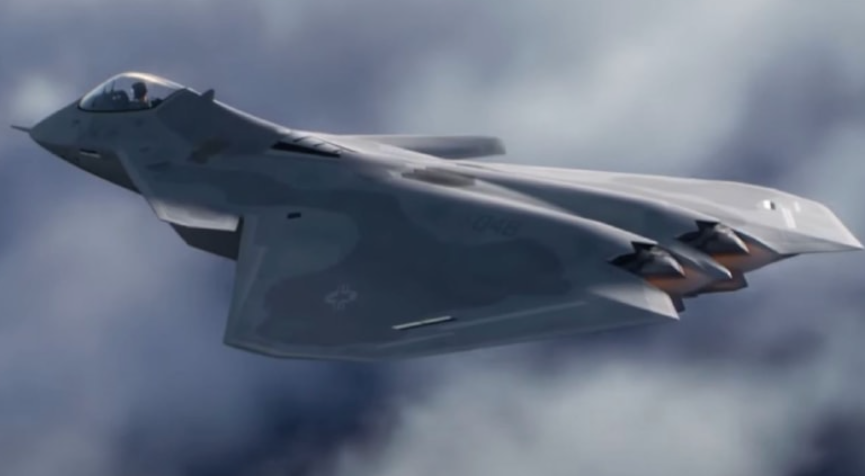
Collaborative Combat Aircraft (CCA): The F-47 will not fly alone. Its most revolutionary aspect is its capacity to act as a quarterback for uncrewed Collaborative Combat Aircraft (CCA)—often referred to as “loyal wingmen.” The pilot of an F-47 will be able to push AI-driven autonomous systems, such as the Anduril YFQ-44A Fury or General Atomics platforms, to the frontlines. These drones will conduct electronic warfare, illuminate targets, and even execute “kill” commands issued by the F-47 pilot.
| Feature | Estimated Capability |
| Generation | 6th-Generation |
| Role | Air Superiority / System of Systems Commander |
| Combat Radius | > 1,000 Nautical Miles |
| Propulsion | Next-Generation Adaptive Propulsion (NGAP) |
| Stealth | Multi-Band / Broadband, Tailless Design |
| Manned/Unmanned | Optionally Manned / CCA Integration |
When Will It Fly? When Will It Enter Service?
While details remain highly classified, technology demonstrator (X-Plane) prototypes have reportedly been undergoing flight testing for several years.
According to USAF timelines, the first official flight of the production-representative Boeing F-47 is targeted for 2028. Because the operational NGAP engines are slated for completion by 2030, initial prototype testing will likely be conducted using interim powerplants. The US Air Force aims to officially induct this next-generation fighter into its inventory in the early 2030s, with a stated objective of procuring at least 200 F-47 airframes.
In an era where geopolitical rivals are rapidly accelerating their own 6th-generation projects, the F-47 NGAD program is setting the stage for one of the most critical technological arms races in military aviation history.